

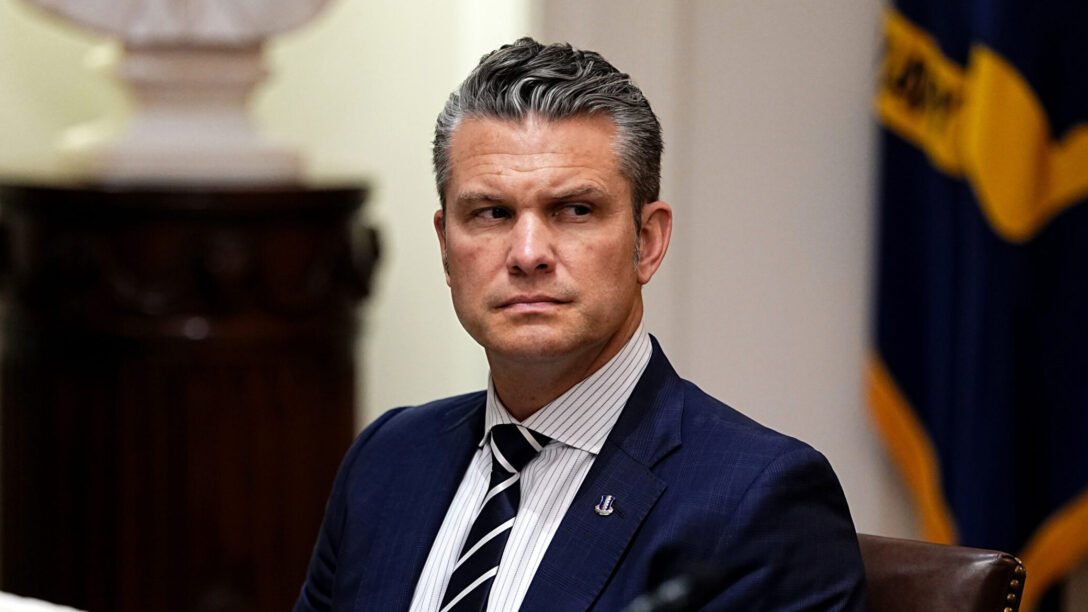
A group of Republican senators in the U.S. has expressed growing dissatisfaction with Secretary of War Pete Hegseth's leadership of the Pentagon.
Citing The Hill, the editorial board reports that some Republican senators have stated that Hegseth would not be confirmed by the Senate if he were nominated again today. The main reasons for the dissatisfaction are the drastic personnel changes and tensions with high-ranking military leaders that have occurred in the Pentagon in recent weeks.
At the center of the senators' criticism is the removal of General Randy George, Chief of Staff of the U.S. Army. George was known in Congress as an influential and professional military leader. His early retirement has been viewed by a number of Republicans as a weakening of experienced leadership within the Pentagon.
According to Reuters, Hegseth removed Randy George from his post in early April. Subsequently, John Felan, Secretary of the U.S. Navy, also left his position. Reuters writes that Felan's departure was linked to shipbuilding reforms, deteriorating relations with Pentagon leadership, and internal management dissatisfaction.
Republican Senator Thom Tillis said Hegseth made mistakes in personnel matters. He stated that the Secretary of War has removed some of the strongest generals who were previously on the team from the process. Although Tillis had previously supported Hegseth's appointment, he now doubts his ability to manage a large and complex institution.
Tillis also emphasized that Hegseth's previous management experience was limited. In his opinion, working with units of 30-40 people in the Minnesota National Guard may not be sufficient preparation to manage the Pentagon, one of the world's largest military bureaucracies.
Another issue causing dissatisfaction is the tension between Hegseth and Dan Driscoll, Secretary of the U.S. Army. Driscoll is known as a figure close to Vice President J.D. Vance and has good relations in Congress. For this reason, Hegseth's confrontation with Driscoll has created additional concern among Republicans.
According to The Hill, some senators believe that high-level management in the Pentagon has weakened under Hegseth's leadership. They consider the removal of experienced leaders from the Pentagon to be a risky move at a time when the U.S. is facing military crises abroad.
Hegseth's supporters, however, present the changes as an attempt by the Trump administration to reform the war system. In their view, personnel renewal in the Pentagon is crucial to break old bureaucratic resistance and align the military with the administration's priorities.
However, for some Republicans, the problem is no longer ideological but a matter of governance. They believe that Hegseth's harsh style is disrupting internal stability in the Pentagon rather than creating order. The main question now is: Will Trump continue to protect his Secretary of War, or will he perceive the growing dissatisfaction within the Pentagon as a political risk?