

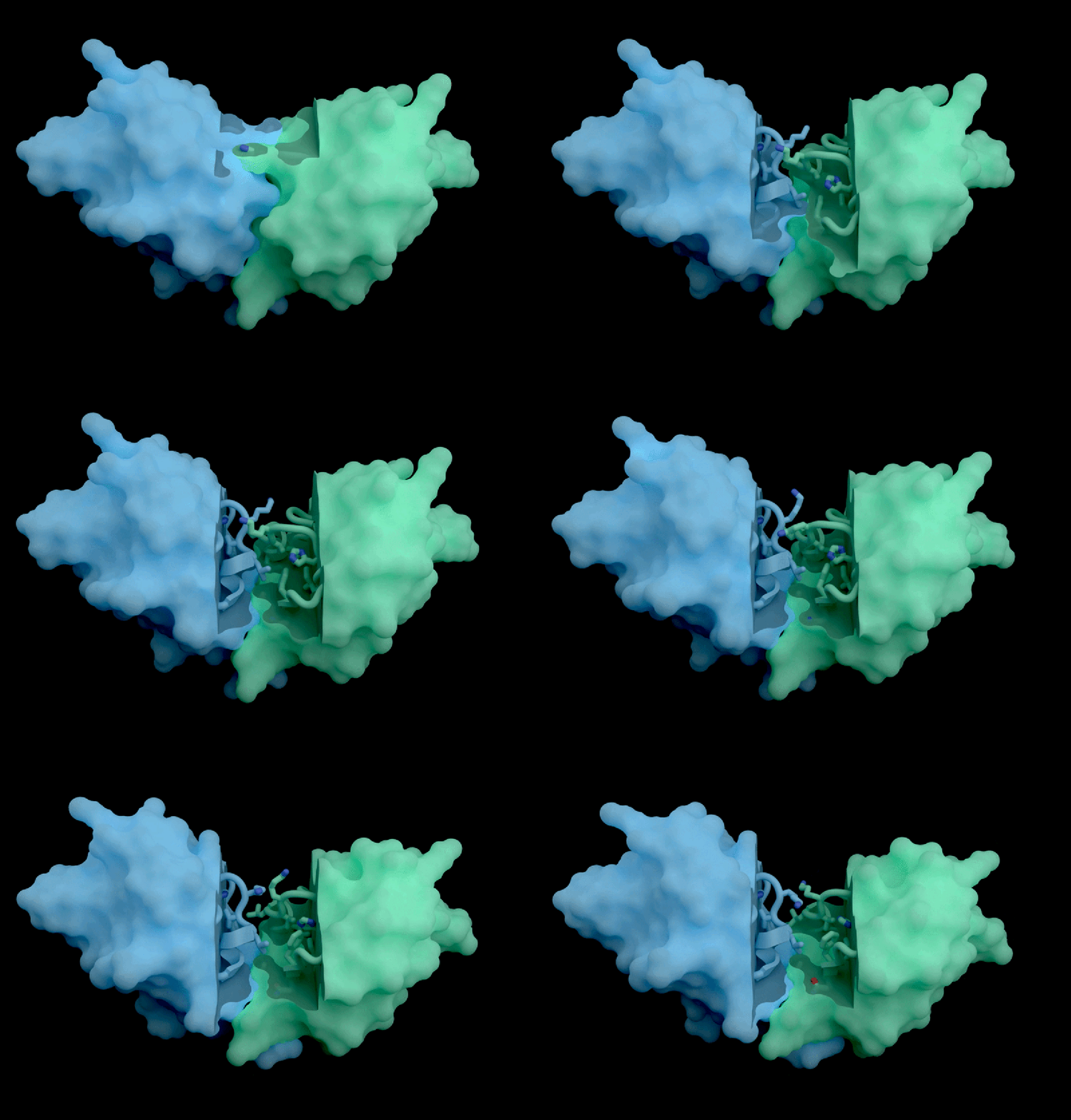
Based on an article published on February 21, 2026, Isomorphic Labs, a subsidiary of Google DeepMind specializing in drug discovery, has introduced a new AI-based model. This model is capable of predicting the interaction between potential therapeutic molecules and proteins. However, unlike open-source tools such as AlphaFold, the details of this model, named IsoDDE, are not publicly disclosed.
Redaksiya reports that the IsoDDE model, developed by Isomorphic Labs, was described in a 27-page technical report published on February 10. This report highlights the model's achievements in accurately predicting the interaction of proteins with potential drugs and antibody structures. However, unlike open-source AI systems like AlphaFold, IsoDDE is proprietary, and the technical document provides little information on how similar results were achieved.
Mohamed AlQuraishi, a computational biologist from Columbia University, rates the IsoDDE model as an advancement on par with AlphaFold4 but expresses concern about the lack of public details. Max Jaderberg, president of Isomorphic, states that the models behind IsoDDE are "fundamentally different" from other initiatives and has no intention of revealing the model's "secret." He emphasizes that this achievement is a combination of "computation, data, and algorithms." Isomorphic has entered into drug development agreements with pharmaceutical companies such as Johnson and Johnson, Eli Lilly, and Novartis, and also has its own internal projects.
The article states that the IsoDDE model is superior to open-source models like Boltz-2 and physics-based methods in predicting the binding strength of potential drugs to proteins. It also notes that the model yields high results in predicting the interaction of antibodies, which form the basis of therapies with billions of dollars in sales, with their targets. Gabriele Corso, co-founder of the Boltz-2 model, believes that proprietary data did not play a significant role in IsoDDE's results and that further progress can be made with open-source data.