

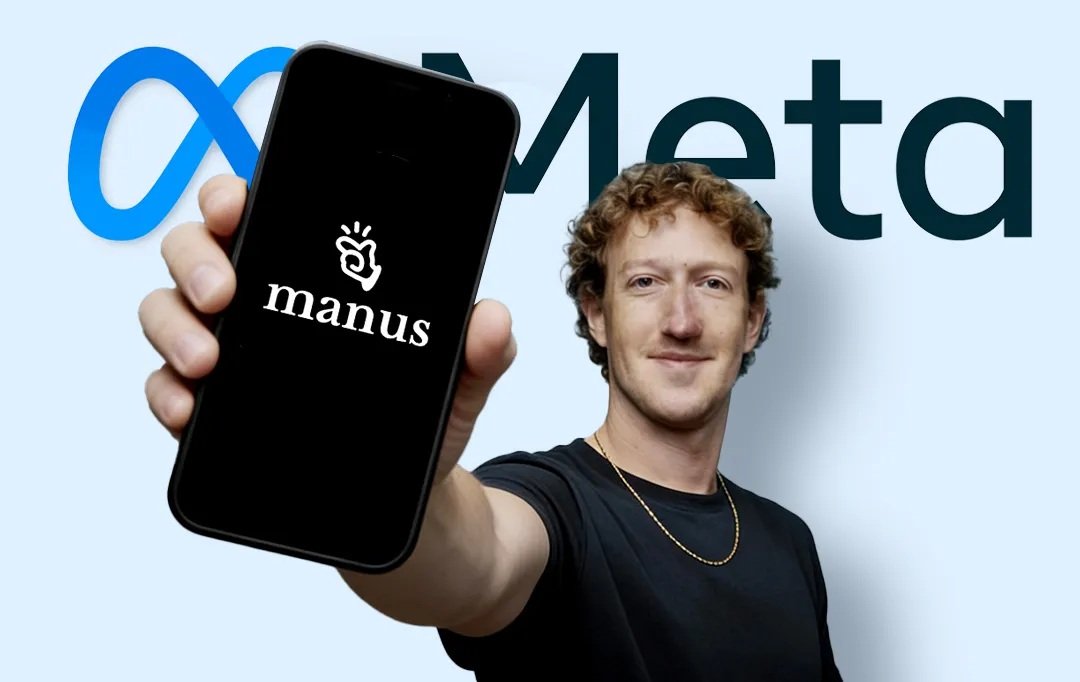
Meta's plan to acquire the China-origin startup Manus has been halted following Beijing's intervention, bringing the reversal of the deal onto the agenda.
Citing Euronews and Reuters, the editorial reports that Chinese regulators have blocked Meta's agreement to acquire Manus for over $2 billion due to national security concerns. Beijing is demanding that the parties cancel the deal and return any assets already transferred.
Manus is an artificial intelligence startup based in Singapore but founded by a team of Chinese origin. The company had attracted attention in the technology sector with its product, which it presented as “the world's first fully autonomous AI agent.” An AI agent is a system that performs online research, writes code, plans, and executes other complex tasks independently, without continuous instruction from the user.
According to Reuters, China's National Development and Reform Commission blocked the deal based on a security review mechanism for foreign investments, which has been in effect since 2021. The agency is demanding that Meta restore Manus's China-related assets and return transferred data and technologies.
Beijing's decision was made despite Manus being legally based in Singapore. The Chinese side argues that the company's technology, engineering staff, and development roots are linked to China. This indicates Beijing's desire to control strategic AI technologies not only based on their geographical registration but also in terms of origin and human capital.
Meta, however, stated that the deal was concluded in accordance with existing laws. Nevertheless, the company is now reportedly preparing to reverse the agreement. The process could be difficult, as it involves not only the return of shares but also an examination of how deeply data, intellectual property, and technology have been integrated into Meta's systems.
This decision indicates a further tightening of the competition between the US and China over AI technologies. Washington is restricting Chinese companies' access to advanced chips and technologies, while Beijing is trying to prevent China-origin AI assets from falling under the control of US tech giants.
Analysts believe that this incident sends a serious signal to China-origin startups. Even if a company relocates to Singapore, the US, or another country, if its technology and core team are linked to China, Beijing may assert control over those assets.
For Meta, this is a blow in the AI race. The company needs stronger agent technologies in its competition with OpenAI, Google, Anthropic, and other rivals. The acquisition of Manus could have given Meta a rapid advantage in the field of autonomous AI agents.
The main takeaway for the global technology market is this: AI is no longer just a commercial product but is considered a national security asset. For this reason, major AI deals will no longer conclude solely with investor and company agreements but will also depend on geopolitical approval from states.