

US President Donald Trump stated in his inaugural address that under his leadership, the US would "end all wars and bring a new spirit of unity to the world." However, he has largely failed to fulfill this promise so far.
According to Redaksiya, since Trump's return to the White House, the US has bombed Iranian nuclear facilities, struck suspicious boats in the Caribbean with drones, and forced Venezuelan dictator Nicolás Maduro out of his residence in the capital, Caracas.
Now, it appears a new conflict may be brewing under Trump's watch. Matthew Petti, a reporter for "Reason" magazine, reported on Wednesday that "The United States is entering a self-created crisis in the Middle East," and Trump has ordered "the deployment of a 'beautiful armada' to the region." According to Petti, this escalation follows tense negotiations over Iran's nuclear program, regional politics, and domestic policy.
If the US intervenes in Iran, it may face more cooperation from Iranians than years ago. In January, weeks of protests occurred in the country as a result of the weakening Iranian economy. Iranian-British journalist Fardad Farhzad told "Reason" reporter Zack Weismuller that "These protests are very pro-Western... and, you know, something that the United States can help with."
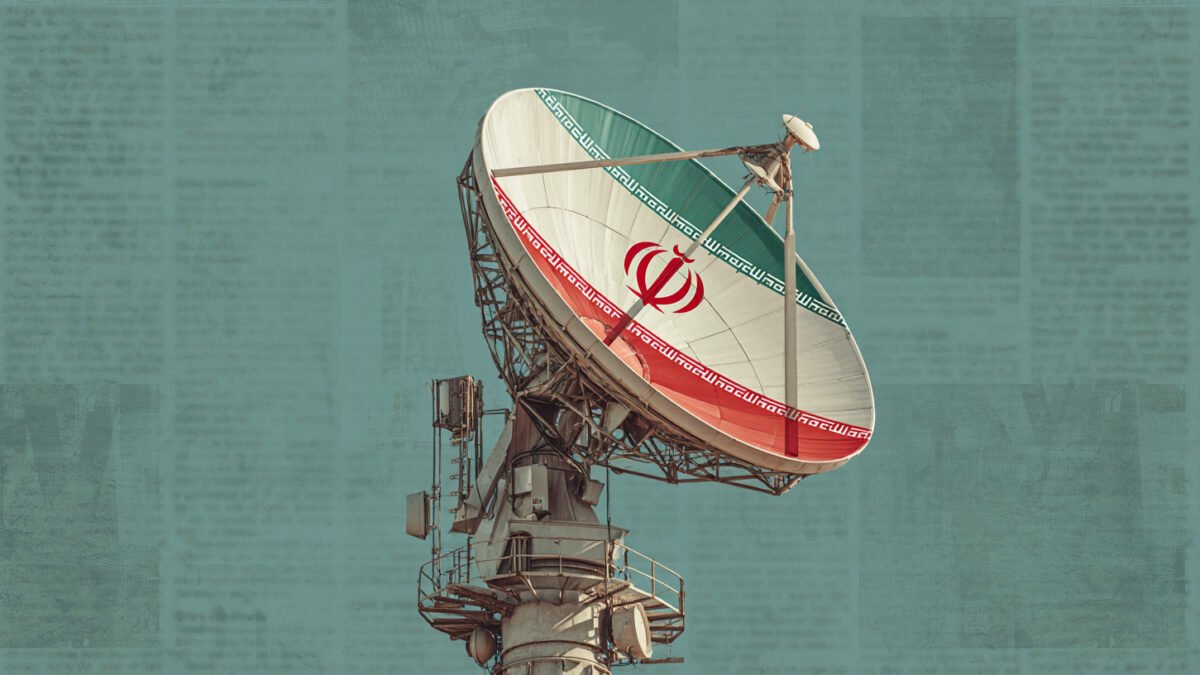
This pro-Western sentiment is partly due to the Iranian regime's ruthless media restrictions during this period of economic uncertainty. Most foreign media are censored, and Iran's domestic internet is severely restricted, an environment that has intensified since January. Despite this blockade, the regime has not been able to prevent all foreign media from entering the country. Farhzad's show, "24 with Fardad Farhzad," broadcast on "Iran International," has been able to enter the country via satellite. Despite the Iranian regime's attempts to block the signal, it is technically impossible to block the entire country or all satellites. And although it is illegal to keep satellite dishes in Iran, a large majority of Iranians have such dishes.
Farhzad's channel has been classified as a terrorist organization by the regime, mainly due to its reporting on the People's Mujahedin of Iran, a domestic protest and Marxist-affiliated Iranian opposition group, and also because organizations like "CNN" report on it and "Iran International" receives financial support from Saudi Arabia. This designation has put Farhzad's life at risk; the regime planned his assassination in London in 2022. He told "Reason" magazine, "You are actually risking your life."
Iran tries to keep media narratives under control. A recent media package prepared by CNN correspondent Frederik Pleitgen, according to Farhzad, "creates a false impression about what is happening in Iran." In it, Pleitgen is selectively taken around Tehran and only allowed to interview pro-regime witnesses regarding American intervention in the region. Farhzad told "Reason" magazine, "It's a controlled environment; people are not free to express their opinions." According to the organization "Reporters Without Borders," the country is also one of the largest jailers of journalists in the world.
The situation in Iran is changing rapidly. Amidst apparent stalled negotiations, threats of regional conflict that will further disrupt the daily lives of Iranians, and harsh measures against media and protests, broadcasts from satellite networks like "Iran International" and "YourTime TV" remain vital for ordinary Iranians.