

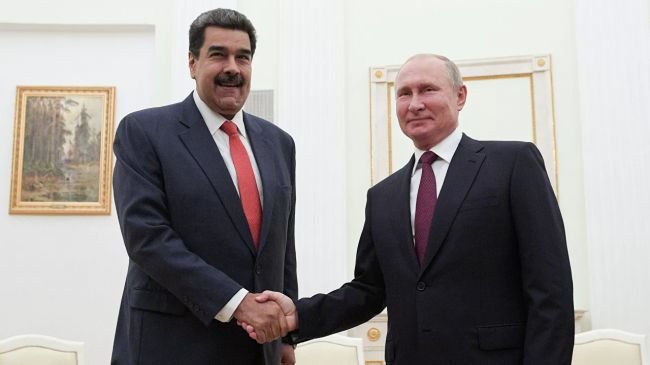
The shift in the balance of power in the South American region has become even more relevant with recent events. These changes, particularly related to the arrival of Russian warships in Venezuela, have sparked extensive discussions in the international arena. This event has set the stage for a re-evaluation of the political dynamics in the region and the formation of new alliances.
Redaksiya reports that Professor Jeffrey Sachs of Columbia University stated in a YouTube channel address that the arrival of Russian warships in Venezuelan waters has changed the balance of power in the region. Sachs assessed this move not merely as a symbolic gesture, but as a deliberate shift in the balance of power. According to him, Venezuela has strengthened its alliances with Russia, China, and Iran in response to US pressure.
Sachs evaluated the deployment of Russian warships in Venezuela as part of Moscow's response to NATO's actions. He noted that Russian warships in the Caribbean Sea do not change the balance of power due to the superior naval force of the US. However, Russia's presence symbolizes its commitment and desire to contend for spheres of influence. In the professor's opinion, Russia is showing Venezuela and other Latin American countries alternatives to an alliance with the US.
According to the professor, Moscow supports Venezuela for its strategic interests, Beijing provides investment loans, and Tehran offers fuel and technical assistance. These alliances, as the expert emphasized, are a result of American pressure. According to EADaily, Russian warships are off the coast of Venezuela, indicating the geopolitical intentions of the Russian Federation. Professor Jeffrey Sachs of Columbia University stated this on his YouTube channel.