

The liberation of Karabakh from enemy occupation opened a new page not only in the destiny of Azerbaijan but in the entire Turkic world. Today, Karabakh has become a symbol of Turkic unity, transforming into a common value both politically and morally. The contributions of brotherly countries – Turkey, Uzbekistan, Kazakhstan, Kyrgyzstan, and finally, Turkmenistan – to the restoration of Karabakh are a real example of Turkic solidarity. The news that Turkmenistan will build a “Friendship and Brotherhood Mosque” in Fuzuli further strengthens the idea of future unity in the Turkic world.
Azerbaijan, standing at the center of this historical process, has become the locomotive of strategic projects uniting Turkic states. This is not just regional cooperation; it signifies the writing of a new Golden Age in Turkic history.
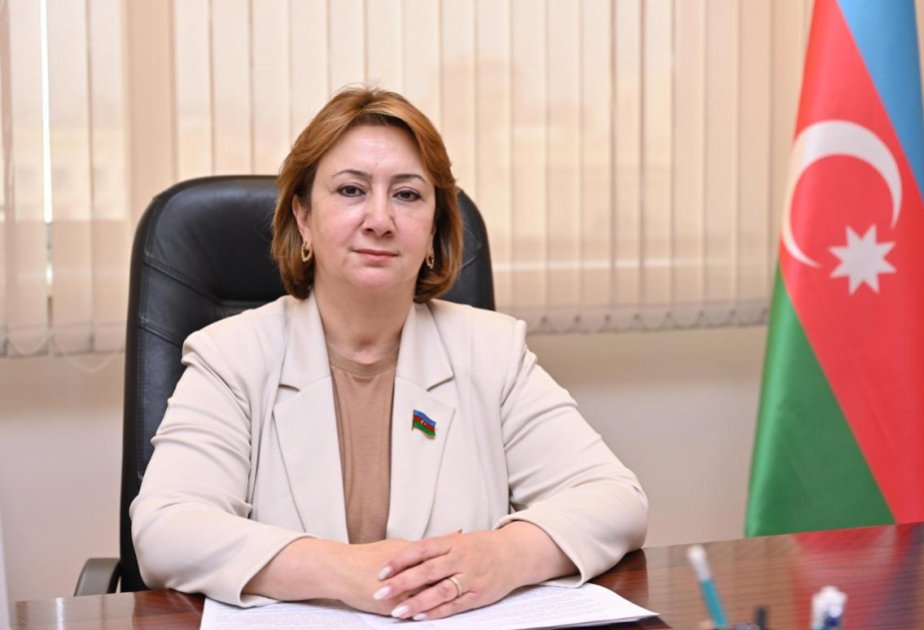
These views were expressed by Milli Majlis deputy Mehriban Valiyeva in an interview with AZERTAC.
Historical Meeting in Turkmenistan
The deputy emphasized that President Ilham Aliyev's working visit to Turkmenistan on August 22, at the invitation of Gurbanguly Berdimuhamedov, Chairman of the People's Council of Turkmenistan, was a significant event for the Turkic world. Bilateral and trilateral meetings were held within the framework of the visit. In particular, the first trilateral Summit of the leaders of Turkmenistan–Azerbaijan–Uzbekistan is regarded as a historical turning point.
President Ilham Aliyev's words clearly expressed the essence of this cooperation: “Our peoples are united by common history, culture, language, and religion. Our traditions are similar, and our friendly and fraternal relations have been strengthened over centuries. There are excellent prospects for cooperation in energy, transport, logistics, digitalization, and cultural ties.”
This statement presented a strategic vision that defines the future directions of solidarity among Turkic states.
Globally Significant Cooperation
The deputy noted that the geographical area where Turkmenistan and Azerbaijan are located forms the main part of the East-West transport corridor, stating: “Modern seaports, airports, railways, and logistics infrastructure play the role of a reliable bridge connecting Europe and Asia. This cooperation brings great benefits not only to the region but also to the wider Eurasian space.
Azerbaijan's cultural and political proximity to Turkmenistan is also evident on the international stage. Azerbaijan was one of the co-authors of the resolution “Permanent Neutrality of Turkmenistan” adopted by the UN General Assembly. This step was regarded as a symbol of friendship and mutual respect between our peoples.
Fuzuli is becoming the capital of brotherhood. Turkmenistan's construction of a mosque in Fuzuli, as well as the twinning of Fuzuli and Arkadag cities, is a historical event. These decisions are of significant importance not only for religious and cultural unity but also for strengthening spiritual unity. The Azerbaijani people will remember this initiative as a shining example of eternal fraternal support.
Relations between Azerbaijan and Uzbekistan have already been elevated to the level of an “Agreement on Alliance.” This document, signed in 2024, has raised fraternal ties to a strategic level.
Uzbekistan's contributions to the restoration of Karabakh should be specially highlighted: the construction of a secondary school named after Mirza Ulugbek in Fuzuli, the establishment of a large sewing factory in Khankendi, and the creation of the “Uzbekistan” park in Baku.
All this shows that fraternal relations have moved beyond official documents and permeated various spheres of life”.
Energy and Transport – Key to the Future
Our interviewee noted that Azerbaijan, Turkmenistan, and Uzbekistan hold an important geostrategic position in the Eurasian space with both their energy resources and transit capabilities. The Middle Corridor, the development of Caspian ports, railway, and logistics projects are transforming the three countries into a key center on the global trade map.
Cooperation in the energy sector is also expanding: SOCAR has already started developing oil fields in Uzbekistan, while traditional partnership with Turkmenistan continues successfully. This cooperation will create new economic opportunities for the region in the coming years.
Historic Joint Statement
“At the Summit, the leaders of Azerbaijan, Turkmenistan, and Uzbekistan adopted a “Joint Statement,” defining the main directions of multilateral cooperation. This included cooperation in transport-transit, energy, cultural-humanitarian fields, as well as issues of mutual support within international organizations.
The main emphasis was on the revival of the “Great Silk Road” connecting Europe and Asia. Strengthening the transport infrastructure of Central Asia and the Caspian Basin will transform the Turkic world into an integral part of the global economy.
This new stage, which began with the liberation of Karabakh, means the strengthening of unity, deepening of cooperation, and building a common future for Turkic states. Azerbaijan, standing at the center of this process, successfully fulfills its historical, political, and moral leadership mission. Karabakh has now become a symbol of unity not only for Azerbaijan but for the entire Turkic world,” concluded deputy Mehriban Valiyeva.