

The first official visit of the President of Azerbaijan to Bratislava not only elevates the long-standing friendly relations between the two countries but also further strengthens the mutual political will and future-oriented cooperation vision of the parties. The one-on-one and expanded talks held during the visit also indicate that Azerbaijan and Slovakia possess sufficiently broad and real opportunities for joint activities in the political, economic, and security spheres to deepen their relations. Azerbaijan's location at the crossroads of Europe and Asia, its possession of vast energy resources, supply infrastructure, extensive transit capabilities, and the strongest economy in the region are the main factors conditioning Bratislava's interest in expanding ties with Baku. The Joint Declaration on Strategic Partnership signed in 2024 has elevated these relations to the highest level from a legal-political perspective, and the impact of this document is already evident in concrete cooperation plans in real sectors.
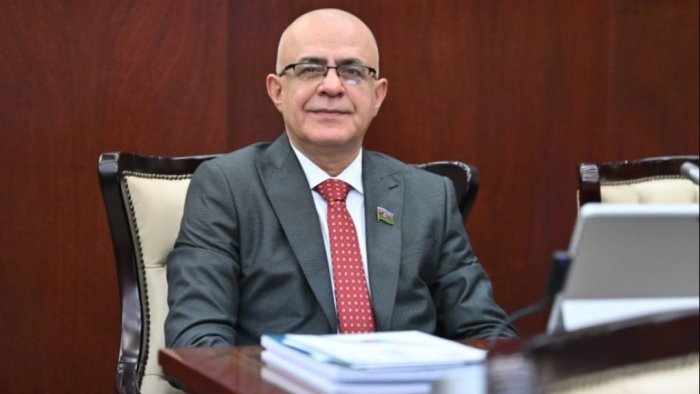
This was stated to AZERTAC by Elchin Mirzabeyli, a Member of the Milli Majlis.
According to him, the energy sector is one of the main and strategic directions of Azerbaijan-Slovakia relations. As President Ilham Aliyev noted in his statement to the press, the delivery of Azerbaijani gas to Slovakia for the first time last year is a serious starting point for further expanding energy cooperation in the future. Azerbaijan's existing and prospective gas fields, as well as new production and transit capabilities, allow our country to further strengthen its role as a strategic partner in Europe's energy security. In the context of Slovakia's strategy to diversify its energy supply, cooperation with Baku in this field promises great economic and political prospects.
Slovakia's military-technical production potential, which meets modern standards as a member of NATO and the EU, and Azerbaijan's growing role in the regional security architecture, along with its expanded domestic production lines in the military industry in recent years, create a rational basis for partnership. Azerbaijan's course towards modernizing its defense industry, particularly in the production of unmanned systems, armored vehicles, communication, and electronic warfare equipment, can create synergy with Slovakia's technological experience and industrial infrastructure. The fact that Slovak companies offer advanced products in the field of ammunition and armored platforms aligns with Azerbaijan's policy regarding the development of its defense industry. This expands opportunities for joint production, component cooperation, and technological transfer. At the same time, Slovakia's interest in diversifying its defense industry market due to the increasing security demands in the Eastern European region can turn the Azerbaijani market into a strategic partnership space.
The deputy noted that Azerbaijan's cooperation prospects with Slovakia in the transport and logistics sector are unfolding against the backdrop of broader geoeconomic transformations. Azerbaijan holds a key transit position on multi-faceted routes, including the Middle Corridor, North-South, and Baku-Tbilisi-Kars. Slovakia's location in Central Europe and its access to the EU's internal logistics hubs can serve as an important complementary function for Azerbaijan. Although Slovakia does not have port infrastructure, the Trans-European Transport Network highways and railway connections within the country create operational opportunities for directing cargo flows from Azerbaijan to Central Europe. The main prospect for Azerbaijan is strengthening integration with Slovakia's logistics operators, coordinating multimodal transportation, and gaining a more systematic position for the port of Baku in the European landscape. Slovakia, in turn, can gain the potential to expand its access to Asian markets via the Middle Corridor and increase its share in the formation of new supply chains.
Discussions on information technologies and the creation of data centers represent a new area of cooperation in line with the demands of the modern global economy. Azerbaijan's extensive energy reserves and regions with cold climates make the country an advantageous platform for international data center infrastructure. The participation of Slovak companies in this field can enable the joint development of a digital ecosystem in the future.
“The development of relations in the fields of humanitarian, educational, and cultural cooperation, as well as tourism, generally contributes to the strengthening of public diplomacy between countries. The participation of a Slovak company in the 'smart village' project in our liberated territories demonstrates this country's readiness to support Azerbaijan's Great Return strategy. The expansion of air transport links is an important step serving to increase trade, business, and tourism flows,” said Elchin Mirzabeyli, who also noted that the high-level reception of President Ilham Aliyev in Slovakia and the messages of mutual trust and friendship from the leaders of the two countries further enhance the significance of Bratislava's political support for Baku. Slovakia's high-level representation on the anniversary of Azerbaijan's victory in the 44-day Patriotic War also stands out as a real example of friendly relations.
“All these points show that President Ilham Aliyev's visit to Slovakia is not just a diplomatic event, but a turning point that lays the foundation for new and more flexible cooperation formats between the two countries. This visit will not only spur the implementation of concrete projects in the economic, technological, energy, defense, and transport sectors but also serves as a platform to elevate Azerbaijan-Slovakia relations to a new strategic level on the Europe-Caucasus plane,” he stated.