

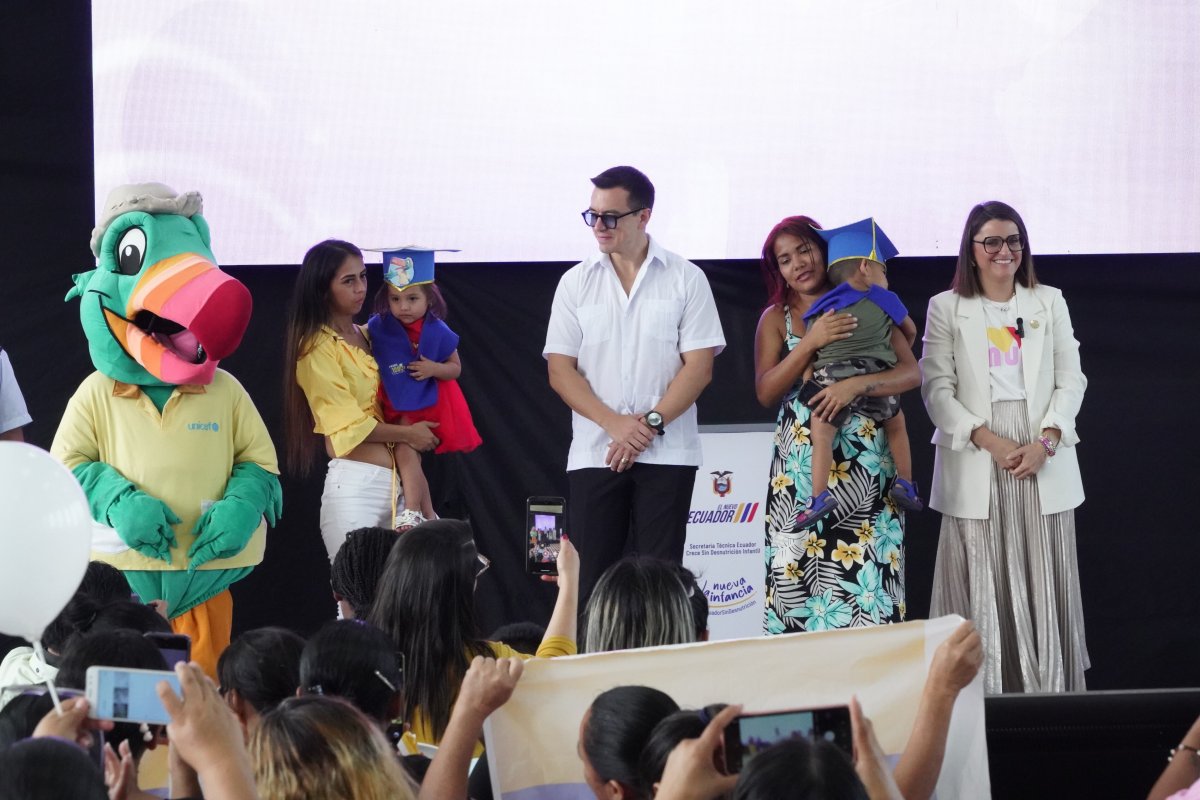
According to information provided by the Ecuadorian government, over 433,000 children in the country have overcome chronic childhood malnutrition under the leadership of President Daniel Noboa Azín. This was announced on February 19th at an event in Guayaquil titled "More Than 400,000 Reasons to Believe. Ecuador Works to Prevent Chronic Childhood Malnutrition (DCI)".
Redaksiya reports that President Daniel Noboa emphasized that attention to early childhood is a strategic priority for the country's development. According to official figures, 433,728 children have completed their first two years with state support and are currently free from DCI. This result has been achieved through a comprehensive care package, including prenatal and healthy child check-ups, complete vaccination schedules, nutritional counseling, early stimulation, access to safe water, vitamins, and micronutrients.
In addition, the 1000 Days Bonus is provided to the most vulnerable families as an economic incentive and a mechanism for shared responsibility in child care. President Noboa stressed that each of these children represents the country's future, stating, "Supporting our children in their first thousand days is investing in an Ecuador where they grow up healthy, strong, and with opportunities." Human Development Minister Zaida Rovira stated that the national strategy against DCI has benefited over 900,000 people, including mothers and children. In 2026 alone, the government is allocating more than $476 million to the National Strategy for an Ecuador Without Childhood Malnutrition, the highest investment recorded in this area. The executive branch has set a goal to reduce the prevalence of chronic childhood malnutrition in children under two years of age to below 15% by 2030, as part of ongoing efforts to break the cycle of poverty and social exclusion. The government has reaffirmed that eradicating DCI is an ethical and social justice issue that ensures every child in Ecuador has the right to full development.