

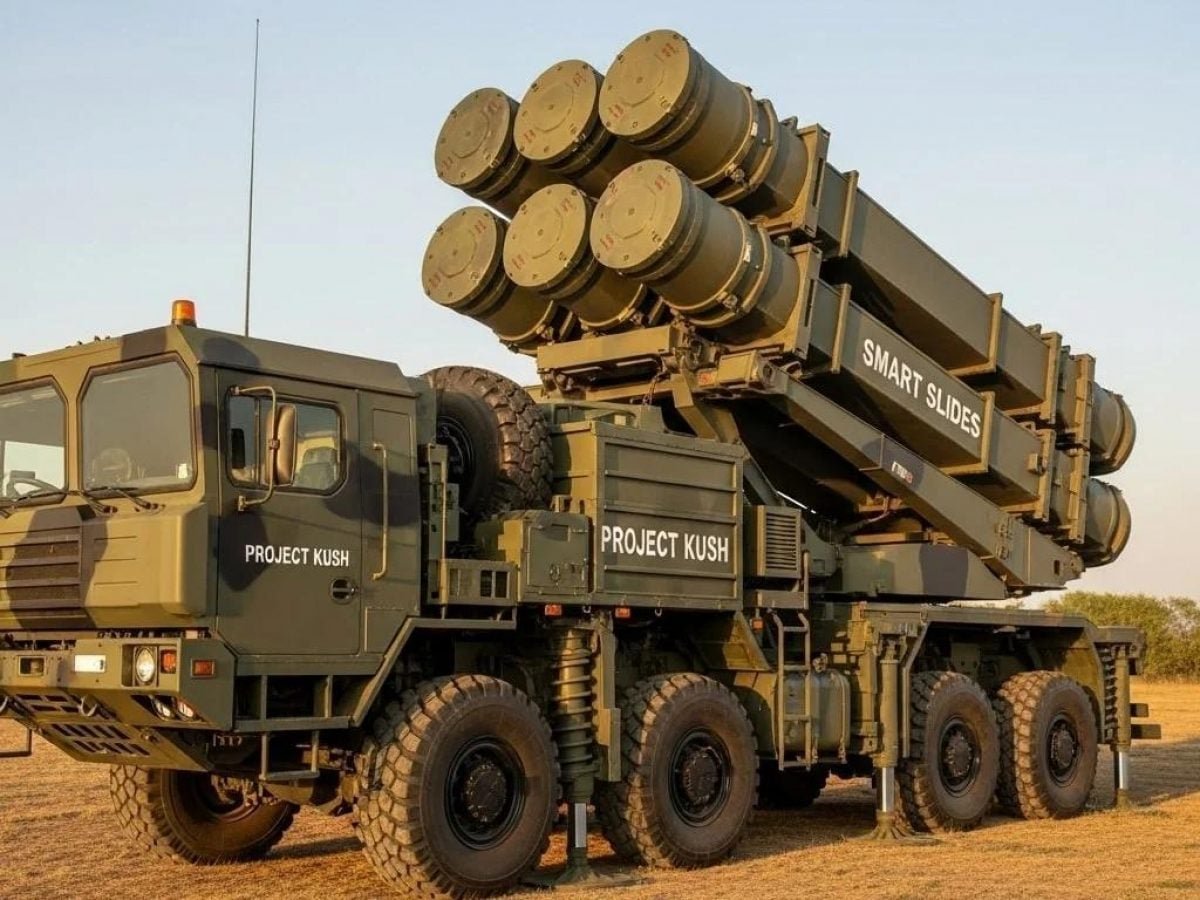
India has launched a large-scale program to create a multi-layered defense system against air strikes. This system is expected to be compared to, or surpass, the Russian-made S-400 in its capabilities. The main element of the project will be three new interceptor missiles with ranges of up to 400 km.
Redaksiya reports that this project aims to create a multi-level air defense shield to protect against a wide spectrum of aerial threats, from fighter jets to cruise missiles and high-value aerial objects. Within the framework of the "Kusha" project, the creation of three interceptor missiles, designated M1, M2, and M3, is planned. These missiles, working together, will form a fully functional multi-layered air defense system.
The M1 will have a range of up to 150 km. This is higher than the capabilities of many modern medium-range missiles, particularly the 9M96E2 (approximately 120 km), and will allow for effective interception of aerial targets at a significant distance. The M2 is being developed as a long-range interceptor with a range of up to 250 km. In its class, it approaches the 48N6DM and 48N6E3 missiles of the S-400 complex and should form the backbone of long-range air defense. The M3 is the most advanced and ambitious missile of the program. The officially announced range is 350 km, but modernization could extend it to approximately 400 km, effectively bringing it to the same level as the 40N6E missile of the Russian-made S-400. According to Ankatxi Rajun, head of the DRDO's Armament Research Center, the program's goal is to create a system with capabilities at or above the S-400 level. The first M3 missile tests are expected by 2028. By this time, the DRDO plans to finalize the tuning of the engine, guidance systems, and integration with radars. If successful, India will possess its own long-range air defense system capable of striking deep targets in enemy airspace, significantly enhancing strategic deterrence.