

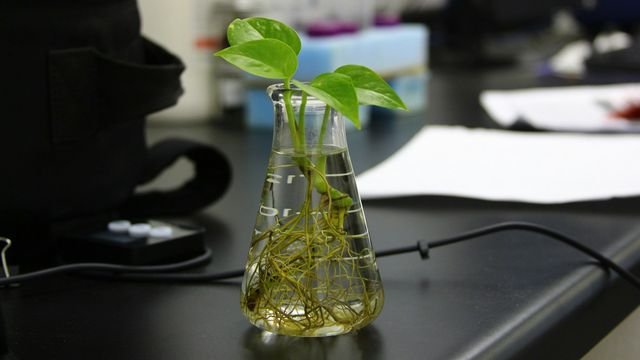
New research has elucidated the structure of a protein that plays a crucial role in plant formation. This discovery offers new hope for both plant development and the treatment of diseases like cancer and infertility in humans.
According to Redaksiya, work conducted by researchers at the University of California has mapped in detail the structure of a protein complex called "auqmin." This protein helps connect the microtubules that form the cell's internal skeleton, aiding in their branching and, consequently, cell division.
Scientists state that a deficiency in the auqmin protein can lead to infertility in humans. Furthermore, it is noted that some auqmin subunits are highly expressed in human cancer cells. Understanding the structure of this protein could lead to new strategies for both novel medical treatments and the cultivation of higher-quality rice and cotton products.
This variable skeleton, present in plant and animal cells, causes cells to expand, elongate, or bend, which ensures the formation of berries, cucumbers, and nerve cells. When a cell divides, the protein skeleton extends its long arms to capture chromosomes containing DNA and then separates them, ensuring that each daughter cell receives a complete set of genes.
The findings of this research demonstrate how plants and animals are similar, which can help answer fundamental questions not only for plants but also for humans. Determining the structure of the auqmin protein has the potential to open new avenues in the treatment of serious diseases such as cancer and infertility.