

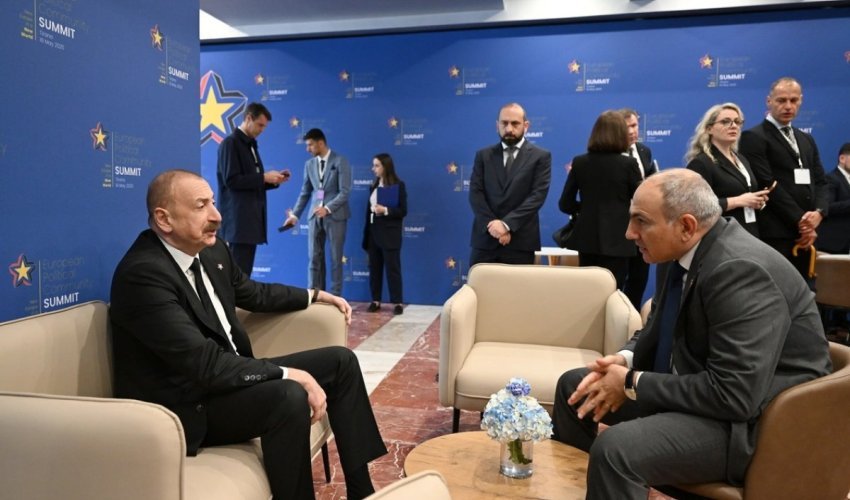
US President Donald Trump is preparing to host the leaders of Armenia and Azerbaijan at the White House on Friday. This is a bold diplomatic step aimed at ending a decades-long conflict.
This White House summit is the culmination of months of secret and intensive negotiations. This process aims to change the geopolitical landscape of the South Caucasus and solidify the US as a key power in a region long influenced by Russia and Iran.
On the eve of the White House summit, Kyiv Post's Washington correspondent spoke with US officials to learn the key details of the peace project.
TRIPP – “Trump Route for International Peace and Prosperity”
A core element of the agreement is a new trade and infrastructure project called the “Trump Route for International Peace and Prosperity” (TRIPP). This innovative framework aims to resolve the most contentious issue between the two countries: transport connectivity.
The TRIPP project will create a transit route passing through the southern part of Armenia, ensuring Azerbaijan's connection with Nakhchivan.
US officials told Kyiv Post that this route will be protected within Armenia's sovereignty, territorial integrity, and jurisdiction.
TRIPP is not a military or defense initiative. Officials emphasized that the US is not providing "hard security guarantees" for this route and is not deploying any military forces. Instead, the US will sign agreements with high-level commercial operators to ensure the route "operates securely for all parties."
Shifting such a politically challenging issue to a commercial plane is considered a characteristic approach of the Trump administration.
Secret Negotiations
This summit significantly differs from previous, largely deadlocked mediation efforts. According to high-ranking US officials, reaching this stage began with the visit of Trump's special envoy, Steve Witkoff, to Baku at the end of February. During that visit, a "significant bond" was established with President Ilham Aliyev.
This step paved the way for five subsequent additional visits to the region. Both the Armenian and Azerbaijani leaderships conveyed to representatives that this moment was a historic opportunity, and that "this leader could get this done."
Officials stated that the current geopolitical situation – particularly Russia's and Iran's focus on global issues – has created a unique opportunity for both countries to "take a bold step" towards peace.
Joint Declaration
According to US officials, on August 8, President Ilham Aliyev and Armenian Prime Minister Nikol Pashinyan will sign several key documents at the White House, with President Trump in attendance:
Joint Declaration – This will affirm a "concrete roadmap" leading to peace and the full normalization of relations. Officials describe this as a process that is "as irreversible as possible."
Initialing of the Peace Agreement – The foreign ministers of Azerbaijan and Armenia will initial the text of the bilateral peace agreement, which has been negotiated for months.
Letter of Withdrawal from the Minsk Group – Both countries will officially withdraw from the OSCE Minsk Group. This platform is now considered "ineffective" and a means that "deepens problems rather than solving them."
New Bilateral Memoranda of Understanding (MOU) – The US will sign separate MOUs with Armenia and Azerbaijan. These documents aim to "restart" relations and open avenues for previously unimaginable opportunities.
Working groups on TRIPP will begin discussions the week after the summit. President Trump has set a specific deadline for the completion of these tasks.
These agreements are long-term and will cover a period of over 50 years. Negotiations regarding the precise duration are ongoing.
Officials state that the US is positioning itself as a reliable partner for both sides.
Issues Still Open
While the summit marks significant progress, two key issues remain unresolved.
These include Armenia's demand for the release of the leaders of the so-called Nagorno-Karabakh republic held in Azerbaijan, and Azerbaijan's demand for amendments to the Armenian constitution.
US officials acknowledge that these issues are "important details." However, the administration plans to first "commit the parties to the path of peace" and then return to these difficult issues in a more conducive environment.
Answering a question about the summit's timing coinciding with a significant date related to Russia-Ukraine, US officials stated, "this date was not chosen by chance; it is precise."
Officials noted that the main goal here was not to align with any other calendar, but to seize a unique diplomatic opportunity.
"We learned from Trump that when a peace opportunity arises, you must seize it. This is not for headlines. This is not to force anyone. This is to end a conflict that has lasted over 35 years, by any means necessary," an official said.
Officials also spoke about the broader regional implications of this agreement, hinting at a potential "Abraham Accords 2.0." This refers to the agreements aimed at normalizing relations in the Middle East in 2020.
They stated that this new peace initiative could serve as a model for a broader "circle of peace." This could include countries with close ties to Israel and those committed to regional stability.
“Historic Friday”
This summit is being called a "historic Friday" as a foreign policy success the administration aims to achieve within its first six months.
One official noted that Azerbaijanis, in particular, are racing against time to make the most of this opportunity.
The White House hopes that by placing the US at the center of this new regional order, it can create a lasting legacy for long-term peace and prosperity in the South Caucasus.
Criticism and Human Rights Concerns
While the diplomatic success is celebrated, human rights defenders and international observers express concerns about the US rapprochement with Azerbaijan.
Relations between Washington and Baku had been strained in recent years due to setbacks in human rights – the silencing of independent media, politically motivated arrests, and a lack of judicial independence.
The US State Department and other international bodies have repeatedly raised these issues.
Critics warn that while this new diplomatic rapprochement may be promising for regional stability, it could undermine previous US efforts to promote democracy and human rights.
Anews