

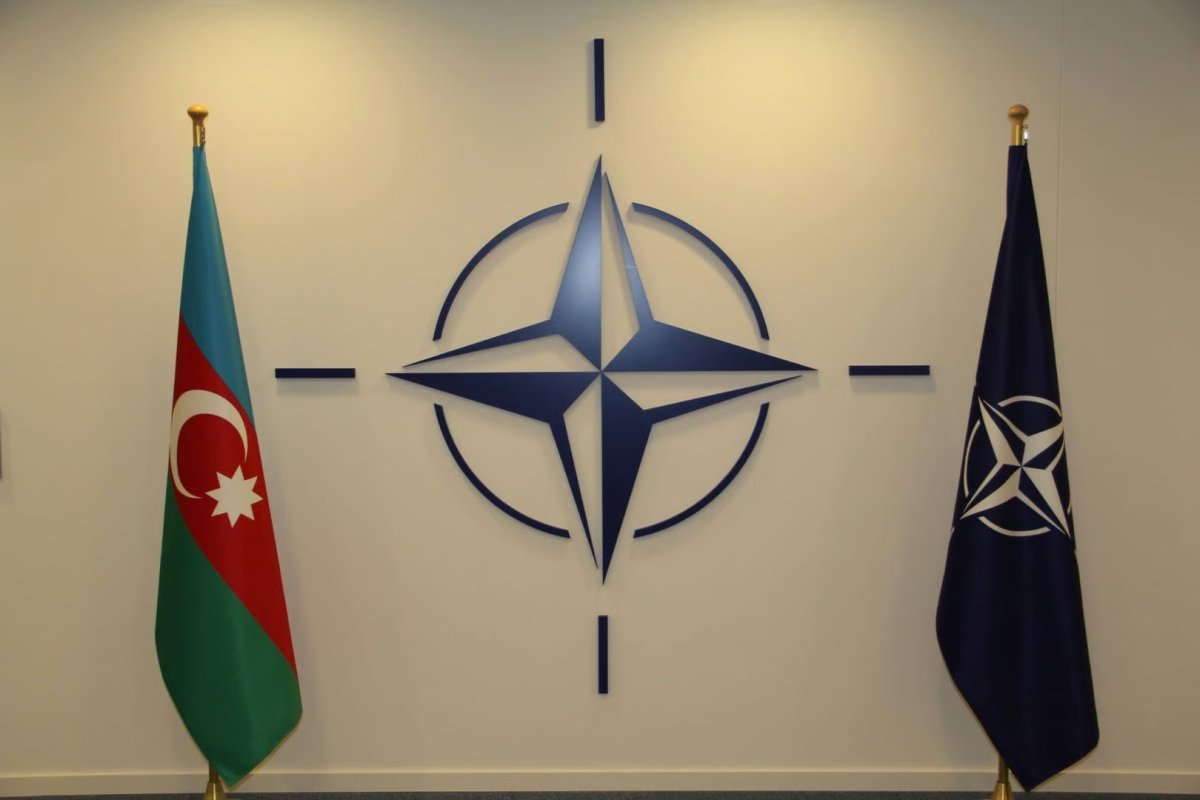
Claims circulating about Azerbaijan preparing for NATO membership and the establishment of Turkish military bases in the country have caused concern in Russia.
Citing a source, the editorial office reports that “Svobodnaya Pressa”, a publication known for its proximity to the Kremlin, claimed that Azerbaijan has turned towards the West after its victory in Karabakh and is considering deeper cooperation with NATO.
According to the publication, “Baku has begun to consider broader cooperation with NATO after the Karabakh victory. News circulating about the establishment of a large NATO military base in Azerbaijan indicates that this country is becoming a tool of pressure against Iran and Russia”.
However, Chairman of the Defense, Security, and Anti-Corruption Committee of the Azerbaijani National Assembly Arzu Naghiyev commented on these claims to the Turkish press, stating that Azerbaijan's NATO membership is theoretically and technically possible: “Criteria such as the form of governance, the rule of law, respect for human rights, multiculturalism, and tolerance are important. NATO membership is not only a military but also a political, social, and diplomatic integration process”.
Naghiyev added that Azerbaijan can fulfill the technical requirements in terms of cooperation with NATO forces and weapons compatibility.
According to the deputy, the strongest objection to Azerbaijan's possible NATO membership would come from Russia and Iran: “Iran and Russia would not want us to join NATO. However, Azerbaijan, under the leadership of President Ilham Aliyev, pursues a balanced foreign policy”.
He recalled that Azerbaijan previously participated in NATO's operations in Afghanistan, stating that while practical steps have not been taken, there are no theoretical obstacles.
Although Azerbaijan currently has no official application for NATO membership, opinions circulating in both Azerbaijani and Russian media indicate that this issue is being kept on the agenda as a long-term strategic plan.
Arzu Naghiyev noted that geopolitical balances in the region affect this process, referring to the examples of Georgia and Ukraine.
Sevinc Karimova