

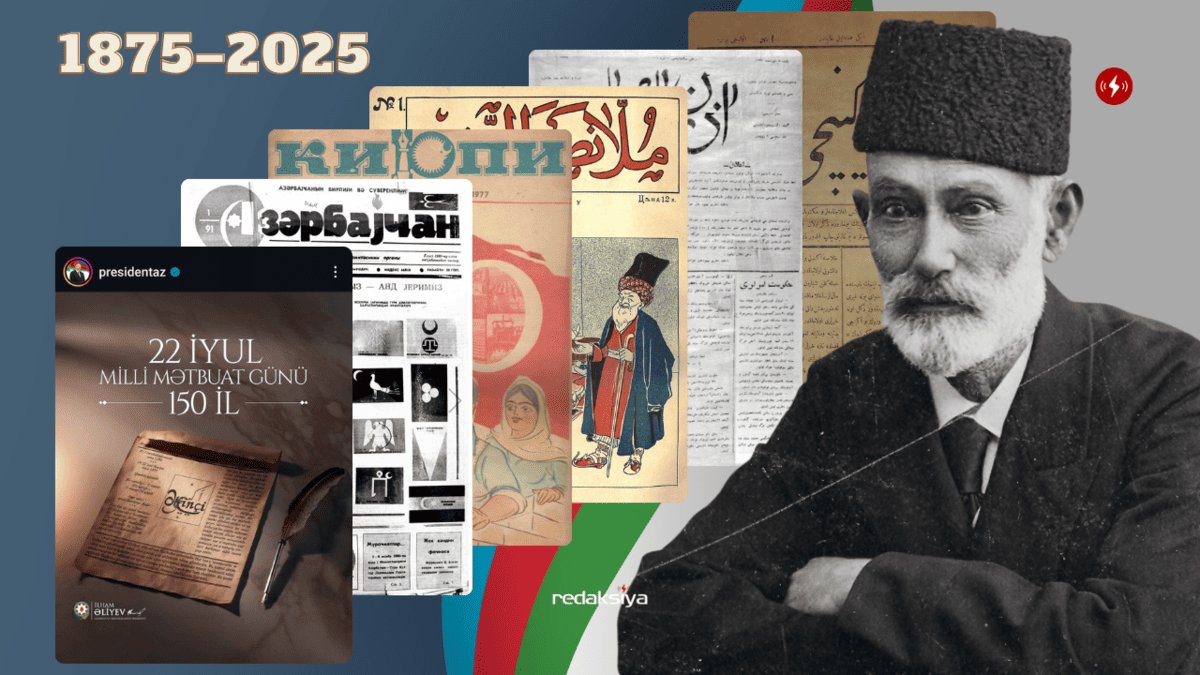
Azerbaijani national press has traversed a 150-year historical path.
Redaksiya reports that this tradition, founded on July 22, 1875, with the newspaper “Əkinçi” published by Hasan bey Zardabi, despite facing censorship, prohibitions, and pressures over time, continues its activity today as an independent source of information. Our press history, from “Əkinçi” to the present day, has been one of the important pillars of public enlightenment, national awakening, and democratization.
The Beginning of the Enlightenment Mission: "Əkinçi" Newspaper (1875–1877)
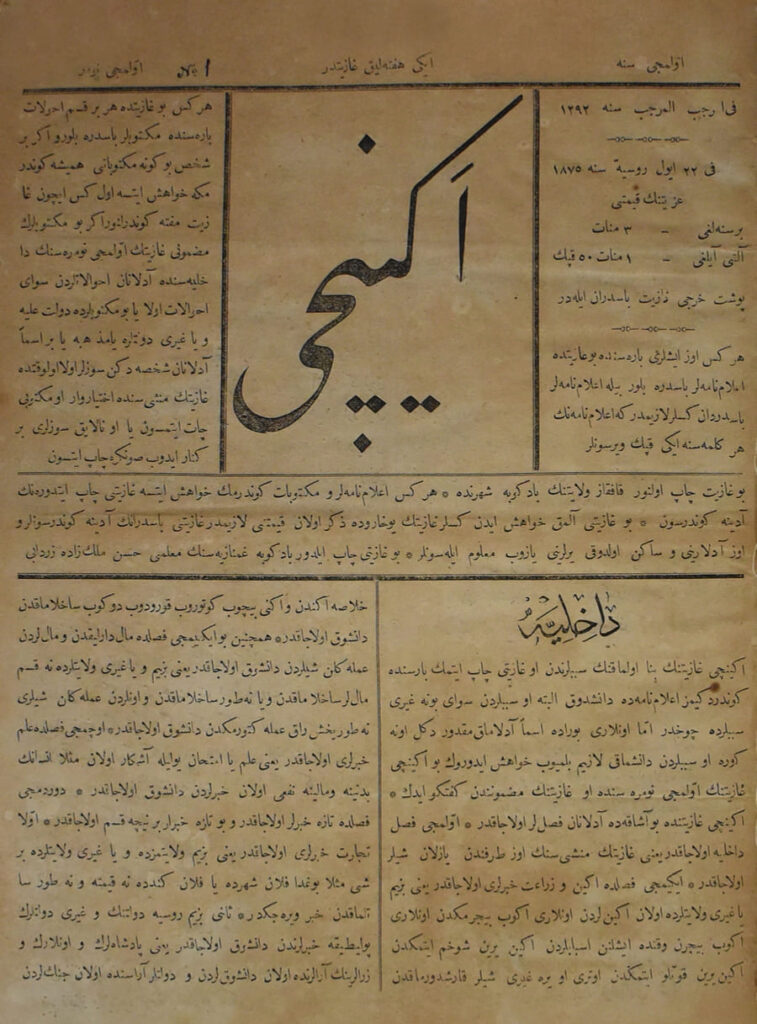
“Əkinçi”, which began publication on July 22, 1875, under the leadership of Hasan bey Zardabi, aimed at enlightening and educating the people. The newspaper featured articles written in simple language, offering advice on peasant life, scientific knowledge, and calls related to social issues. “Əkinçi” was closed after only 56 issues due to censorship by Tsarist Russia. However, it went down in history as the starting point of the national press.
Period of Ideological Awakening: 1905–1918
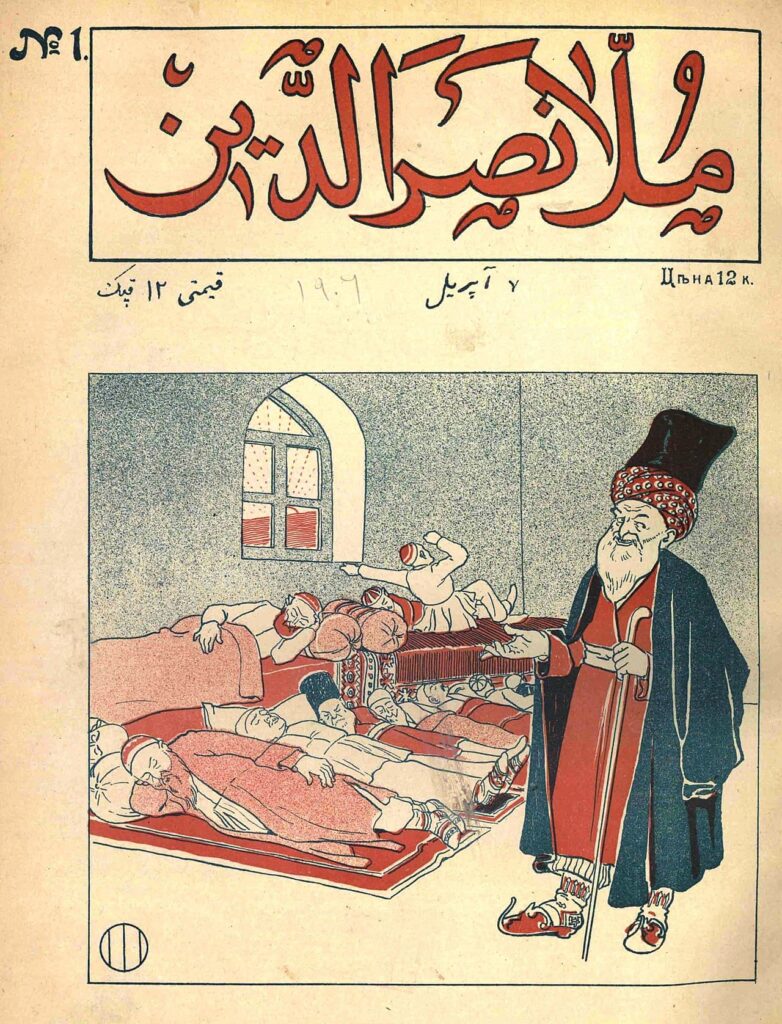
The early 20th century marked a new stage in the development of the Azerbaijani press. The magazine “Füyuzat”, founded by Ali bey Huseynzade, disseminated national ideology and Turkism ideas. The satirical magazine “Molla Nəsrəddin”, under the leadership of Jalil Mammadguluzade, gained great prestige among the people by sharply criticizing social problems. During this period, publications such as “İrşad”, “Tərəqqi”, and “Həyat” played a significant role in strengthening reformist thought.
Nationalization of the Press: Azerbaijan Democratic Republic Period (1918–1920)
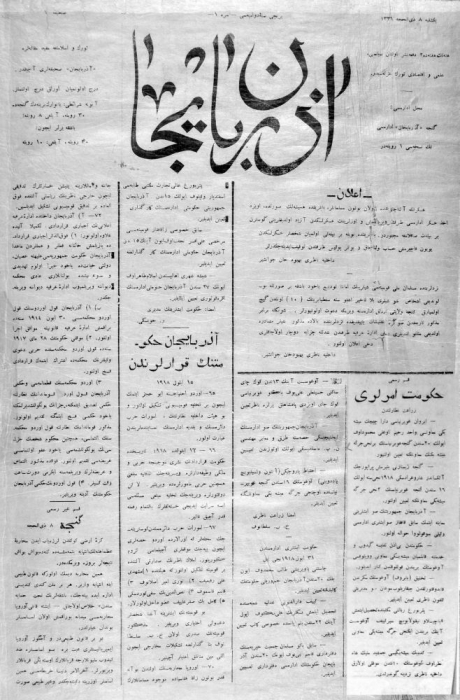
During the Azerbaijan Democratic Republic period, the press began to operate freely and independently. Newspapers such as “Azərbaycan”, “İstiqlal”, “Yeni İqbal” and others played a leading role in promoting statehood. Furthermore, the entry of women into the press is one of the notable aspects of this period. Women's magazines like “İşıq” opened a new page within the national press.
Years of Censorship and Control: Soviet Period (1920–1991)
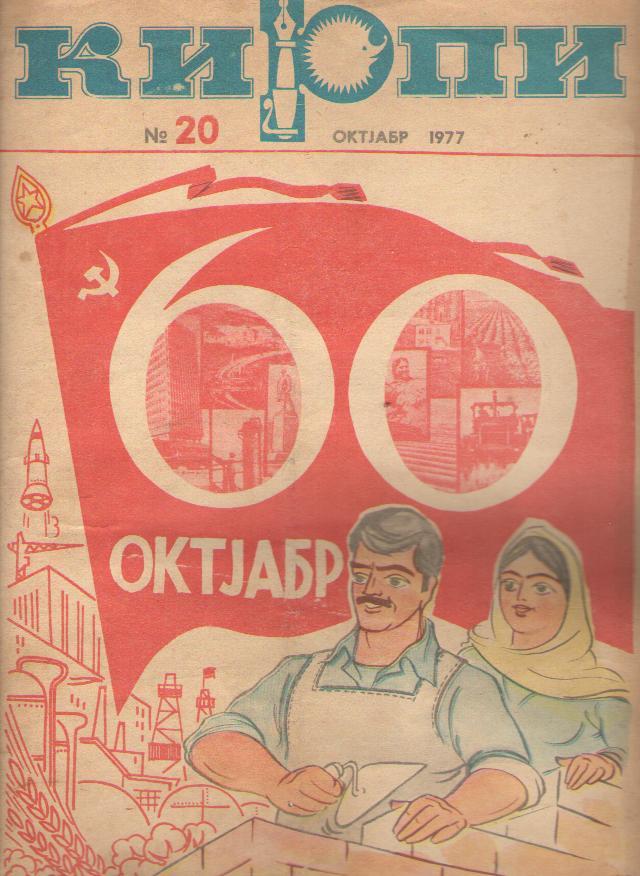
During the Soviet era, the press was completely under state control. Publications such as “Kommunist”, “Bakı işçi”, “Ədəbiyyat və incəsənət”, “Ulduz”, “Azərbaycan”, and “Kirpi” operated in accordance with the ideological demands of the system. In this period, the press primarily disseminated the party line, but in some cases, social criticisms were also included indirectly. The satirical magazine “Kirpi” was one of the unique platforms in this regard.
Independence and a New Era: From 1991 to Today
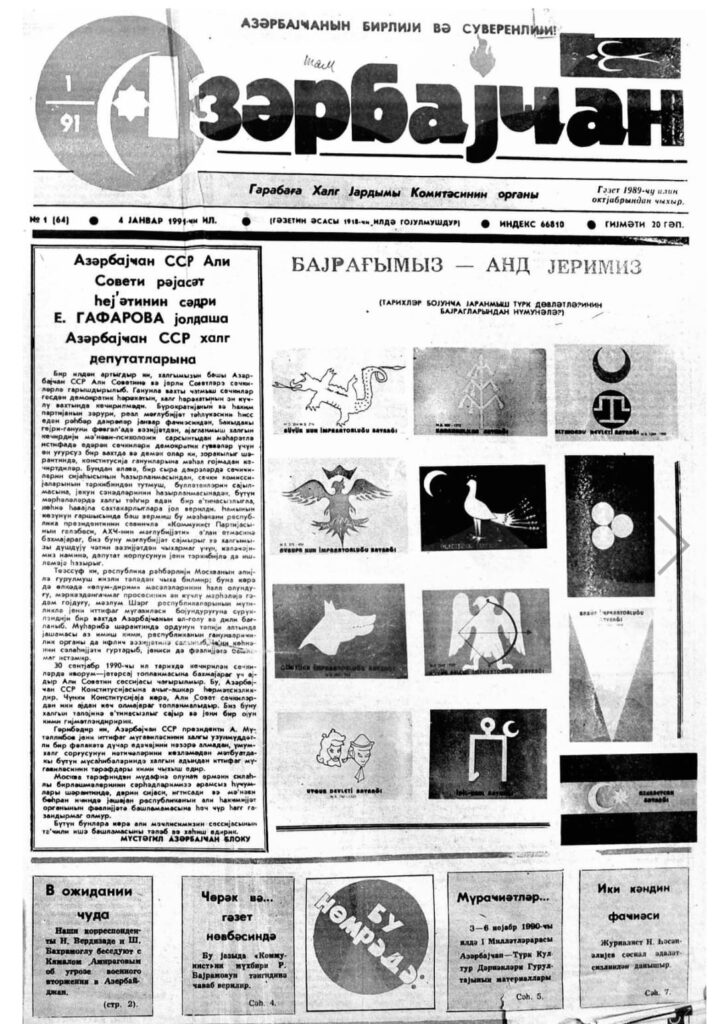
As a result of the visionary and unparalleled policy of National Leader Heydar Aliyev, with the official abolition of censorship in 1998, the press entered a new stage. Newspapers such as “Yeni Müsavat”, “525-ci qəzet”, “Azadlıq”, “Azərbaycan”, and “Zərdab” gained a wide readership. At the same time, the development of the internet and the spread of social media platforms changed the form of the press. Portals like Report, APA, Oxu.az, and Qafqazinfo rapidly developed during this period.
Anniversary Year: 150-Year Historical Milestone in 2025

With the declaration of 2025 as the 150th anniversary of the Azerbaijani national press by the President of the Republic of Azerbaijan, Ilham Aliyev, anniversary events are being systematically implemented. On this occasion, scientific conferences, exhibitions, anniversary publications, and award ceremonies are being held. Original copies of the “Əkinçi” newspaper are being exhibited, and the initiative to create a national press museum is on the agenda.
In Conclusion
The 150-year history of the Azerbaijani national press, born from the idea of enlightenment, passed through periods of censorship, and in the years of independence, became one of the main pillars of information freedom. This history is not only the history of journalism but also a mirror of the development of the people, the state, and the nation. The press is not just a source of news, but also an important carrier of national identity, free thought, and public consciousness. This glorious 150-year journey will remain an important example and valuable legacy for future generations. As a part of the Azerbaijani press, we feel proud of our homeland, our state, and our President.
Farid Alizade