

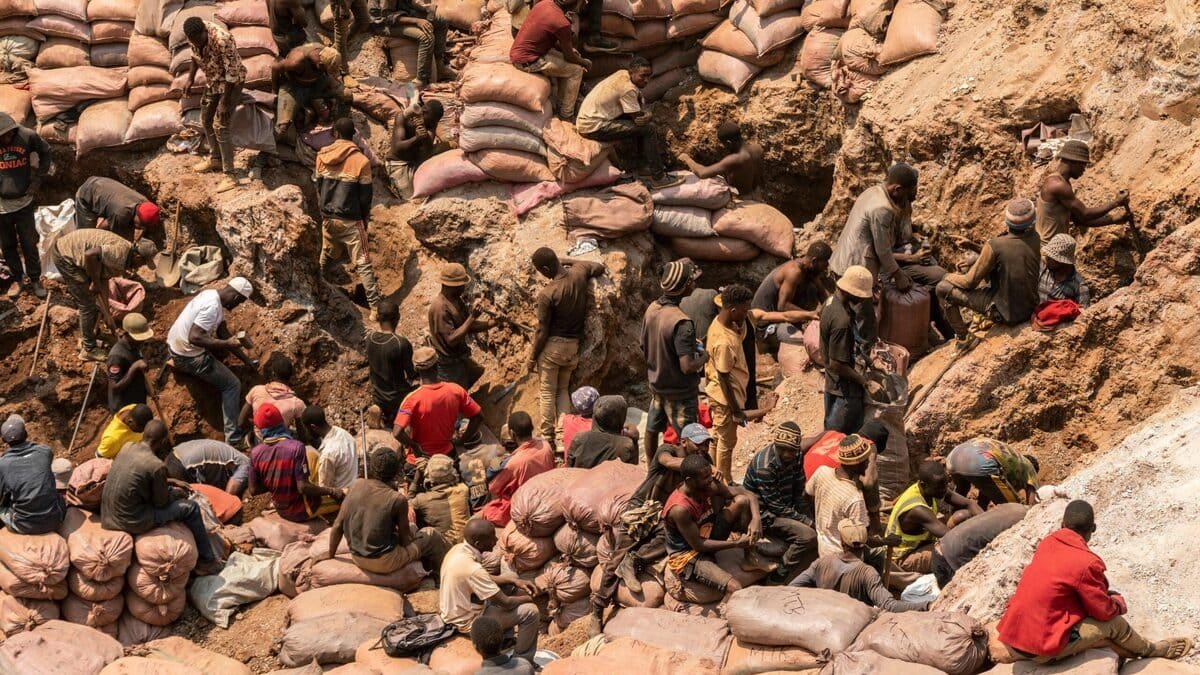
As global demand for minerals vital for electric vehicles, wind energy, and the defense industry increases, the question arises of how the US is seizing the natural resources of African countries in this race.
The editorial office reports that a comprehensive analysis published on this topic in the Canadian-origin “Asia Times” publication explains in detail how the US has turned conflicts in African countries into opportunities, particularly how it has benefited from the tensions between the Democratic Republic of Congo and Rwanda.
Washington's Diplomatic Maneuver and Mineral Control
The analysis notes that the peace agreement signed between the Democratic Republic of Congo (DRC) and Rwanda in June 2025, mediated by the US, actually resulted in Congo's rich underground resources falling under US control. In return for this agreement, the US provided security guarantees to Congo, and both countries were compelled to cooperate closely with the US government and American investors within the framework of an “end-to-end transparent mining supply chains” mechanism.
The agreement also provides for the establishment of a joint oversight committee including representatives from the African Union, Qatar, and the US.
The Conflict Behind the Minerals
The analysis reminds that Congo possesses rich deposits of cobalt, copper, lithium, manganese, and tantalum. These minerals are essential raw materials for artificial intelligence technologies, electric vehicles, wind energy, and military equipment. Rwanda, despite having fewer resources, is one of the world's leading countries, particularly in tantalum production.
These mineral resources are at the heart of conflicts that have been ongoing for nearly 30 years in the Democratic Republic of Congo. Currently, approximately 130 armed groups, including government forces, are fighting for control over tungsten, tantalum, and gold reserves in the eastern part of the country alone.
Congo's Bitter Reality and Kleptocracy
The Congolese state, with a population of 109 million and an area of 2.3 million square kilometers, is unable to ensure security due to logistical, financial, and corruption deficiencies. The analysis notes that widespread kleptocracy in the country – meaning the systematic embezzlement of state funds – prevents these resources from being used for the benefit of the people.
A Wave of Dangerous Agreements in Africa
Asia Times also emphasizes that such agreements frequently occur in other African countries. For example, Angola agreed in 2004 to transfer state revenues to accounts controlled by China in exchange for a $2 billion oil-backed loan from China Eximbank. This significantly weakened the country's economic independence.
Thus, such agreements, which promise short-term stability to African countries, actually limit their sovereignty and right to self-determination. The recent agreement signed by the US with Congo is a continuation of this trend and serves to expand its sphere of influence in the region in exchange for resources.
Sevinc Kərimova