

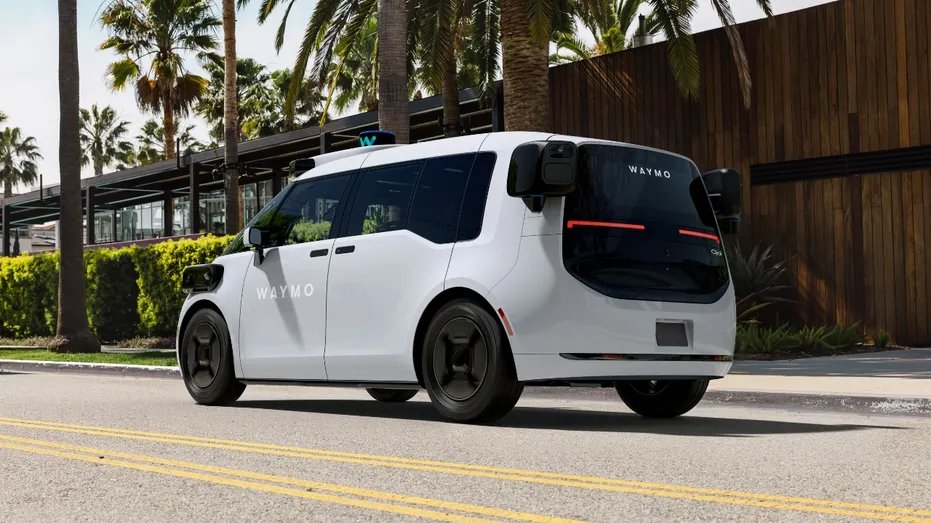
Residents in cities like San Francisco, Phoenix, Los Angeles, Austin, and Atlanta have seen or even ridden in Waymo's driverless tests, operating without a human behind the wheel. Service is being introduced in new markets like Miami, with other cities including Dallas, Houston, San Antonio, and Orlando on Waymo's expansion plans. However, for others, this has not yet been the case.
Redaksiya reports that this situation could begin to change very soon. Waymo has introduced its sixth-generation Waymo Driver hardware, and the headline is simple: it requires less cost and is compatible with more vehicles. This combination could help driverless rides reach more cities faster than you and I might expect.
The robotaxi price war has begun. Everything you need to know:
If you've seen a Waymo on the road, it's usually been a Jaguar I-Pace. A nice car. It wasn't exactly built for mass robotaxi deployment. The sixth-generation system changes that. The first vehicle to carry its new hardware is the Ojai electric minivan, built by Zeekr. Zeekr is owned by Geely. Waymo employees in Los Angeles and San Francisco will soon begin fully autonomous rides, with the public expected to follow. In these new applications, Waymo states the vehicles will operate without safety drivers behind the wheel. Following that, the hardware will also power versions of the Hyundai Ioniq 5.
When Waymo can install the same system in multiple vehicle types and produce it at a lower cost, expansion becomes easier. The company says it plans to move into 20 additional cities this year and is scaling up its Metro Phoenix facility to produce tens of thousands of Driver kits annually.
Waymo says it's moving more processing power to its custom silicon chips, which allows it to use fewer cameras while still improving performance and reducing overall system costs. More vehicles and lower costs mean one thing: a better chance of driverless rides showing up in your city soon.
If you've never been in a robotaxi, this is likely the part you're interested in. The sixth-generation Waymo Driver uses 16 high-resolution 17-megapixel cameras, short-range lidar, radar, and external audio receivers. Waymo says the updated cameras offer improved dynamic range compared to the previous 29-camera setup. This helps the vehicle perform better at night and in bright glare.
Short-range lidar provides centimeter-level accuracy for detecting pedestrians, cyclists, and other road users. Radar adds another layer of awareness. Waymo says its improved imaging radar can track distance, speed, and object size even when it's raining or snowing, giving the system more time to react. External audio receivers can detect sirens or horns via sound.
Unlike Tesla, which focuses on camera-based systems, Waymo relies on multiple overlapping technologies. If one sensor struggles, another can back it up. There's also a cleaning system for the primary sensors. Snow, dirt, or road spray shouldn't easily block the view.
Waymo says this version is designed to operate in more extreme weather conditions, including heavy winter conditions, which could open the door to colder U.S. cities that were previously difficult to support.
Waymo currently has about 1,500 vehicles on the road. That sounds like a lot, but when you compare it to the millions of cars in the U.S., it's not that many. The company wants to increase that number to about 3,500 this year and eventually to tens of thousands. Despite this, service is limited to certain parts of certain cities.
That's why this new hardware is important. When the system requires less cost and is compatible with more vehicles, Waymo can put more cars on the road in more places. This isn't about adding flashy features or cool upgrades. It's about moving from a small area to something that looks normal in everyday life.
As self-driving cars expand, safety questions come with them. Waymo says its system is built with multiple layers of redundancy. The sixth-generation Driver combines cameras, lidar, radar, and audio detection so the vehicle doesn't rely on a single sensor. This layered approach is designed to reduce risk if one system encounters a problem. The company says this latest system is built on about 200 million fully autonomous miles driven in more than 10 major cities, including dense urban centers and highways.
Earlier this year, a Waymo vehicle was involved in a crash that resulted in a child's injury, raising new concerns about how autonomous vehicles react to complex real-world situations. Regulators continue to closely monitor the performance of autonomous vehicles, especially in states like California where reporting requirements are stringent.
Waymo has also published data showing its vehicles have fewer injury-causing crashes per mile than human drivers in similar areas. Proponents argue that reducing human error could improve road safety over time. Critics say that expanding too quickly could introduce new risks.
Both things could be true. The technology is advancing, but public trust will depend on transparency, accountability, and long-term safety performance.
If Waymo expands to your city, you might soon open a ride-sharing app and see a new option. No driver. No conversation. Just a vehicle navigating using software and sensors.
More vehicles could mean shorter wait times in dense areas. Increased competition could also impact prices in the ride-sharing market. At the same time, levels of comfort will vary. Many passengers might hesitate before getting into a car with an empty front seat. This change is about more than just technology. It's changing the way people commute, travel, and move around urban areas.