

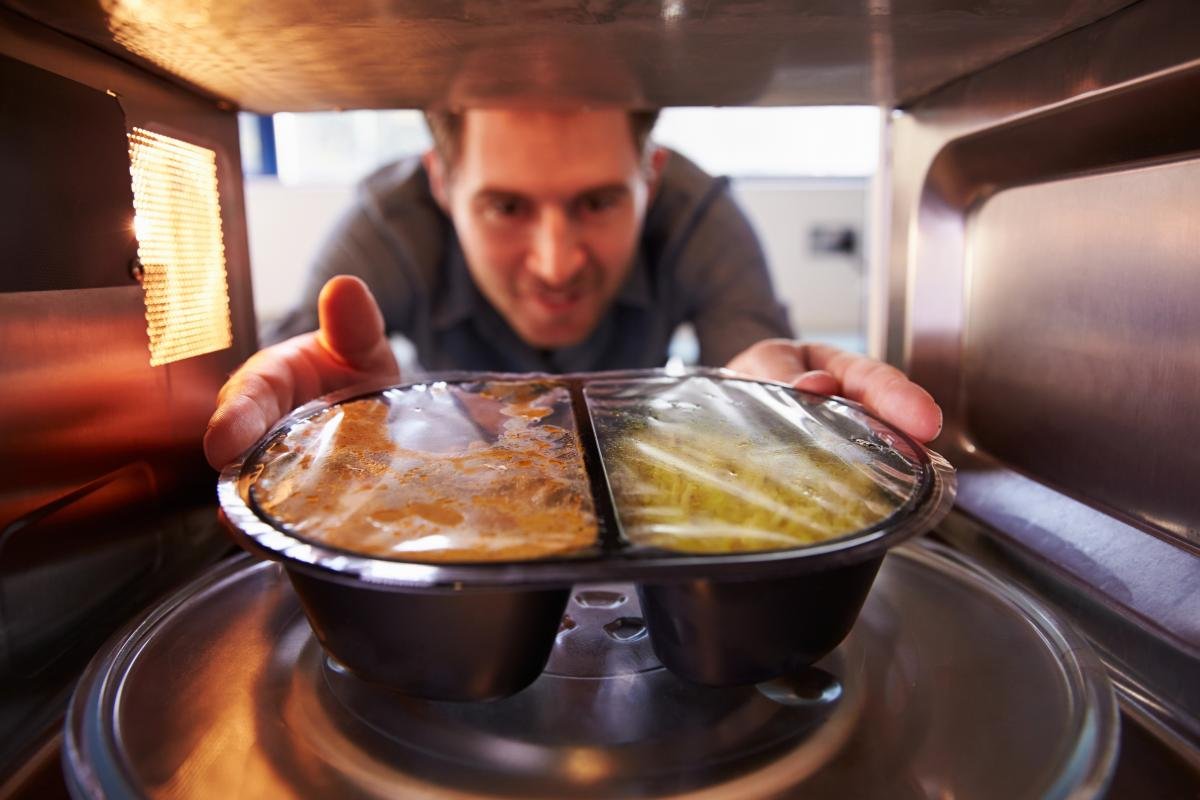
The microwave oven is undoubtedly an extremely important household appliance that simplifies life. However, according to cnet.com, not all materials are equally safe for direct use in a microwave oven. Experts state that many food containers and packaging materials should not be heated in a microwave oven, as they can release harmful chemicals when heated.
Redaksiya reports that polypropylene, often known as "PP-plastic" or "plastic #5," is usually the best choice. It has good heat resistance and contains fewer additives compared to other plastics. However, "fewer" does not mean "none," and some chemicals, such as antioxidants or stabilizers, are used in the production process.
It notes that one should avoid using colored or decorative paper plates, brown paper bags, or takeout containers, as well as any paper plates with water or grease repellent coatings. The reason is that we cannot rule out the possibility of them smoking, melting, or releasing undesirable chemicals when heated.
It states that Bisphenol A is known to affect hormonal balance and is associated with some endocrine disorders. Although polycarbonate physically withstands high temperatures, heating it in a microwave oven accelerates its release, especially if the container is scratched, used repeatedly, or contains fatty or acidic foods.
Johnson-Arbor reports that many plastic food storage containers have "Microwave Safe" labels or symbols. However, in recent years, scientists have discovered that the smallest plastic particles, called microplastics, can be released from food storage containers when heated.
Johnson-Arbor notes that the glazes of some ceramic products may contain heavy metals, including lead. When this glaze is heated, lead can leach out and contaminate the food or liquids in the ceramic dish.
MedStar Health toxicologist Kelly Johnson-Arbor states that both materials act as insulators, meaning they are resistant to heat transfer. Therefore, the containers themselves do not heat up, while electromagnetic waves heat the food inside.
Li Li, an associate professor at the University of Nevada School of Public Health, states that glass and ceramic dishes not only withstand high temperatures but also typically do not contain organic chemical additives.
Johnson-Arbor explains that metal reflects electromagnetic waves, which prevents the food from heating. This can cause heat to transfer to other surfaces of the microwave oven, potentially leading to overheating or fire.
Experts conclude that since the overall impact of microplastics on our health is still being studied, the safest option is to avoid using plastic containers in microwave ovens.