

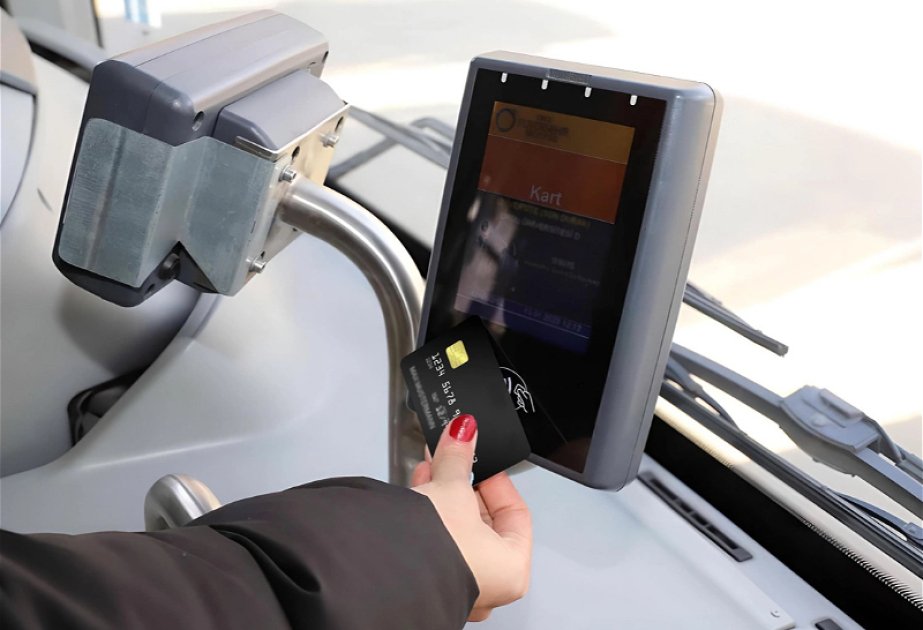
As we reported, a cashless payment mechanism supporting local bank cards with NFC, as well as "Apple Pay" and "Google Pay", has been fully activated on all bus routes belonging to "BakuBus" LLC in Baku. Can this innovation help reduce delays and congestion during payments? Furthermore, what opportunities does it create for the future transition to a unified payment system for other bus carriers and urban transport?
According to transport expert Rauf Agamirzayev, speaking to AZERTAC, passengers now have several payment options: the previous plastic "BakuCard", "QR tickets", and now NFC cards, "Apple Pay", and "Google Pay". These various payment methods reduce dependence on a single method and provide passengers with a choice.
The expert noted that tourists visiting the capital previously had to buy local currency and obtain a "BakuCard", a problem that is now being resolved. Regarding the impact on congestion and traffic jams, the diversity of payment methods allows buses to move more smoothly and quickly, but this is not solely resolved by the payment system itself. Validation on buses – checking if passengers have paid – remains important. Controllers can check passengers at certain stops, and strict fines are imposed on those who do not pay. This practice is widely used worldwide.
The expert also added that this system has been implemented in neighboring Georgia since 2022, and has been operational in many European cities for years.
Important points for the future development of the system:
- Passenger payment verification (validation) at each door
- Provision of controllers
- Daily and monthly ticket packages
- Payment for discounted groups
- Determination of transit times
These steps increase the attractiveness of public transport and directly impact the optimization of citizens' financial expenses.