

Iran's Foreign Minister Abbas Araqchi accused the US Pentagon of concealing the true costs of the Iran war.
The editorial office reports that Araqchi claimed on his X account that the US has spent $100 billion on the war so far, not $25 billion. He stated that this figure is 4 times higher than the amount announced by the Pentagon.
According to Araqchi, “the Pentagon is lying” and Israeli Prime Minister Benjamin Netanyahu's “adventure” has so far cost the US a direct $100 billion. The Iranian minister added that indirect costs for American taxpayers are even higher.
Araqchi claimed that the monthly burden of the war on every American family has reached $500 and is rapidly increasing. He concluded his post with the phrase “Israel First always means America Last.”
The Iranian official's statement came after the Pentagon's first official cost estimate to Congress. Economic Times writes that Jules Hurst, acting comptroller at the Pentagon, told lawmakers that the war with Iran has so far cost approximately $25 billion.
According to Hurst, a large portion of the costs went to ammunition. However, he did not elaborate on whether this calculation included the restoration of damaged base infrastructure in the Middle East, logistics, replenishment of future reserves, and indirect economic impacts.
Araqchi's claim of $100 billion, however, is not an independently verified official figure. It is presented as a political assessment by the Iranian side. Washington has not yet responded separately to this figure.
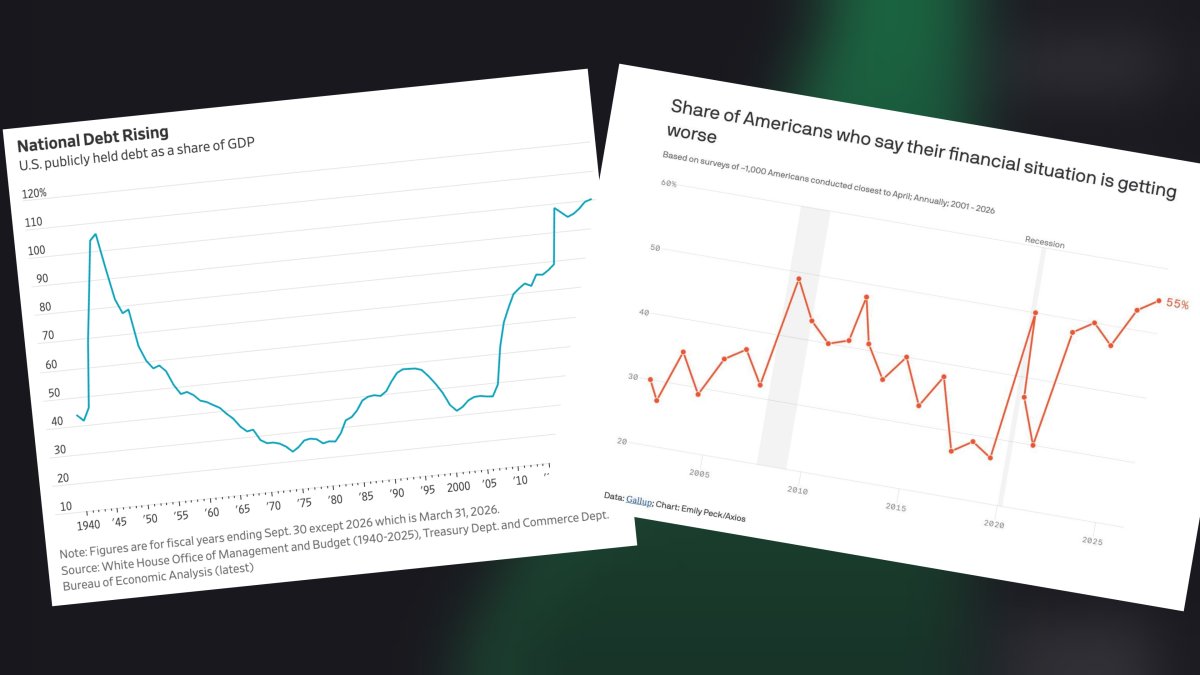
Türkiye Today writes that Araqchi also included graphs in his post showing the deteriorating financial situation in the US. One was based on Gallup data indicating that Americans believe their personal financial situation is worsening, while the other was based on the US national debt-to-GDP ratio approaching post-World War II levels.
This statement is also consistent with Iran's information warfare strategy. Tehran seeks to demonstrate that the US is paying a heavy price in the war with Iran, not only militarily but also financially. The goal is to increase dissatisfaction among the American public regarding war costs.
For the US, the main problem is broader than the figures themselves. If the war prolongs, costs such as replenishing ammunition stockpiles, base defense in the Middle East, shipping security, energy prices, and support for allies will create an additional burden on the federal budget.
Araqchi's statement also targets the debate surrounding Israel's role in US policy. The Iranian official presents the war not as Washington's own interest but as Netanyahu's initiative, claiming it is costly for American taxpayers.
Consequently, there is a significant difference between the Pentagon's official estimate of $25 billion and Iran's political claim of $100 billion. However, both figures indicate one thing: the Iran war is no longer just a military operation but has become a political debate within the US about budget, debt, and the taxpayer's burden.