

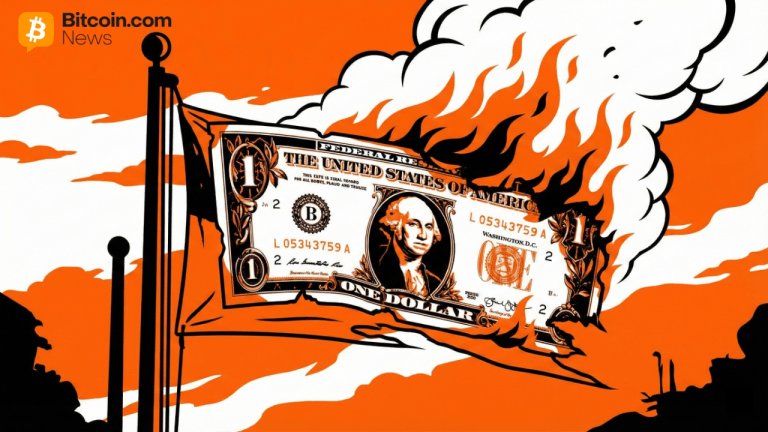
Recent changes in the global economy have led to increased uncertainty in currency markets. In this context, analyses and forecasts regarding the future of the US dollar hold particular significance. Economists are presenting various opinions on the dollar's reliability and offering different scenarios for its future fate.
Redaksiya reports that the latest issue of The Economist journal touched upon important points concerning the future of the US dollar. The publication highlighted factors contributing to the dollar's assessment as a risky asset, including the current administration's unpredictable actions, the potential for rising inflation, and the possibility of Donald Trump nominating Kevin Warsh, who might continue Trump's policies, as the Chair of the Federal Reserve System (Fed). These factors indicate significant changes that could affect the dollar's role in the financial system.
The Economist article notes that the decline in the value of the US dollar is linked to several factors. One of these is the uncertainty in US foreign policy. The unpredictability of government decisions affects investors' assessment of dollar-related risks. Another significant factor is the possibility of rising inflation. Economists predict that an increase in inflation will reduce the dollar's purchasing power and consequently lead to a decrease in its value. Furthermore, if Kevin Warsh is elected Fed Chair and continues Trump's policies, the possibility of lower interest rates could also negatively impact the dollar's value. This move could reduce the dollar's investment attractiveness.
As a result of these factors, the US dollar is now being assessed as a "risky" asset. This could lead to significant changes in the financial system. Economists emphasize the possibility of the dollar's dominant position in the global economy weakening and the strengthening of other currencies, particularly those like the Chinese yuan. These changes will affect international trade and investment flows, potentially leading to structural shifts in the global economy. Consequently, investors will seek to diversify their portfolios, reduce risks, and shift towards more reliable assets. This process could further weaken the dollar's role in the global currency market.