

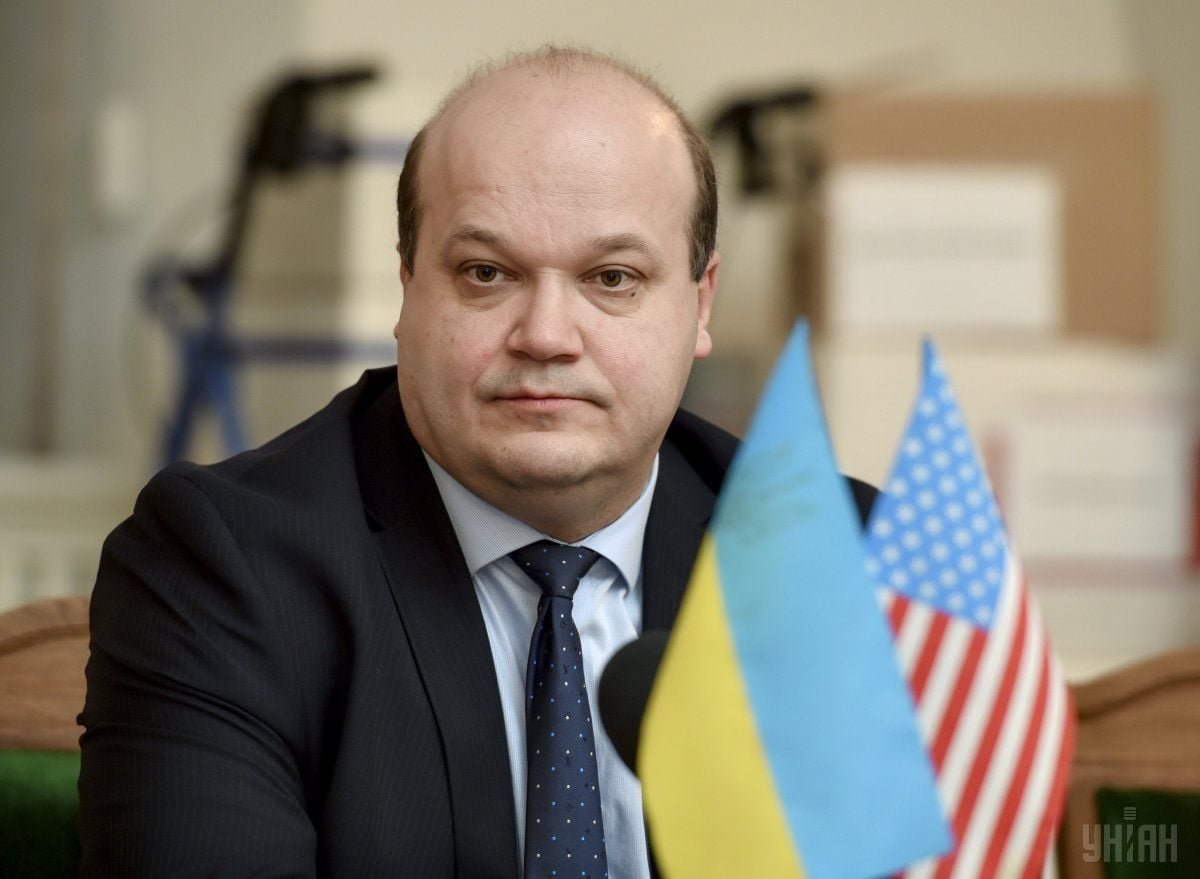
According to Valeriy Chaly, Ukraine's former ambassador to the US, a new US geopolitical strategy is being formed, which could lead to significant changes in the country's foreign policy. These changes particularly encompass issues such as China's growing influence and the withdrawal from the Middle East. This process can be assessed as the US re-evaluating its role on the world stage and adapting to new challenges.
Redaksiya, citing Unian, reports that according to Valeriy Chaly, Ukraine's former ambassador to the US, China is one of the parties that signed the Budapest Memorandum. By signing this document, Ukraine agreed to transfer its nuclear weapons to Russia in exchange for security guarantees. However, as Chaly noted, China has an official position of interest regarding the Budapest Memorandum. Beijing interprets this agreement as China will not use nuclear weapons against Ukraine, and these are the country's "guarantees."
Furthermore, according to Chaly, the Kremlin's main goal in potential peace talks with Ukraine will be to gain control over all of Donbas. The former ambassador of Ukraine to the US added that this would be a reward that could be shown to the Russian people. The former ambassador considers the Kremlin's statements regarding Ukraine's internal political structure, especially on the language issue, to be dangerous. Every new US president re-examines the geopolitical strategy, and this is normal, as stated by Valeriy Chaly, Chairman of the Board of the Ukraine Crisis Media Center and former Ambassador of Ukraine to the US from 2015-2019, to "Hromadske Radio." Chaly noted that "Such a thing has not happened for a long time. With the arrival of President Trump, the situation is clearly changing, but this does not mean that the strategy will remain the same in the future: the next president may approve a new strategy."
According to the diplomat, additionally, a concentration of forces is observed in the American continent. Chaly noted that it is already possible to see how many weapons, ships, and fighter jets the US has gathered around Venezuela. The former ambassador of Ukraine to the US added that a completely new aspect of the US strategy is related to the possible internal use of armed forces within the country's territory. The diplomat explained that the conversation is about the Pacific Ocean, not the Atlantic Ocean as we often think: China, Australia, New Zealand, South Korea, and the DPRK, Japan. He also explained that the second aspect of this US strategy is, "although it sounds quite contradictory," a gradual withdrawal from the Middle East.
"This is the first thing that defines the strategy – competition with China and preparation for a possible clash," added the former ambassador of Ukraine to the US. He noted that "This time, such an approach has been set: the main region for American military operations has been defined as the Indo-Pacific region." Thus, the new US geopolitical strategy is aimed at re-evaluating its role on the world stage, focusing on competition with China, withdrawal from the Middle East, and internal security issues.