

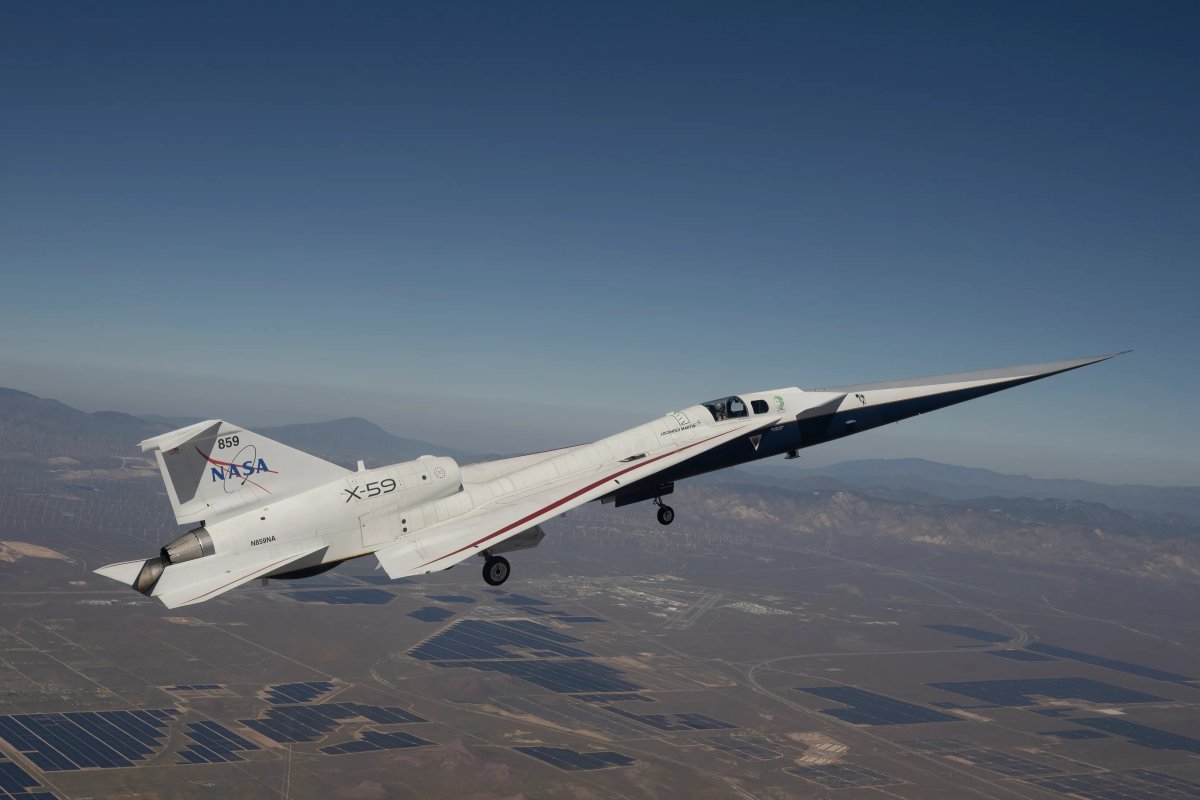
NASA's quiet supersonic X-59 aircraft completed its second flight on March 20, 2026. This flight took place near NASA's Armstrong Flight Research Center in Edwards, California. This second flight of the aircraft marked the beginning of a series of dozens of test flights to be conducted in 2026.
Although the flight duration was cut short due to a technical issue, the team managed to collect data for future tests, according to Redaksiya. "Despite an early landing, this is a good day for the team," said Cathy Bahm, project manager for NASA's Quiet Supersonic Flight Demonstration project at Armstrong Flight Research Center. "We collected more data, and the pilot landed safely. We look forward to returning to flight as soon as possible."
The aircraft took off from Edwards Air Force Base, near NASA Armstrong, at 10:54 AM local time. A few minutes into the flight, pilot Jim "Clue" Less saw a technical system alert in the aircraft's cockpit. In accordance with flight procedures, the aircraft landed at 11:03 AM after a call to return to base. "As we said, it was the same as the simulator, and we like to hear that," Less noted. "This is just the beginning of a long flight campaign."
The X-59 aircraft is designed to fly faster than the speed of sound, or supersonic speed, but instead of producing a loud sonic boom, it emits only a quiet "thump." The X-59 is a central part of NASA's Quesst mission, which aims to make commercial supersonic flight over land a reality. The aircraft plans to accelerate its tests in 2026, gradually flying faster and higher in the process, demonstrating its performance and airworthiness towards supersonic speeds.