

Students studying at Western Caspian University under state order (tuition-free) are being asked for additional payments. Western Caspian University, in turn, states that such a problem arose due to the return of allocated funds to the state budget related to the end of 2025.
How legally justified is the return or cancellation of funds for services already rendered to students studying under state order? How does the discrepancy between the financial year and the academic year affect the emergence of such problems, and what mechanisms should be applied to eliminate this gap?
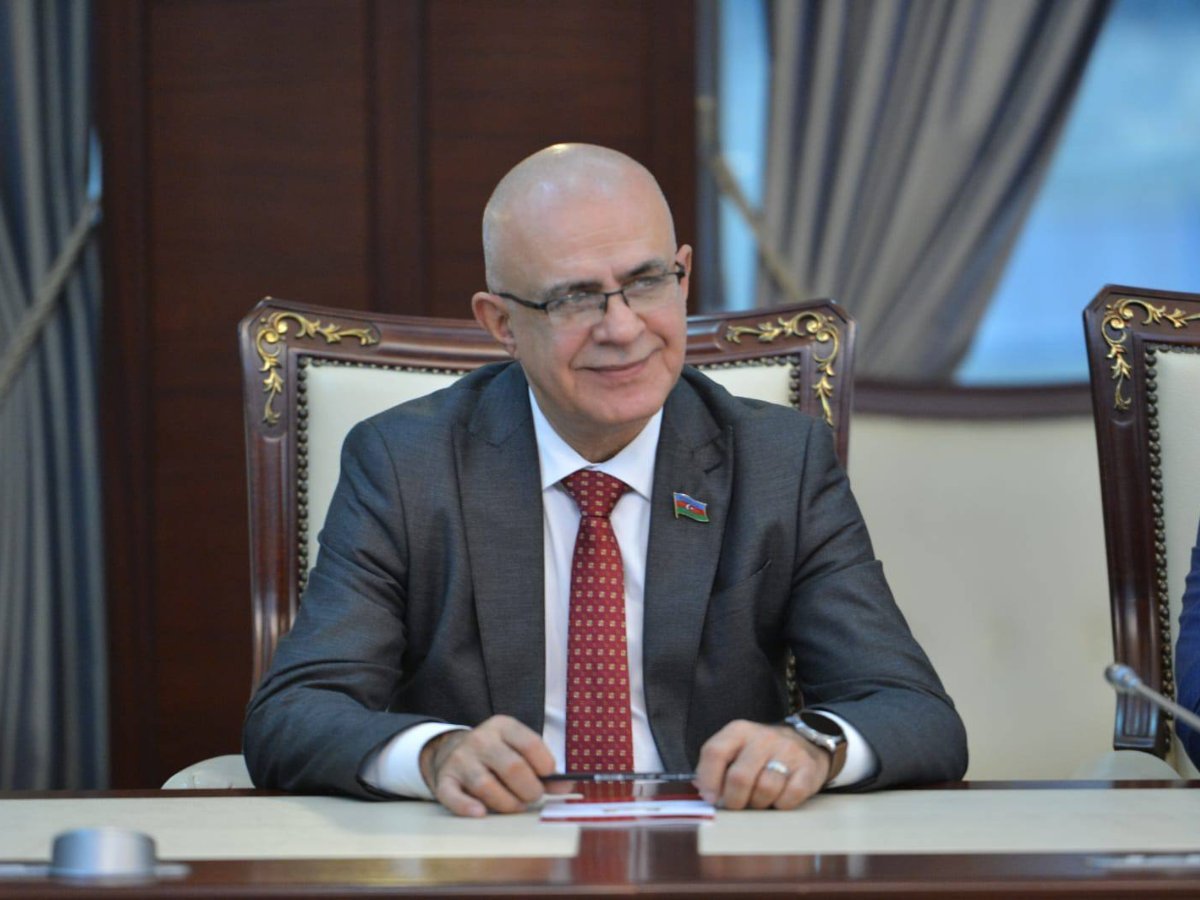
In a statement to Trend on the matter, Elchin Mirzabayli, a member of the Science and Education Committee of the Milli Majlis (National Assembly) and an MP, stated that the situation regarding the demand for payments from students studying under state order at Western Caspian University raises serious questions from both a legal and institutional perspective, and it is necessary to evaluate this issue based on several key factors.
According to him, financing based on state order is carried out based on the agreement concluded between the university and the state, and the normative legal acts in force:
"The university accepts the student based on this order and provides educational services to them. In this case, the subsequent return of funds for services already rendered contradicts the principle of legal stability. One of the fundamental principles accepted in law is the inadmissibility of retroactivity, meaning that legal relations that have occurred cannot be subsequently altered to the detriment of one of the parties. At the same time, as is known, both the university and the student form legitimate expectations based on the state's financial obligations at the beginning of the academic year. The unilateral violation of these expectations cannot be legally justified. Therefore, the cancellation of funds for educational services already provided can be considered a legally unfounded step."
It is important for state order contracts to have a superior legal framework than the budget year
Elchin Mirzabayli also drew attention to the discrepancy between the financial year and the academic year. He noted that while in practice the financial year covers the period from January to December, the academic year starts in September and continues until the summer months of the following year:
"This structural difference creates gaps in the planning of funds allocated under state order. As a result, at the end of the year, allocated funds are returned as 'unused,' even though these funds should actually be directed towards the ongoing educational process. This inconsistency creates a contradiction between financial obligations and the provision of actual educational services. To eliminate the problem, it is important to implement a multi-year funding model, create mechanisms that allow unused funds to be carried over to the next year, and ensure that state order contracts have a superior legal framework than the budget year. At the same time, the formation of a separate and more flexible budget mechanism for education expenses can prevent these types of problems.
The third and most sensitive issue is the extent to which demanding additional payments from students in the current circumstances is legal and fair. A student admitted to a higher education institution under state order effectively acquires the right to tuition-free education, and this right is confirmed by the decision of the relevant state body to admit them to the university. In this relationship, the university has a financial connection with the state, not with the student. From this perspective, a problem arising in the state's financial obligations cannot be shifted onto the student. Subsequently demanding payment from the student is neither legally justified nor does it violate the principle of social justice. This is because the student bases their choices and future plans precisely on state guarantees. A subsequent change to this guarantee can also lead to a loss of public trust."
It is possible to eliminate the gap by allocating additional financial resources by the state or by making technical budget corrections
The MP emphasized that the way out of the current situation lies primarily in the proper regulation of financial relations between the state and the university:
"In the short term, it is possible to eliminate the existing gap by allocating additional financial resources by the state or by making technical budget corrections. At the same time, a restructuring of financial obligations between the university and state institutions can be carried out. During this period, demands for payments from students should be suspended. In the long term, it is necessary to carry out reforms in the education financing system, eliminate the discrepancy between the financial year and the academic year, and ensure that the state order mechanism is accompanied by more sustainable legal foundations.
In conclusion, it can be noted that this problem is not merely a technical difficulty that arose within a single university, but rather, in a broader sense, a result of coordination problems between state financial management and the education system. In such cases, the main principle should be that a student studying under state order should under no circumstances bear the financial burden of management or budget planning errors. The protection of this principle is an important component of both the concept of a legal state and social justice."
A student should not bear responsibility for the university's financial errors – MP
Aytac Dəniz · Cəmiyyət ·