

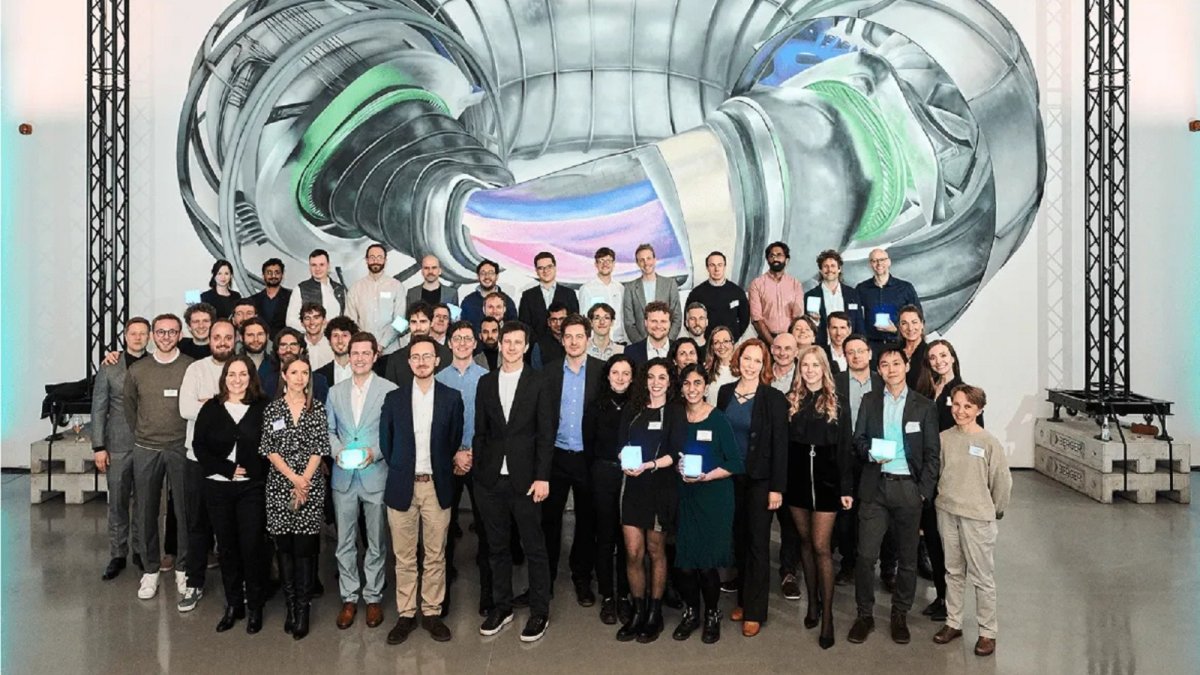
German nuclear fusion initiative Proxima Fusion has secured €400 million in support from the state of Bavaria to build Europe's first commercial station.
Redaksiya reports that German company Proxima Fusion has received €400 million in support from the state of Bavaria to build a €2 billion test facility. This move stands out as one of the most ambitious investments in Europe's yet-to-be-proven nuclear technology. The Munich-based company signed a memorandum of understanding to develop the test station north of the city. If the tests are successful, the construction of Europe's first commercial fusion station is envisioned. Proxima and the Bavarian leadership have agreed to cover 20% of the €2 billion cost. However, this funding is contingent on Berlin's federal government securing the remaining €1.2 billion.
Germany's largest power producer, RWE, is also supporting the project. The company has agreed to allocate the site of the old nuclear power plant in Gundremmingen, decommissioned in 2021, for a potential commercial station. Proxima CEO Francesco Sciortino told the Financial Times that they aim to complete the commercial station within the 2030s. The goal is to achieve net energy gain. Unlike nuclear fission, which releases energy by splitting atoms, fusion aims to replicate the reaction that powers the sun. It generates energy by forcing atomic nuclei to combine within an extremely hot plasma. The test station is planned to demonstrate the crucial step of net energy gain by the early 2030s. At this stage, the aim is to produce more fusion energy than is used to contain the plasma.
This announcement comes against a backdrop of growing concerns that Europe is lagging in the global fusion race. According to PitchBook, US fusion initiatives attracted $1.6 billion in private capital last year. China is also believed to have significantly increased its public and private investments. BNEF analyst Chris Gadomski stated that Europe's challenges are partly due to the multinational research project ITER in France. The project has experienced engineering delays in recent years and has consumed a significant portion of the EU's fusion budget. Despite all these challenges, Germany is trying to take a more ambitious role. After its exit from nuclear energy, it is positioning fusion as part of its long-term energy security strategy. Chancellor Friedrich Merz, who took office last May, stated before the election that he wanted Germany to build the world's first commercial fusion reactor. The Berlin leadership justified its support for the sector with a federal "Fusion Action Plan." The government has committed over €2 billion in investment by 2029. This amount also includes a budget of €755 million aimed at strengthening the development of the German fusion industry and supporting the construction of a pilot station. Bavaria, along with the state of Hesse, has emerged as one of the most enthusiastic supporters of fusion technology. However, an official from a company that is a competitor to Proxima described securing €1.2 billion from the federal fund as a dream. The official stated that the €400 million from Bavaria is a good figure, but it will be useless without government money.
Many fusion developers aim to use devices called tokamaks to confine plasma. Proxima, however, plans to use a design called a stellarator, which has been researched in Germany and by the institute since the 1960s. While tokamaks are mechanically simpler, stellarators potentially offer better performance in keeping plasma stable. This situation is known as a key challenge for fusion technology. As the test facility's reliance on an additional €1.2 billion from federal funds remains uncertain, it is unclear whether Proxima will stick to the plan. Even if engineering challenges are overcome and the technology is perfected, more capital will be needed for a commercially viable station. Skeptics believe this stage is still decades away. Sciortino stated that if the funding is not secured, the plan will likely be abandoned. However, he added that he is not particularly concerned about this, given the supportive political environment. Sciortino expects the German government's selection process for investment projects to be completed by the end of this year.