

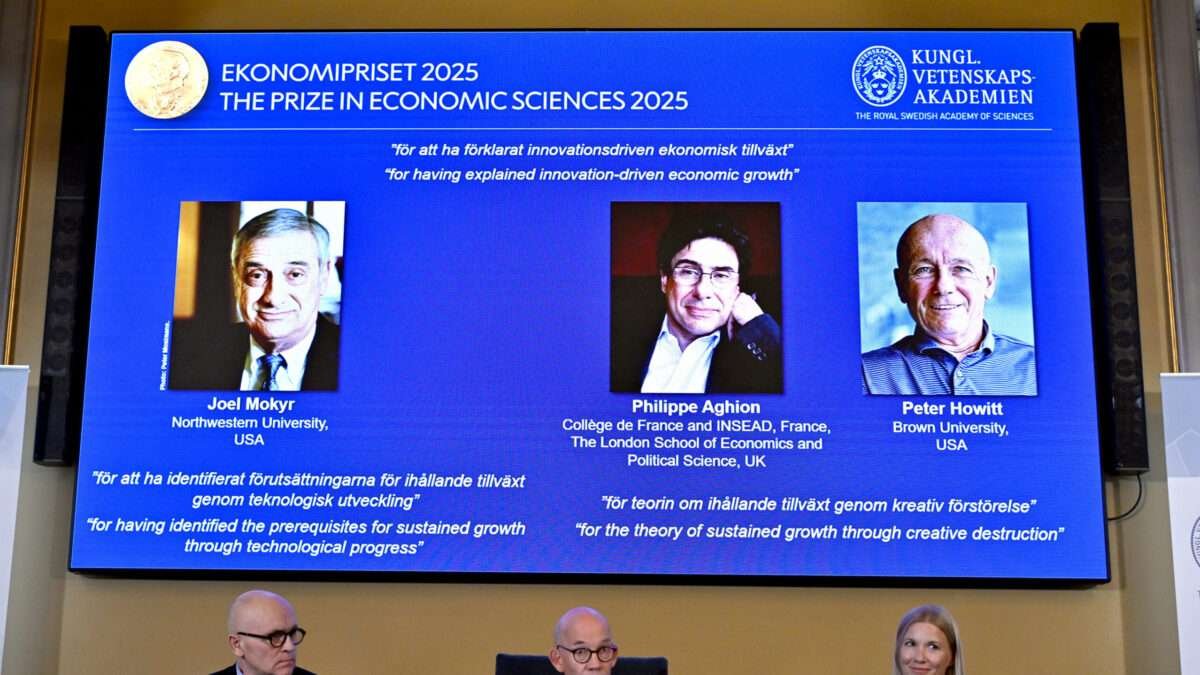
The Royal Swedish Academy of Sciences on Monday awarded the Nobel Memorial Prize in Economic Sciences to Joel Mokyr, a professor at Northwestern University and author for "Reason" magazine, "for identifying the prerequisites for sustainable development through technological progress." He shares the award with Philippe Aghion and Peter Howitt, who jointly won the other half of the prize "for their theory of sustainable development through creative destruction." The Academy stated that this trio together explained how innovation has driven economic growth for the vast majority of human history, where economic stagnation was the rule, not the exception. As a result of this rise, countless people have been lifted out of poverty.
Redaksiya reports that Mokyr's own work focuses on the intersection of economics, culture, and history, emphasizing the importance of understanding why various technologies successfully build upon one another, as well as the prosperity that stems from openness to new ideas. Reviewing Mokyr's 2016 book, "A Culture of Growth: The Origins of the Modern Economy," classical liberal economist Deirdre McCloskey wrote that Mokyr is "a Nobel-worthy economist, right down to his shoelaces." In Monday's announcement of the pro-growth winners, the prize committee warned against anti-growth policies such as tariffs and restricted immigration. Mokyr, as he noted several times in "Reason" magazine in the 1990s, is well aware of the multifaceted path to economic stagnation, focusing his attention on certain topics in a way that would later appear prescient and help clarify the problems society faces today.
"The most convincing argument against conservatism is not the standard argument taught to undergraduate students in introductory international economics courses, which is: Tariffs distort resource allocation and impose a 'deadweight loss'," Mokyr wrote in the June 1996 issue of "Reason" magazine. "The standard argument is undoubtedly true, but for some reason, it has failed to convince many people since Adam Smith and David Ricardo first articulated it." Instead, a better argument is that "protectionism and isolationism stifle innovation, depriving our children of the comfort and security brought by progress and economic growth," he stated. "Free trade and international competition not only lead to a better allocation of resources but also ensure that countries do not fall into technological lethargy, which is the main enemy of economic growth."