

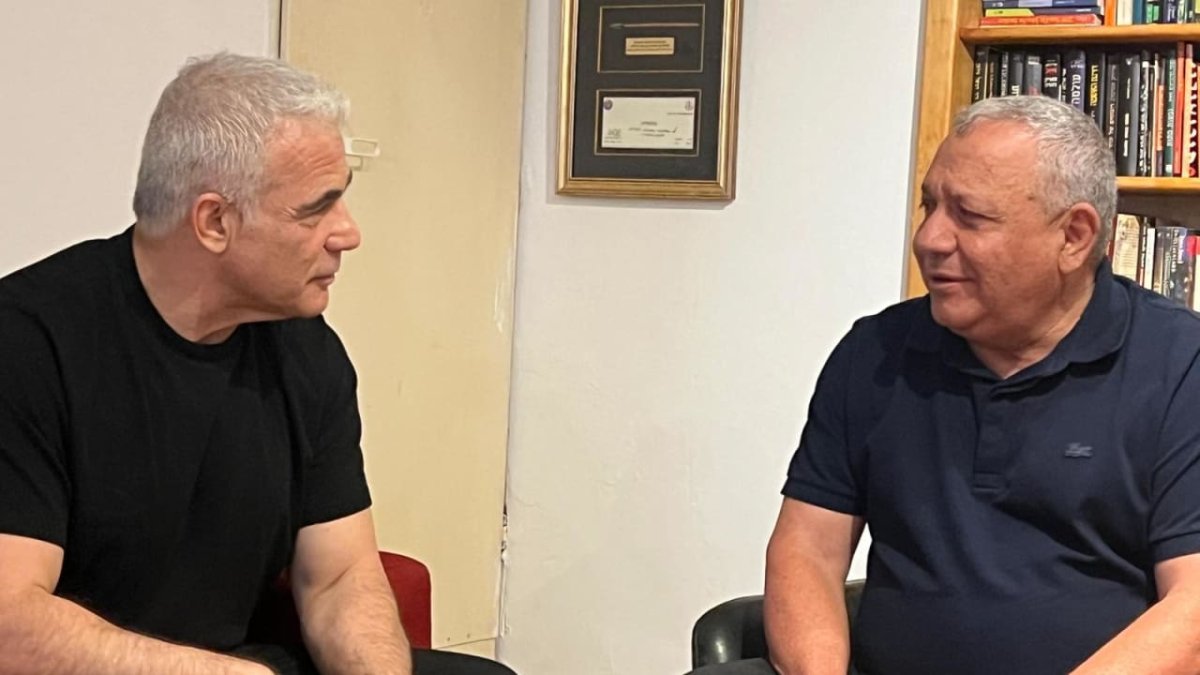
Recent events in Israel's political arena have led to important discussions shaping the country's future political landscape. Meetings held between opposition leaders and political figures have resulted in the expression of various opinions regarding the possibility of early elections and the country's political direction. These meetings could signal the beginning of a new phase in Israel's political life.
Redaksiya reports that, according to news published by JPost on the matter, plans for early elections were discussed during a meeting between opposition leader Yair Lapid and former MP Gadi Eisenkot. These plans envision elections being held sooner than the date planned for October 2026, during the Knesset's ongoing winter session. The discussions at the meeting can be seen as an indicator of the changes occurring in the political arena and the opposition's desire to come to power.
This meeting is a clear example of the tension in Israeli politics and the strengthening of the opposition's position. Holding early elections is one of the key issues on the country's political agenda. Such steps indicate strong competition among political forces and a struggle for power. Holding elections ahead of schedule could force political parties to change their strategies and seek new ways to gain voter support.
Other issues discussed at the meeting concerned the country's domestic and foreign policy. Opposition leaders are trying to attract voters' attention by putting forward alternative proposals to the government's policies. Such meetings allow political parties to establish closer ties with voters and better understand their problems. At the same time, this also creates a basis for expanding the exchange of ideas and discussions in the political arena.
Holding early elections could lead to significant changes in Israel's political life. This could alter the balance of power among political parties, lead to the formation of new coalitions, and change the country's political course. The results of the elections could have long-term effects on Israel's domestic and foreign policy. For this reason, such meetings and discussions are of great importance for the country's future.
The meeting between Yair Lapid and Gadi Eisenkot is an indicator of the increasing tension and activity of the opposition in Israeli politics. The discussion of early election plans at this meeting is a clear example of the changes occurring in the political arena and the opposition's desire to come to power. Such meetings could signal the beginning of a new phase in Israel's political life.