

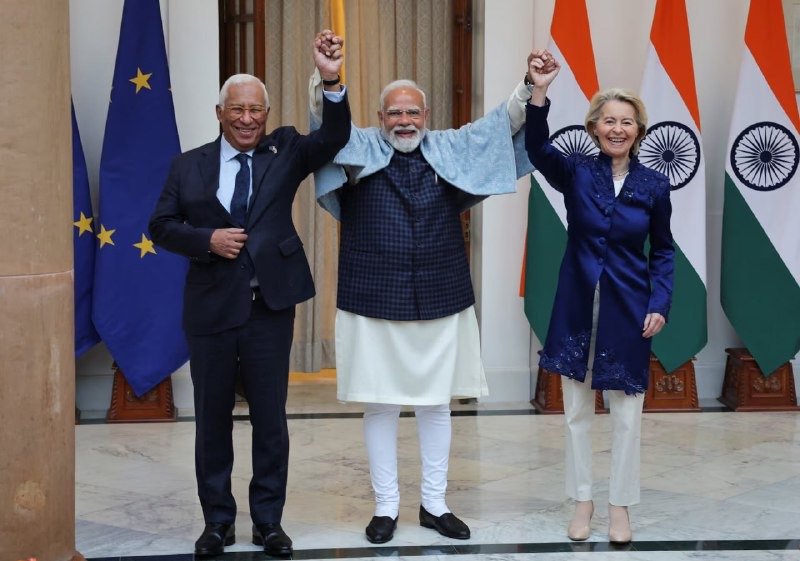
A large-scale free trade agreement has been signed between the European Union and India. The agreement envisages deepening economic relations between the parties, increasing trade turnover, and significantly expanding mutual market access.
The editorial reports that within the framework of the agreement, customs duties will be abolished on 96% of products of European origin. This category includes cars and wine. At the same time, 99.5% of Indian products, including clothing and jewelry, will enter the European market duty-free. It is expected that this step will double the European Union's exports to India by 2032.
The agreement is of particular importance against the backdrop of Europe's efforts to reduce its dependence on the US and Chinese economies. India, through this agreement, aims to gain access to new markets and create a more attractive environment for foreign investors. The agreement provides for special concessions for cars, wine, and industrial products.
In addition, India's access to the European services market will be expanded. The promotion of student mobility is also planned within the framework of the agreement, which is considered an important step in terms of education, skilled labor exchange, and long-term economic cooperation.