

During the expedition, we wanted to study the reserves. Sturgeon and Caspian salmon were not encountered during the expedition in the Caspian Sea. This does not mean that these fish are not present in the Caspian. They simply did not appear during the expedition period. As we know, five countries have a moratorium agreement regarding sturgeon. Therefore, fishing for the aforementioned fish is prohibited.
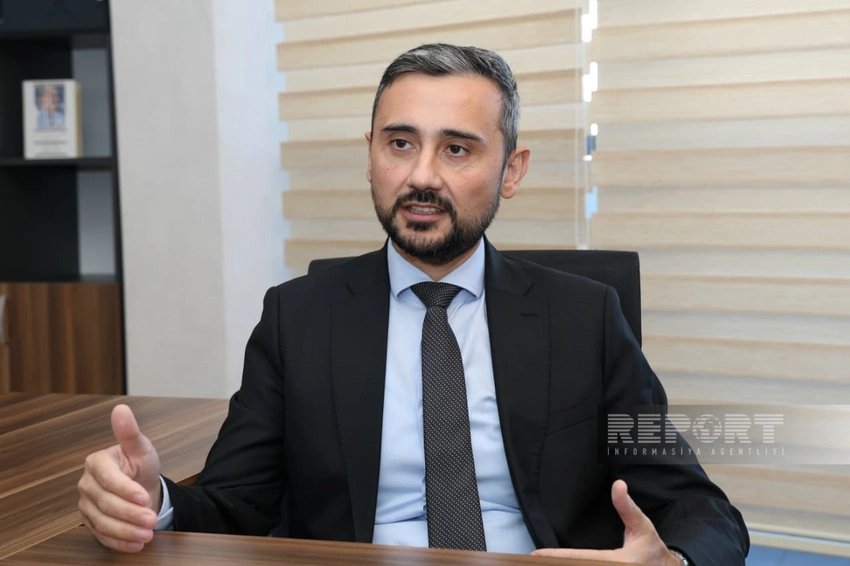
These remarks were made by Jeyhun Aliyev, Director of the Fisheries and Aquaculture Center under the Ministry of Agriculture, in an interview with "Report".
According to him, in previous years, Azerbaijan was given the largest quota for sprat fishing. According to the preliminary results of the expedition, the reserve of this fish species in the Caspian is approximately 500-700 thousand tons. I should note that this is not solely the volume allocated to Azerbaijan.
It is not possible to determine everything with a single expedition. Fish are caught, tagged, and then released back into the same basin. Within a few days, the fishing process is repeated with nets, and it is determined how many tagged fish are recaptured in inland waters. In this expedition, only one out of approximately three thousand fish was recaptured. This is considered a fairly good result. As we mentioned, this scientific expedition has already begun. We have preliminary results, but these are still in the initial stage. The process of increase and decrease must be continuously monitored.
In late November, Russia, Azerbaijan, Turkey, Iran, and Kazakhstan will hold a meeting in Ashgabat. There, countries will provide information on fish species quotas, and quotas will be divided. The needs of fishermen and the industrial infrastructure in each country will be taken into account. An important point is that until now, only Russia has conducted these studies. This year, for the first time, Azerbaijan will provide its scientific data, as well as baseline information on fish stocks in the Caspian.