

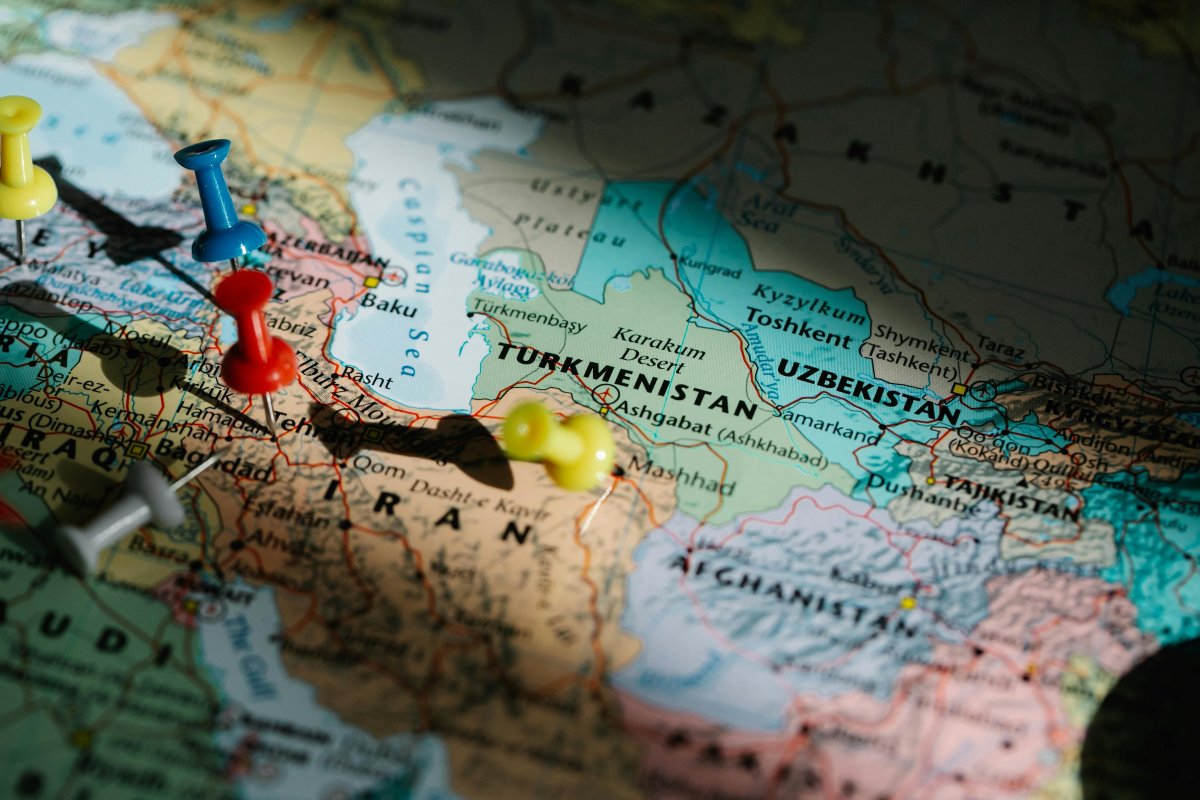
A newly released video emphasizes that the Strait of Hormuz is one of Iran's main geopolitical advantages. The material states that in a confrontation with Iran, the US is forced to consider not only military power but also the reality created by geography.
Redaksiya, citing Press TV, reports that the video presents the Strait of Hormuz as one of the most sensitive passages for global trade and energy shipments. Iranian media states that influence over this narrow waterway gives Tehran a significant strategic advantage against the US and its allies.
The Strait of Hormuz is located between Iran and Oman, connecting the Persian Gulf with the Gulf of Oman and the Arabian Sea. According to Reuters, the strait is approximately 33 kilometers wide at its narrowest point, with designated shipping lanes for vessels being about 3 kilometers in each direction.
The importance of this passage is not limited to oil. Approximately one-fifth of global oil and liquefied natural gas shipments pass through the Strait of Hormuz under normal conditions. Furthermore, a significant portion of sulfur, ammonia, and other fertilizer products are also transported via this route.
Press TV's material claims that any serious restriction in the Strait of Hormuz could disrupt not only energy markets but also food production, fertilizer supplies, industrial raw material chains, and global inflation. For this reason, the strait is presented not merely as a maritime passage for Iran, but as a tool for economic and political pressure.
Reuters, however, notes that from the perspective of international maritime law, the principle of free navigation for vessels in strategic passages like the Strait of Hormuz holds significant importance. Nevertheless, the fact that neither Iran nor the US has ratified the UN Convention on the Law of the Sea further complicates legal disputes in this area.
Experts believe that tensions around the Strait of Hormuz immediately impact global markets every time. Although alternative pipelines and routes exist, none of them can fully replace this passage in the short term. Therefore, Iran's geographical position remains one of the key factors complicating Washington's military and economic plans.