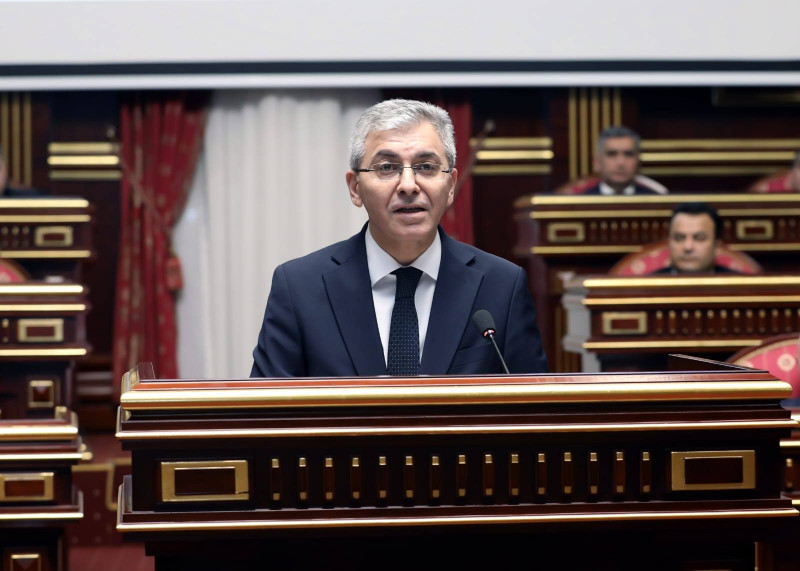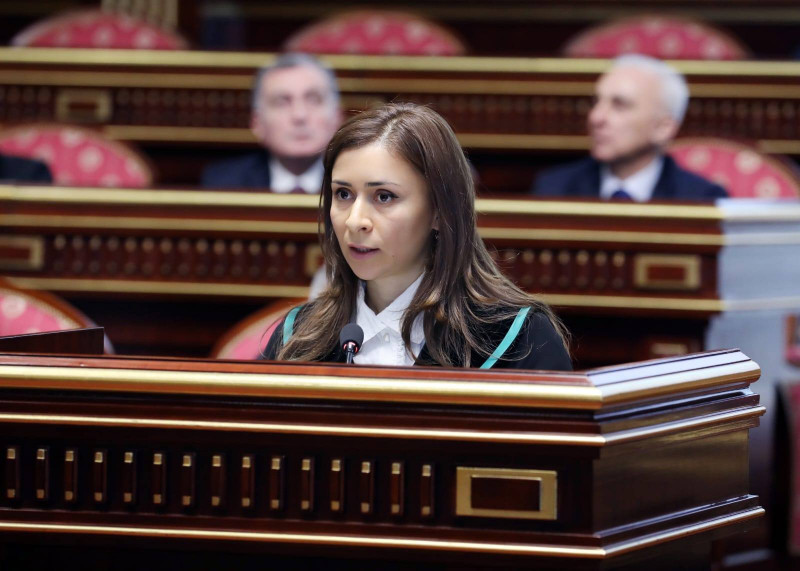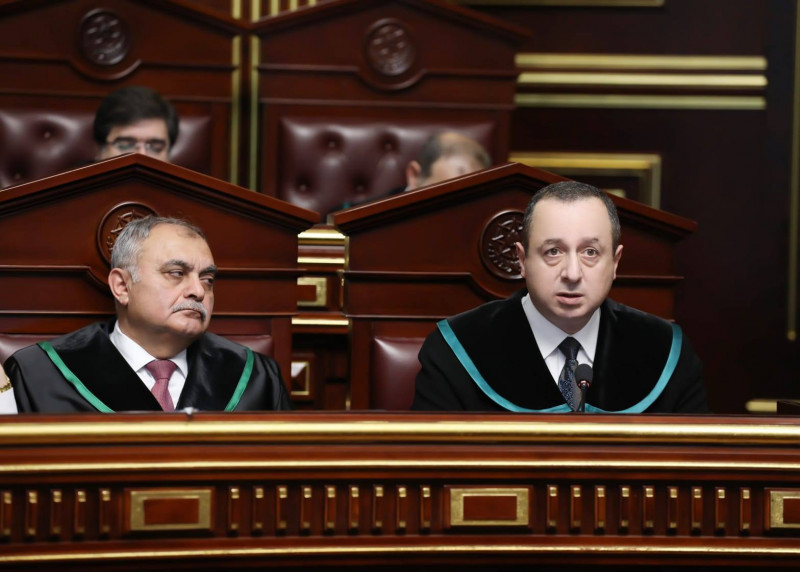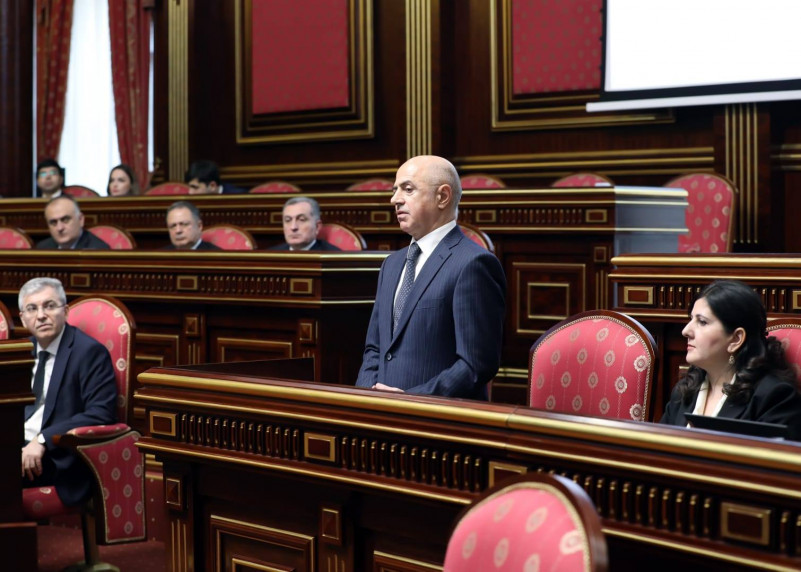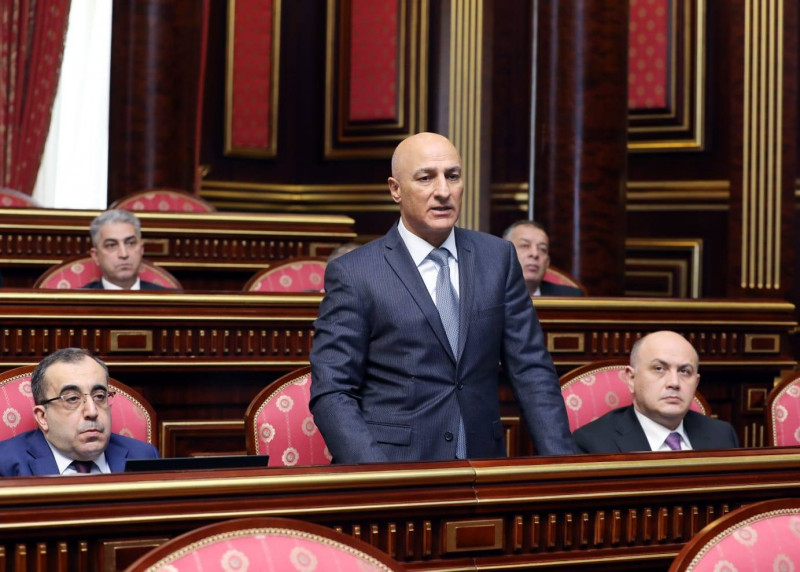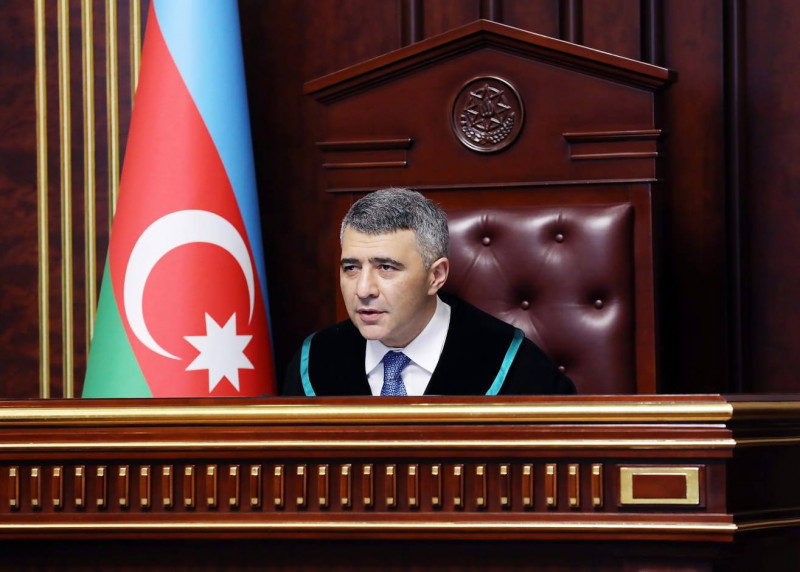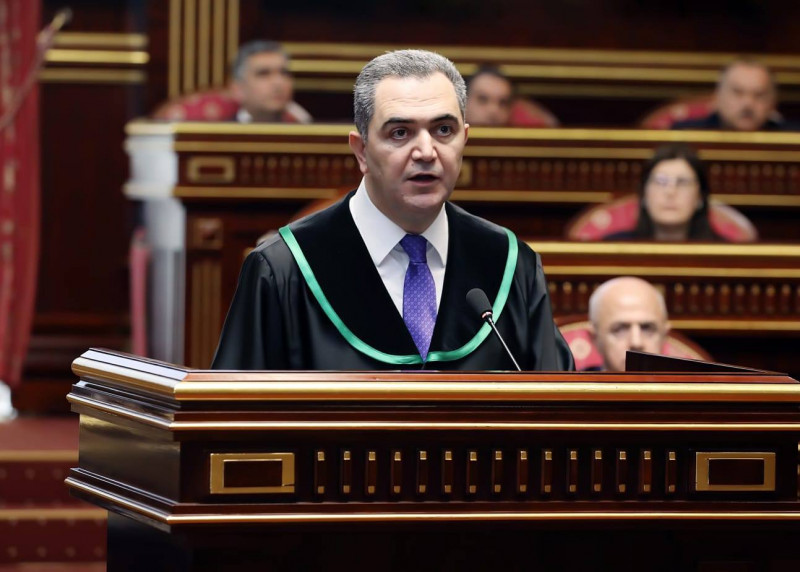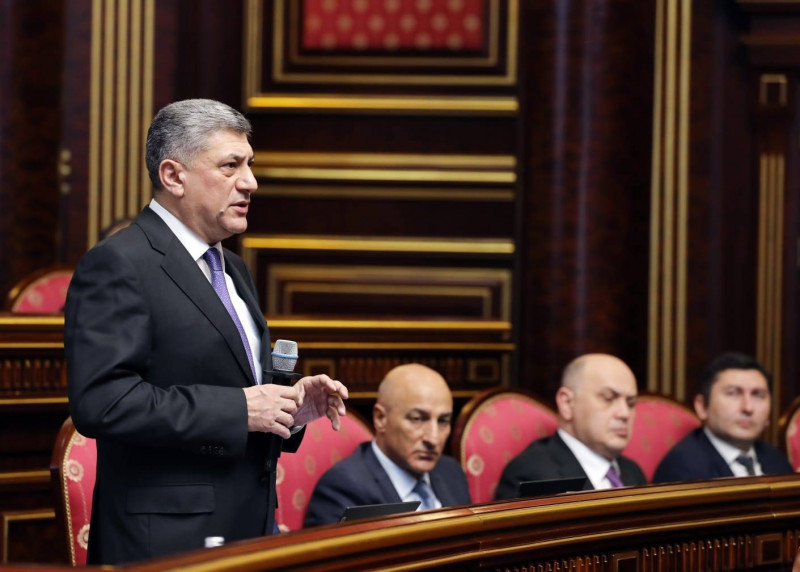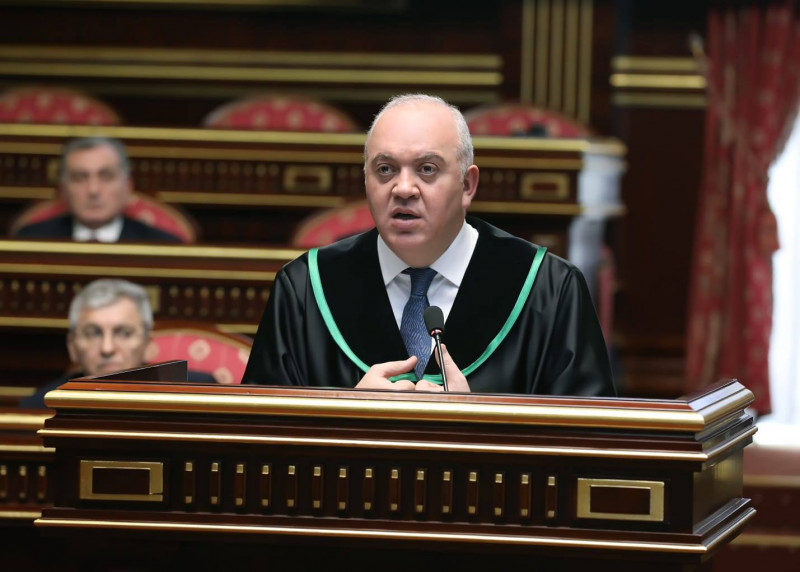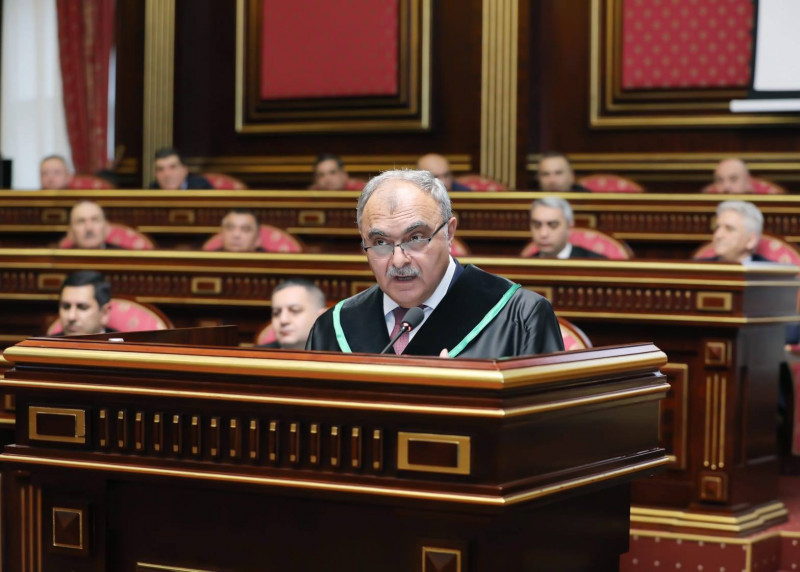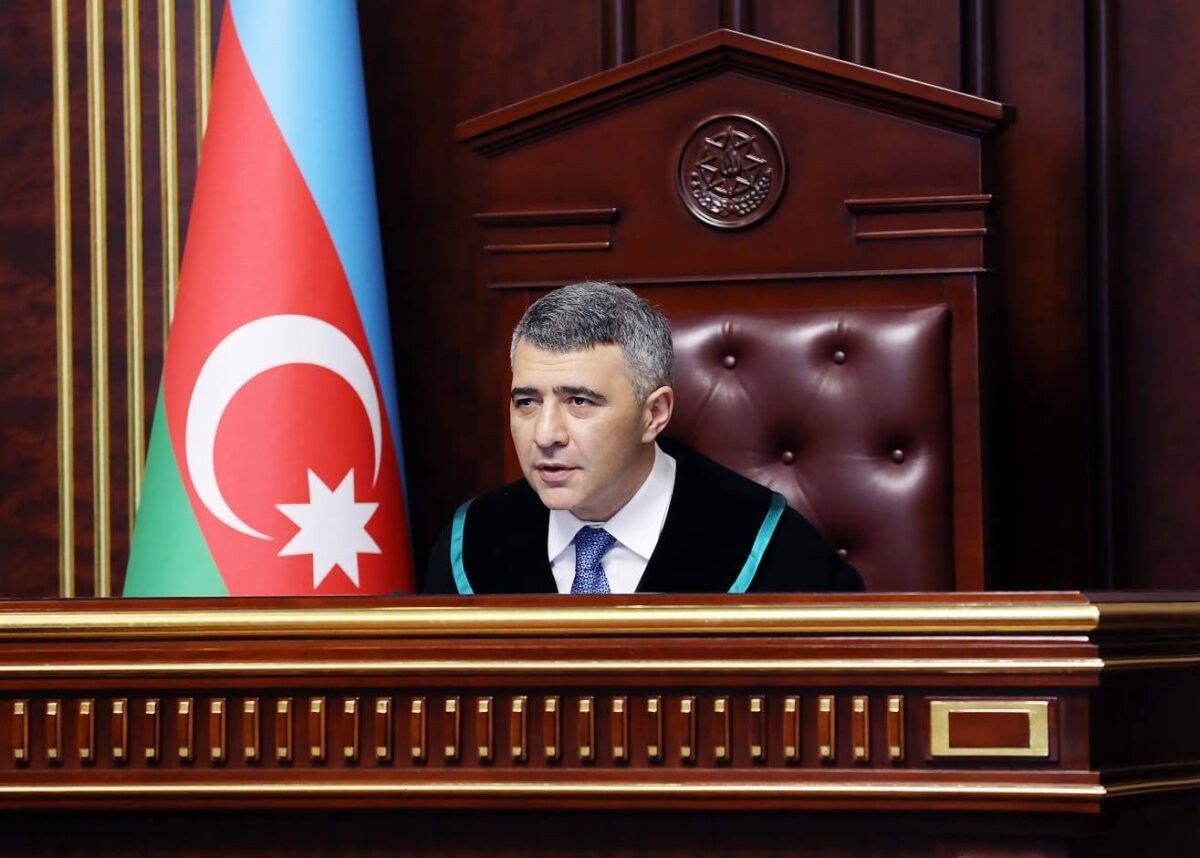
The next session of the Plenum of the Supreme Court of the Republic of Azerbaijan was held on January 23, 2026.
Opening the session with a welcoming speech, Inam Karimov, Chairman of the Supreme Court and the Judicial-Legal Council, stated that today's Plenum was dedicated to the Supreme Court's activities over the past year.
Noting that the past year was successful for our state and people, the Chairman remarked that the declaration of 2025 as the "Year of Constitution and Sovereignty" in our country, by the relevant Decree of Mr. President Ilham Aliyev, held special significance for the development of legal state principles. Within the framework of that year, a series of purposeful measures were implemented by the Supreme Court, and important steps were taken to improve the quality of judicial activities and strengthen citizens' trust in fair justice.
It was highlighted at the session that the past year was quite productive and effective for the judiciary. It was stated that consistent measures were taken by the Supreme Court of the Republic of Azerbaijan to increase the quality of fair justice and ensure stability in the approach to resolving legal issues in courts.
Touching upon the cases under the jurisdiction of the Supreme Court, it was noted that during the reporting period, 44 three-star decisions, 1 new four-star decision, 2 resolutions ensuring the uniformity of court practice of the collegiums, and 2 new Plenum decisions were adopted with the aim of forming a unified judicial practice, ensuring the development of law, and maintaining stability in the courts' approach to resolving legal issues. Significant changes were made to a number of Plenum decisions, and relevant decisions were adopted on 4 Plenum proceedings.
It was specifically emphasized at the session that reforms and innovations in the judicial-legal system will continue. It was noted that currently, the optimization of the workload in courts, the expansion of the application of unified judicial practice, the organization of agile case processing, and thereby increasing citizen satisfaction are among the upcoming goals.
Following this, extensive reports from the collegiums of the Supreme Court regarding the work done in the past year were heard.
It was stated that cases under the Commercial Collegium increased by 17.9 percent compared to 2024. In 2025, out of 1026 cases under the jurisdiction of the Commercial Collegium, 91 percent were related to commercial disputes, and 4 percent were related to the recognition and enforcement of foreign court decisions in the Republic of Azerbaijan. Of the 937 cases related to commercial disputes under jurisdiction, 82 percent were concluded. Of the cases reviewed, court acts were upheld without change in 81.1 percent of cases, court acts were annulled in 18.1 percent of cases, and court acts were modified in 0.8 percent of cases.
In the reporting period of 2025, out of 5227 cases under the jurisdiction of the Administrative Collegium, 62.1 percent were concluded. Of the concluded cases, 43.4 percent were reviewed on their merits, 9.6 percent of cassation appeals were deemed inadmissible on formal grounds, and cassation proceedings were terminated in 0.6 percent of cases. Of the 3246 cases reviewed, court acts were upheld without change in 27.4 percent, 47 percent of cassation appeals were deemed inadmissible because the disputed court decision was consistent with unified judicial practice, 14 percent of decisions were annulled, proceedings were terminated in 0.5 percent of cases, and 0.9 percent of decisions were modified.
For the Civil Collegium, a decrease in the number of civil cases received by the Supreme Court in 2025 was observed compared to previous years, while an increase was noted in the number of cases entering the Plenum in an additional cassation order. It was stated that a total of 234,597 cases were received by the republic's courts for civil matters. This figure increased by 8.3 percent compared to the previous period. Although the number of cases with appeals increased by 3.5 percent, the number of cassation appeals decreased by 5.9 percent.
The report noted a high number of concluded cases across the instances, with an average conclusion rate of 85 percent. At the same time, a decrease was observed in the number of cases re-examined and carried over to the next year. It was stated that the stability indicator of decisions from the first and appellate instance courts is quite high. These results were attributed to ensuring the uniformity of practice, coordinated activity between instances, and an increase in the professional level of judges. In conclusion, the current situation regarding the administration of fair justice in civil cases in lower instance courts was discussed.
It was noted that in 2025, out of 3556 cases under the jurisdiction of the Criminal Collegium, 75.3 percent were reviewed on their merits. Of the 2677 cases reviewed, court decisions were upheld without change in 82.3 percent of cases, decisions were annulled in 5 percent of cases, and decisions were modified in 12.7 percent of cases.
Following this, the report of the Apparatus of the Supreme Court for 2025 was heard. It was noted that consistent measures were taken last year regarding the legal and organizational support of the Supreme Court's activities. It was highlighted that the main priorities for 2026 will be the expansion of digital management, the full transition to electronic document circulation, automatic analysis and monitoring of activities, and the application of artificial intelligence elements.
Those who spoke on the reports noted a significant qualitative change in the activities of the collegiums in 2025.
The Plenum also discussed the draft Decision of the Plenum of the Supreme Court on amending the Decision No. 1 of the Plenum of the Supreme Court of the Republic of Azerbaijan dated November 1, 2001, "On Court Practice in Cases of Evasion of Military Service, Unauthorized Departure from Military Unit or Service Location, and Desertion.".
Finally, the Supreme Court's Work Plan for 2026 was approved at the Plenum.