

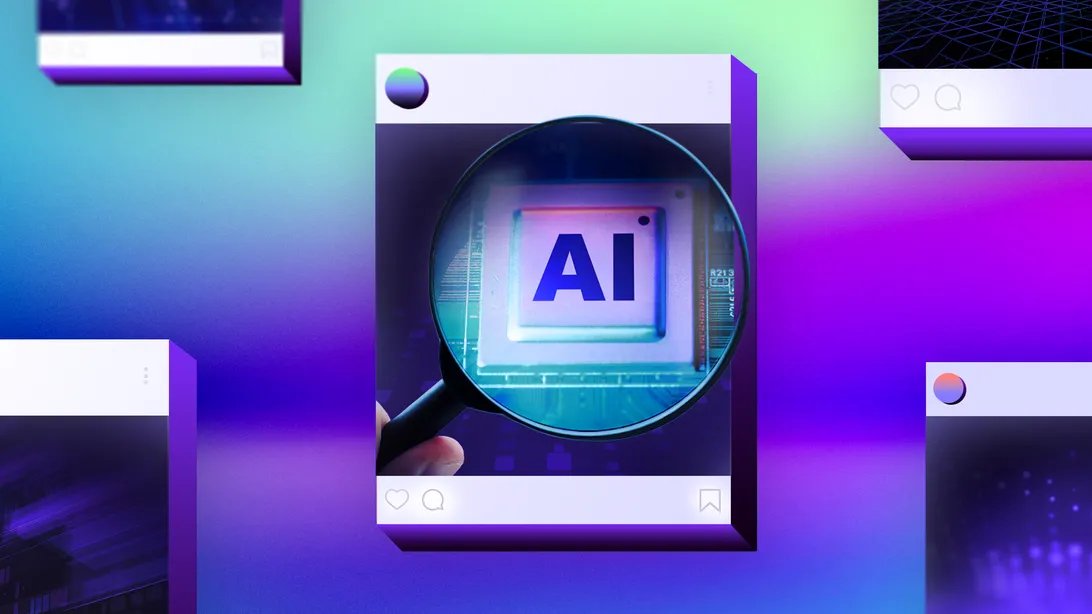
Anyone browsing social media lately knows that artificial intelligence (AI) is everywhere. However, we can't always identify it when we see it. This is a major problem, and our concerns about AI are growing.
Redaksiya reports that AI-generated products have infiltrated every platform, from soulless images to bizarre videos and superficially literate texts. A vast majority of U.S. adults (94%) who use social media believe they have encountered content created or altered by AI, but only 44% of U.S. adults are confident they can distinguish real photos and videos from those generated by AI. This is according to an exclusive investigation by CNET.
Various approaches are being taken to combat AI content. Some solutions focus on better labeling for AI-generated content, as it's becoming harder than ever to trust our eyes. Half of social media users surveyed (51%) believe there is a need for better AI labeling online. Others (21%) believe AI-generated content should be banned entirely from social media. Only a small group of respondents (11%) find AI content useful, informative, or entertaining.
AI is not going anywhere, and it is fundamentally changing the internet and our relationship with it. Our investigation shows we still have a long way to go to reckon with it. Key findings: A majority of U.S. adults who use social media (94%) believe they encounter AI content on social media, but fewer (44%) can confidently distinguish real from fake images and videos. Many U.S. adults (72%) said they take steps to determine if an image or video is real, but some do nothing, particularly among Baby Boomers (36%) and Gen X (29%). Half of U.S. adults (51%) believe AI-generated and edited content needs better labeling. One in five (21%) believe AI content should be banned from social media with no exceptions.
AI's ability to mimic reality makes verifying what we see online even more crucial. About three-quarters of U.S. adults (72%) said they take some action to determine if an image or video is real, with Gen Z (84%) being the most likely to take such steps among these groups. The most obvious and popular method is to carefully examine images and videos for visual cues or artifacts. More than half of U.S. adults (60%) do this. However, AI innovation is a double-edged sword; models are rapidly improving, overcoming the flaws we previously relied on to identify AI-generated content. New AI models typically do not exhibit these common errors. Therefore, we all need to work a little harder to determine what is real and what is fake.
As AI's visual tells disappear, other forms of content verification become increasingly important. The next two most common methods are checking labels or captions (30%) and searching for the content elsewhere online (25%), such as on news sites or via reverse image searches. Only 5% of respondents reported using a "deepfake" detection tool or website. However, 25% of U.S. adults do nothing to determine if the content they see online is real. This inaction is highest among Baby Boomers (36%) and Gen X (29%). This is concerning – we have already seen AI become an effective tool for misuse and fraud. Understanding the origin of a post or piece of content is a crucial first step in navigating the internet, where anything can be faked.
Many people are working on solutions to combat the flood of AI-generated products. Labeling is a key area of opportunity. Labeling relies on social media users disclosing when their posts were made with the help of AI. This can also be done by social media platforms in the background, but it's somewhat difficult, leading to inconsistent results. This is likely why 51% of U.S. adults believe there's a need for better labeling on AI content, including "deepfakes." Support was strongest among Millennials and Gen Z, at 56% and 55% respectively.
Other solutions focus on managing the influx of AI content shared on social media. All major platforms allow AI-generated content, as long as it doesn't violate general content rules by being illegal or abusive. However, some platforms have implemented tools to limit the amount of AI-generated content you see in your feeds; Pinterest introduced its filters last year, while TikTok is still testing some of its filters. The goal is to give each person the ability to allow or exclude AI-generated content from their feeds. However, 21% of respondents believe AI content should be banned entirely from social media with no exceptions. This figure is highest among Gen Z – 25%. When asked if they believe AI content should be allowed but strictly regulated, 36% answered "yes." These low percentages can be explained by the fact that only 11% of AI content provides meaningful value – being entertaining, informative, or useful – and 28% provides no or little value.
The best defense against being fooled by AI is to be vigilant and trust your instincts. If something seems too weird, too polished, or too good to be true, it probably is. However, you can also take other steps, such as using a "deepfake" detection tool. There are many options; since it works with several different file types, I recommend starting with the Content Authenticity Initiative's tool. You can also check the account sharing the post for red flags. In many cases, AI products are shared by mass producers, and you can easily see this in their feeds. They will be filled with bizarre videos with no consistency or similarity. You can also check if anyone you know follows them, or if that account follows anyone else (which is a red flag). Spam posts or scam links are also indicators that an account is not legitimate.
If you want to limit the AI content you see in your social feeds, check out our guides for turning off or muting Meta AI on Instagram and Facebook, and filtering AI posts on Pinterest. If you encounter a product, you can mark the post as not interested, which should indicate to the algorithm that you don't want to see more of it. Outside of social media, you can turn off AI on Apple Intelligence, Pixel, and Galaxy phones, and Gemini in Google Search, Gmail, and Docs.