

“The prioritization of a number of issues in the document titled ‘Strategic Agenda for EU-Armenia Partnership,’ signed as a result of the VI meeting of the Partnership Council held between the European Union (EU) and Armenia in Brussels on December 2, distorts post-conflict realities and is contradictory to the overall peace agenda between Azerbaijan and Armenia, causing serious concern.”
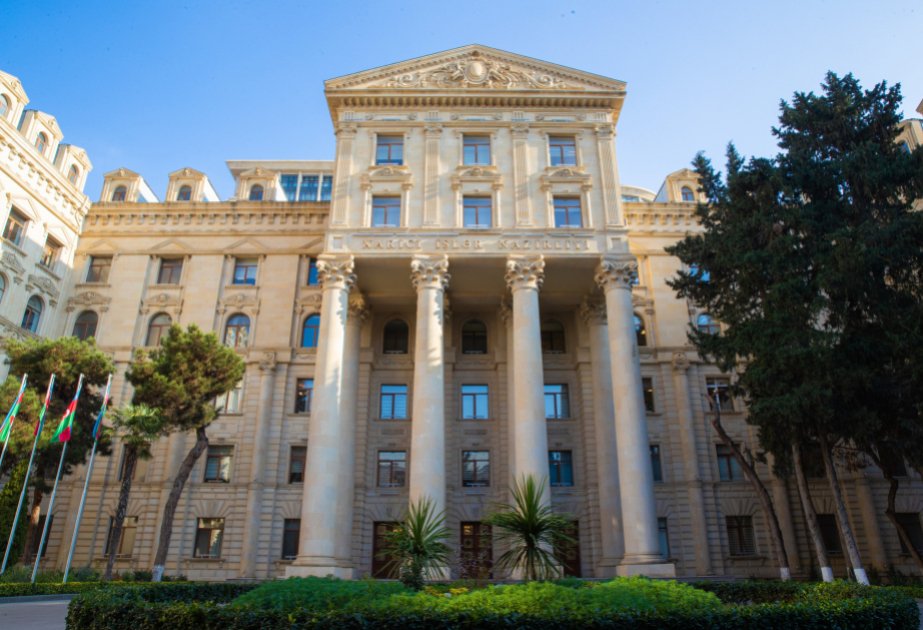
The Ministry of Foreign Affairs of Azerbaijan stated this in its commentary on the "EU-Armenia Partnership Priorities" document signed between the EU and Armenia, the editorial office reports.
It was noted that the inclusion of issues targeting Azerbaijan in this bilateral document, which defines strategic priorities between the EU and Armenia for the next 7 years, is unacceptable and negatively affects the prospects of Azerbaijan-European Union relations.
“The use of the phrase ‘displaced Karabakh Armenians following Azerbaijan’s military operations’ in the preamble and several other sections of the document, referring to Armenian residents who voluntarily migrated from our country to Armenia after rejecting the reintegration plan presented by the Azerbaijani side, and the prioritization of this issue as a partnership priority between the EU and Armenia, as well as the classification of these individuals as ‘refugees,’ is a clear example of bias against Azerbaijan.
Furthermore, in the section on the EU’s possible contributions to normalization processes in the region, the support for the full, immediate, and effective implementation of all relevant decisions of the International Court of Justice unequivocally refers to the known claims put forward by Armenia against Azerbaijan.
Bringing up an issue that is directly related to Azerbaijan and Armenia and is purely bilateral in nature with a third party is completely illogical, and such an approach does not take into account Azerbaijan’s own legitimate judicial claims against Armenia.
Considering that the draft peace agreement initialed in Washington with the participation of the leaders of Azerbaijan, the United States, and Armenia includes a provision for the resolution of these claims, touching upon this issue in the EU-Armenia document directly contradicts the peace process and raises serious questions about the Armenian side’s stated intentions.
The classification of individuals of Armenian origin accused and convicted of crimes against humanity and war crimes as ‘prisoners’ and the determination of their release as a separate priority is a serious distortion of realities and is unacceptable.
Despite the numerous provisions in the EU-Armenia document supporting Armenia’s “peace crossroads” initiative, which lacks regional consensus, the complete absence of any reference to the “Tramp Route for International Peace and Prosperity” (TRIPP) project, which was achieved within the framework of the normalization process during the August 8 Washington summit and holds significant importance, is a cause for serious concern. This situation raises questions about the seriousness of Armenia’s intention to fulfill its obligations within the TRIPP agreement signed by its Prime Minister in Washington, and about the EU’s declared support for this project.
Considering the commitment in Article 7 of the draft agreement initialed between Azerbaijan and Armenia, where the parties commit not to deploy any third-party forces on the mutual border, the prioritization of maintaining the presence of the EU’s Monitoring Mission in Armenia (EUMA) and ensuring its full operational capability, instead of terminating its activities which are used as propaganda against Azerbaijan, is another source of concern.
The emphasis on military and defense issues alongside the stated priorities serves Armenia’s militarization.
The aforementioned issues, against the backdrop of positive progress achieved in the post-conflict period since August 8, bring back elements of the past conflict and raise serious doubts about Armenia’s intentions. We expect Armenia and the EU to take concrete steps to eliminate these harmful provisions that do not reflect the existing realities. In turn, we will continue to closely monitor the situation and draw necessary conclusions.”