

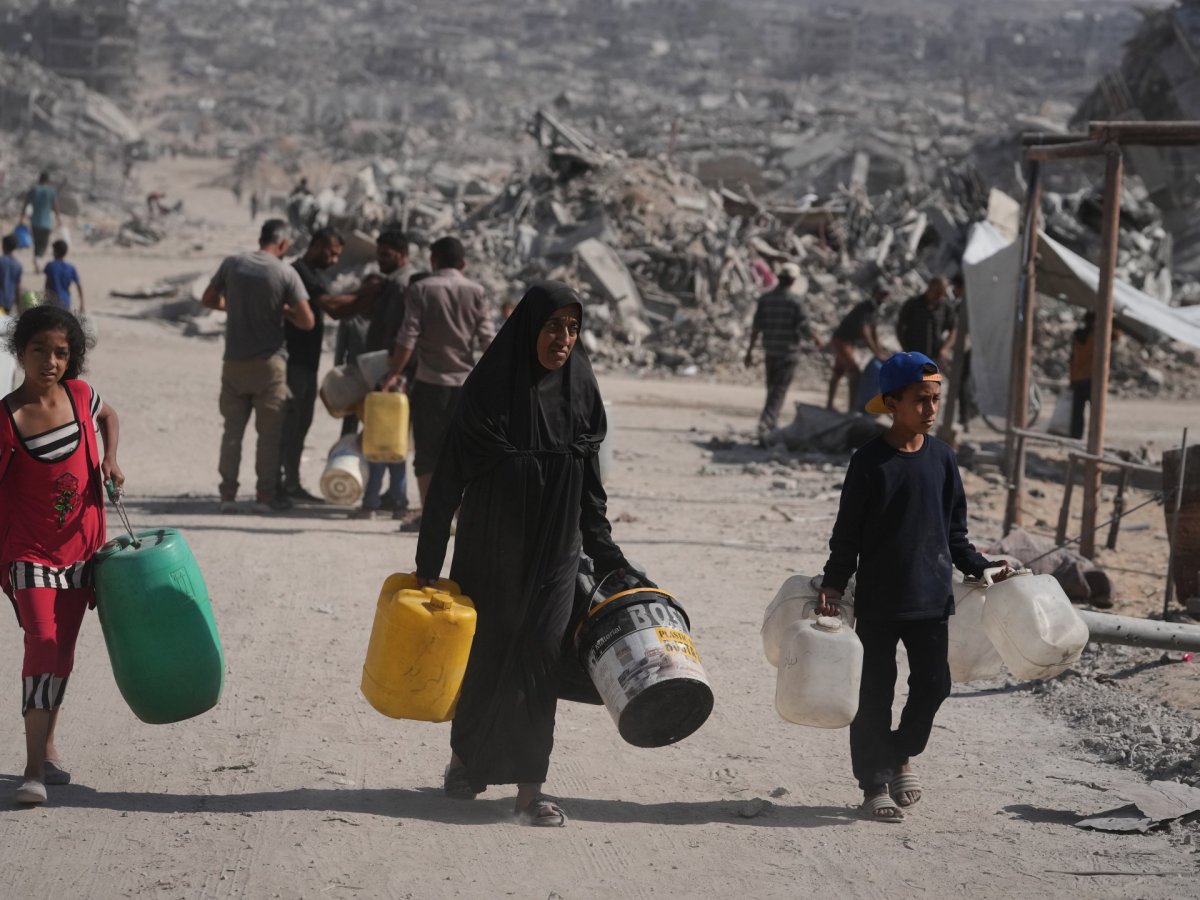
Recent events in Gaza, the delivery of humanitarian aid, and the positions of the conflicting parties are attracting the attention of the international community. Despite the announcement of a ceasefire, the situation in the region remains tense, and concerns about the deepening humanitarian crisis persist.
Redaksiya reports that the Hamas movement has stated its commitment to returning the remains of Israeli prisoners trapped under the rubble of Gaza. The armed wing of the movement stated that they have handed over all bodies they found and that the return of more remains requires the introduction of heavy machinery and excavation equipment into Gaza. Most of this equipment was destroyed as a result of Israeli bombardments.
The United Nations (UN) has warned for several days that there has been very little progress in delivering aid to Gaza and that large-scale entry of aid through all border crossings is needed to meet urgent humanitarian needs. According to an agreement to end Israel's genocide, which caused the deaths of over 67,000 Palestinians over two years, Israel was supposed to allow an increase in aid delivery.
The World Food Program (WFP) stated that an average of 560 tons of food has been brought into Gaza daily during the last week since the start of the ceasefire, but this amount is still below the required quantity. The UN agency stated that it has enough food to feed all of Gaza for three months.
To the question of whether Hamas would give up its weapons, Nazzal replied: "I cannot give an unequivocal answer. Frankly, it depends on the nature of the project. What does the disarmament project you are talking about mean? To whom will the weapons be handed over?"
A week after the start of the ceasefire, Israel continues to close the Rafah crossing on Gaza's border with Egypt, despite repeated international calls for allowing large-scale aid delivery. At the same time, Israeli attacks have resulted in the deaths and injuries of several Palestinians in northern Gaza.
WFP spokesperson Abeer Etefa stated at a press conference in Geneva: "We are not yet at the level we need to be, but we are moving towards it... The ceasefire has opened a window of opportunity, and WFP is moving very quickly to scale up food assistance."
With the blocking of heavy machinery and vehicles by Israeli military forces, Israel "is creating difficulties for the residents of Gaza, who are experienced and have expertise in searching for and extracting bodies from under the rubble," Mahmud stated.
The UN stated on Friday that aid convoys are struggling to reach the hunger-stricken northern areas of Gaza due to bombed roads and the closure of other key routes – Zikim and Beit Hanoon (known as Erez in Israel).
Authorities in Gaza are also struggling to identify dozens of bodies of killed Palestinians that Israel returned earlier this week. According to the Ministry of Health, only six of the 120 bodies have been officially identified so far.
Etefa added that "access to Gaza City and northern Gaza is extremely. Recent events in Gaza, the delivery of humanitarian aid, and the positions of the conflicting parties are attracting the attention of the international community. Despite the announcement of a ceasefire, the situation in the region remains tense, and concerns about the deepening humanitarian crisis persist.