

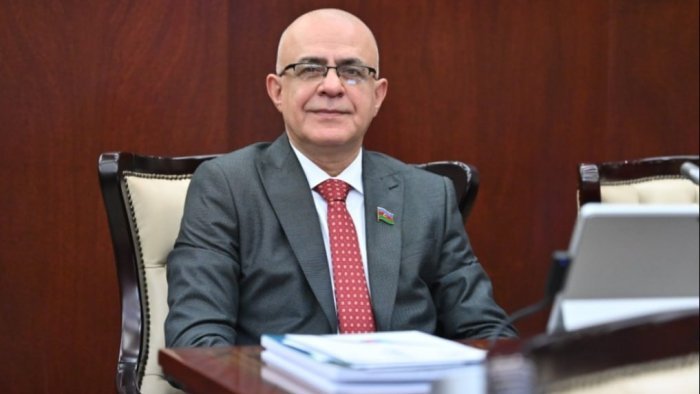
The draft law submitted for discussion should be considered a significant normative step that changes the future architecture of oncology care in our country, while also allowing for an approach that expands patients' right to choose.
This was stated by Elchin Mirzabeyli, a Member of Parliament, during the discussion of the draft law on amendments to the "Law on Oncology Care" at today's plenary session of the Parliament.
The Member of Parliament stated that the draft law needs to be approached from the perspective of the real situation of cancer patients, the existing capabilities of the healthcare system, and social consequences:
“Considering the ever-increasing number of cancer patients and the existing capabilities of state institutions, this is a logical approach. However, it is possible that in the future, clarity will be needed on a number of issues within the framework of legislation, rules determined by the Cabinet of Ministers, or explanatory statements from relevant bodies.
To what extent are private medical institutions in Azerbaijan ready to accept cancer patients?
It is not excluded that specialists will be invited from abroad by private clinics to this field. How will their certification be carried out? Our doctors undergo a rigorous certification process when they go abroad. However, the same requirements are not clearly envisioned for doctors coming from abroad in Azerbaijan. Doctors who are not recognized in the medical sector of their own countries are advertised in Azerbaijan with grand titles. How and when will this issue be resolved?"
The deputy added that the biggest problem related to cancer diseases in Azerbaijan starts at the stage of timely detection and correct diagnosis, before treatment:
“The accessibility of medical services in the regions, the public's trust in the healthcare system, and access to medical services for vulnerable social groups remain serious problems,” noted E. Mirzabeyli. (Trend)