

Azerbaijan, never as powerful in its centuries-old history as it is today, consistently realizes its strategic goals, and the power of our state steadily increases. The main factor enabling this is the successful continuation by President Ilham Aliyev of the policy laid down by our nation's National Leader Heydar Aliyev. The steps taken based on President Ilham Aliyev's political will ensure the strengthening of our country's military Victory on the diplomatic front.
It should be noted that news of the leaders of Azerbaijan and Armenia signing a joint declaration in Washington creates a basis for the formation of a new political situation in the region.
The signing of this document is considered a fundamental step forward on the path to a peace agreement. The meeting held at the White House will be remembered as a decisive turning point not only between the two countries but also in the fate of the entire South Caucasus.
US President Donald Trump's emphasis on the Azerbaijan-Armenia peace talks process is also evident from the remarks made by Azerbaijani President Ilham Aliyev at a meeting with participants of the 3rd Shusha Global Media Forum in Khankendi on July 19 this year: “We are also very grateful to him for his efforts to help Azerbaijan and Armenia ultimately reach an agreement. Although he is engaged in more global issues of international security, he also keeps the situation in the South Caucasus in focus.”
It should be recalled that in July 2024, Azerbaijani President Ilham Aliyev and Armenian Prime Minister Nikol Pashinyan held their first one-on-one meeting in Abu Dhabi, the capital of the United Arab Emirates. This meeting is considered a significant change against the backdrop of all previous contacts between the parties taking place within the framework of mediators or international summits. The Washington meeting is a continuation of this diplomatic process.
It should be noted that in the initial period after the end of the Patriotic War, the “traditional” actors who had mediated during the 30-year conflict between the two states were still on the scene – Russia, France, the USA, as well as the notorious Minsk Group, which united this trio. Azerbaijan had even sent the first text of the peace agreement to Armenia precisely through the Minsk Group. However, Armenia's efforts to re-introduce the “Nagorno-Karabakh” issue into the agenda and its attempts to use only the support of the Minsk Group for this resulted in Azerbaijan taking a firm stance on the dissolution of this pro-Armenian group.
As is known, Azerbaijan put forward 2 main conditions for signing a peace agreement with Armenia. The first condition relates to a joint appeal to the OSCE regarding the dissolution of the Minsk Group, and the second condition – to the elimination of territorial claims against Azerbaijan by making amendments to the Constitution of Armenia.
It should be noted that as early as March of this year, it was announced by the foreign ministers of both countries that all 17 articles of the peace agreement to be signed between the two states had been agreed upon. This, in itself, proved that Armenia had accepted Azerbaijan's rightful position on those two issues as well.
The Joint Declaration to be signed by the leaders of Azerbaijan and Armenia confirms that the two countries will make a joint appeal to the OSCE Secretary General for the dissolution of the Minsk Group. The Minsk Group, which operated for nearly thirty years and played a significant role in maintaining the status quo during the occupation, is now becoming a thing of the past. This is regarded as a diplomatic victory for Azerbaijan.
At the same time, after the text of the Agreement on the establishment of interstate relations and peace between Azerbaijan and Armenia is initialed, the necessity of taking further steps to achieve the signing and ratification of the aforementioned agreement is recognized. That is, one of the main requirements for the signing of the final peace agreement – the necessity of amending the Constitution of Armenia – is confirmed.
Also, one of the main strategic issues awaiting resolution for our country after the signing of the peace agreement is, undoubtedly, the opening of the Zangazur corridor. After the Patriotic War, President Ilham Aliyev repeatedly stated that unhindered land access from the main part of Azerbaijan to Nakhchivan must be ensured. Through this agreement, for the first time, the provision of direct and unhindered passage between the main territory of Azerbaijan and Nakhchivan can move to a legal and practical plane. This increases the likelihood of the Zangazur corridor's realization and shifts the geopolitical balance in the South Caucasus in favor of Azerbaijan by restoring transport links. Although President Ilham Aliyev's resolute stance on the Zangazur corridor was clear, his very open and direct detailed statement about the corridor for the first time in Khankendi clearly proved once again that our country fundamentally maintains the priority of the Zangazur corridor: “The most important issue for us is – I told my counterpart in Abu Dhabi – that we must have unhindered and safe passage from Azerbaijan to Azerbaijan. This is a passage from one region of Azerbaijan to another region of the country. Our cargo and our citizens, Azerbaijani citizens, should not have to see the face of an Armenian border guard there every time. This is our demand. This is a legitimate demand, this is a fair demand. Otherwise, our citizens will be at risk… Today we cannot put our citizens at risk. Therefore, there should be no physical contact there, and guaranteed measures must be implemented for them so that people and cargo move safely.”
Thus, if the Peace Declaration is signed, Azerbaijan will draw closer to Nakhchivan, and Nakhchivan will open up to all of Azerbaijan.
Of course, at the heart of these processes lies President Ilham Aliyev's principled and far-sighted policy. Both military victory, diplomatic superiority, and the establishment of long-term stability are the logical outcome of the Azerbaijani leader's statehood concept. Azerbaijan is no longer just a country that desires peace, but one that dictates peace. With the signing of the peace framework document, Ilham Aliyev will go down in history as a leader who victoriously concluded not only the war but also the peace.
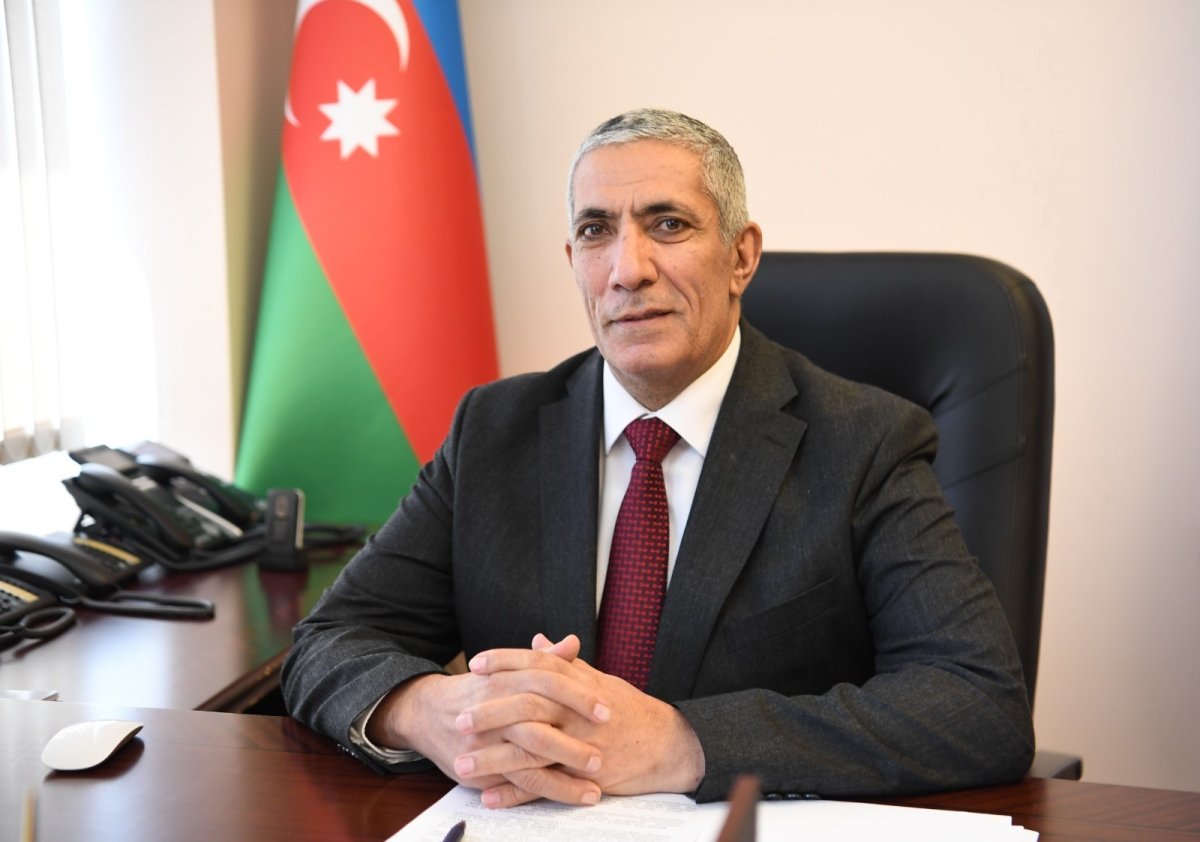
Siyavush Novruzov
Chairman of the Regional Affairs Committee of the Milli Majlis