

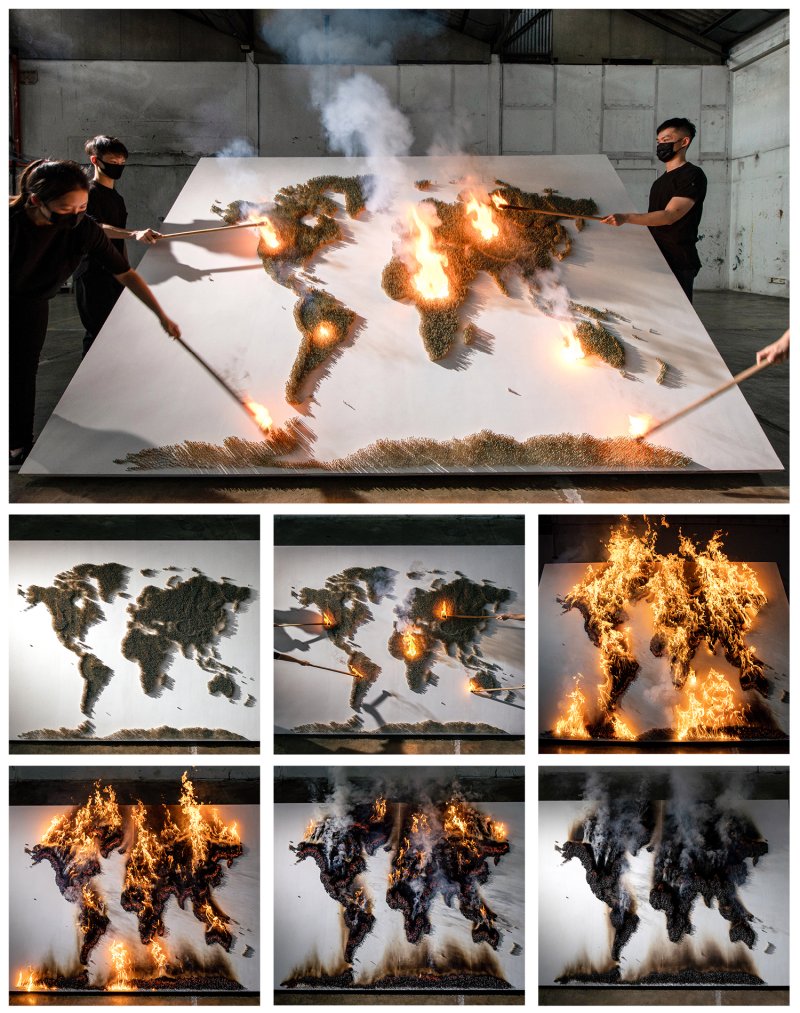
The iconic cover of TIME magazine dated May 3, 2021, titled “Climate Is Everything”. On this cover, the emphasis that “everything is climate” was conveyed with a fiery metaphor: Malaysian artist Red Hong Yi created a map of the world from 50,000 green-tipped matchsticks and set it on fire. The artist did not choose matchsticks by chance – he stated that the matchstick, especially with its green tip, resembles a tree and could be a metaphor representing the world's forests.
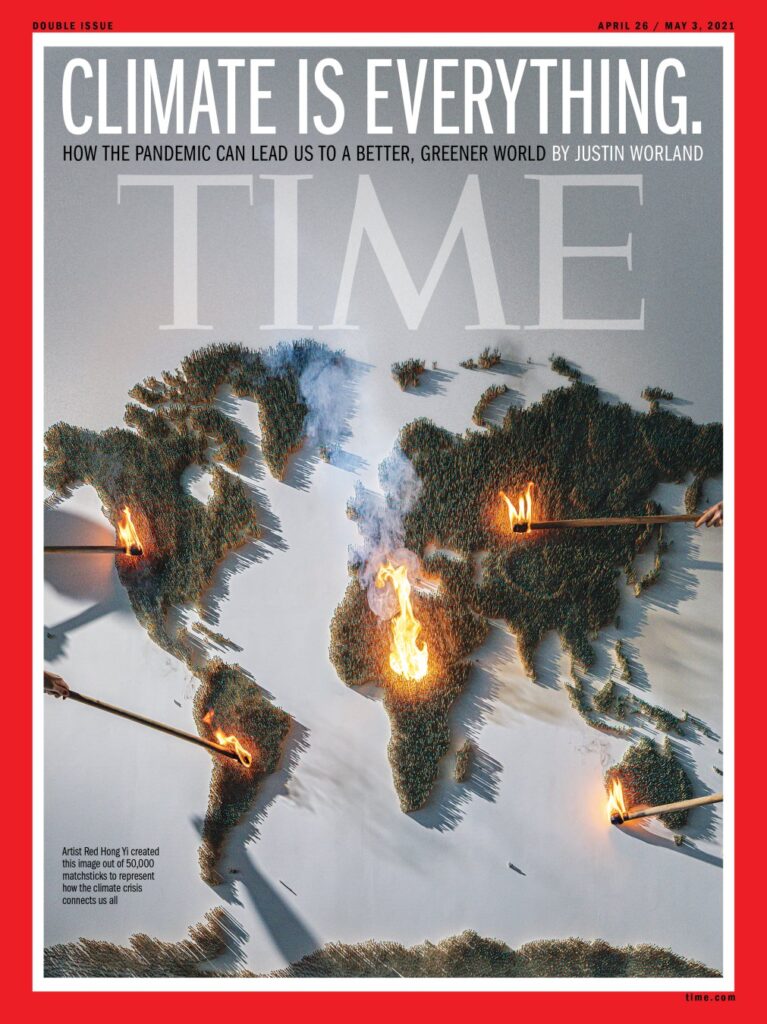
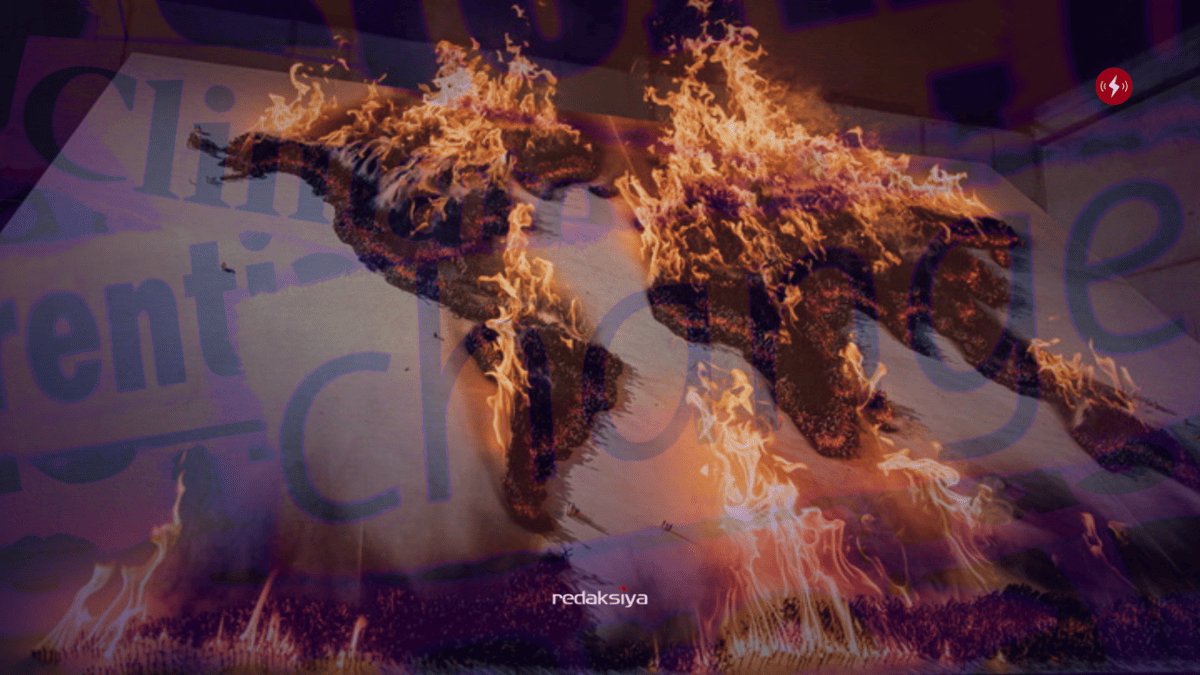
The giant world map igniting and burning like a matchstick symbolizes the pervasive impact of the climate crisis spread across the planet. This dramatic image, showing that climate change “means everything,” calls for urgent unity on the issue of global warming. Ironically, the world made of matchsticks turned to ashes in seconds – conveying the message that the order built and created by human activity over millennia can be destroyed in an instant by the “flame” of climate change.
Turkey: 90% of Forest Fires Caused by Human Hand
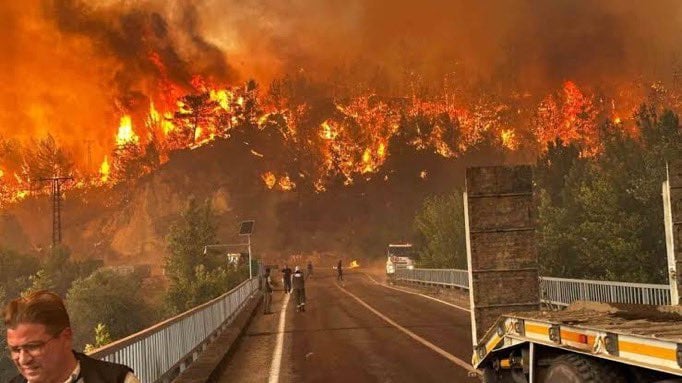
Large-scale forest fires in Turkey in recent years have also sparked discussions around the topic of climate. However, according to official statistics, the vast majority of these fires originate not from natural causes, but directly from human activity. For instance, Zafer Derince, the Regional Director of Istanbul Forest Management, emphasized in his official statement that 90 percent of forest fires in the country are caused by people. He listed simple but dangerous errors as the main factors causing fires, such as garden clearing by burning, cigarette butts thrown from cars, burning of leftover grass in harvested fields, and careless use of welding equipment. These facts indicate that a large portion of forest fires in Turkey are linked more to human negligence or deliberate acts rather than the consequences of climate change. The ironic point is that many fires presented as the “wrath of nature” actually occur by human hand – yet, ultimately, the blame is still “placed on climate.”
Forests Ablaze in Karabakh
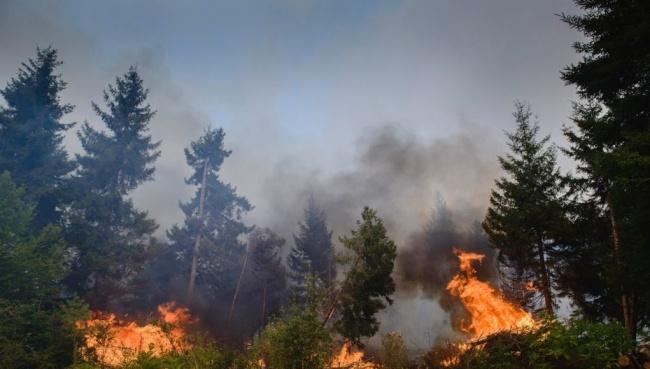
In the last week, successive forest fires in Azerbaijan's Karabakh region, particularly in Aghdam district, have also been in the public spotlight. In the last days of July, a large-scale fire that started in the areas of Abdal and Gulabli villages of Aghdam, as well as Aghdara and Khojavand, continued for days. According to APA's Karabakh bureau, although firefighters and equipment from the Ministry of Emergency Situations were deployed to the area to extinguish the fire, windy weather further intensified the flames, making suppression difficult. As a result, the fire spread from Aghdam district to the nearby Aghdara region, covering vast areas. According to official information, although the fire was partially contained in the mountainous-forested terrain, individual local hotspots remained, and aerial intervention was limited due to smoke and fog. Fortunately, the fires were finally brought under control and extinguished, but the charred forest strips and black earth show the traces of another blow to nature in Karabakh. The irony is that the lands of Karabakh, burned and devastated for many years as a result of occupation, even after liberation, once again become the target of flames – whether due to remnants of the enemy, negligence, or some malicious reasons “under the guise of climate.”
Baku COP29 Summit: From Oil Country to “Green Leader”
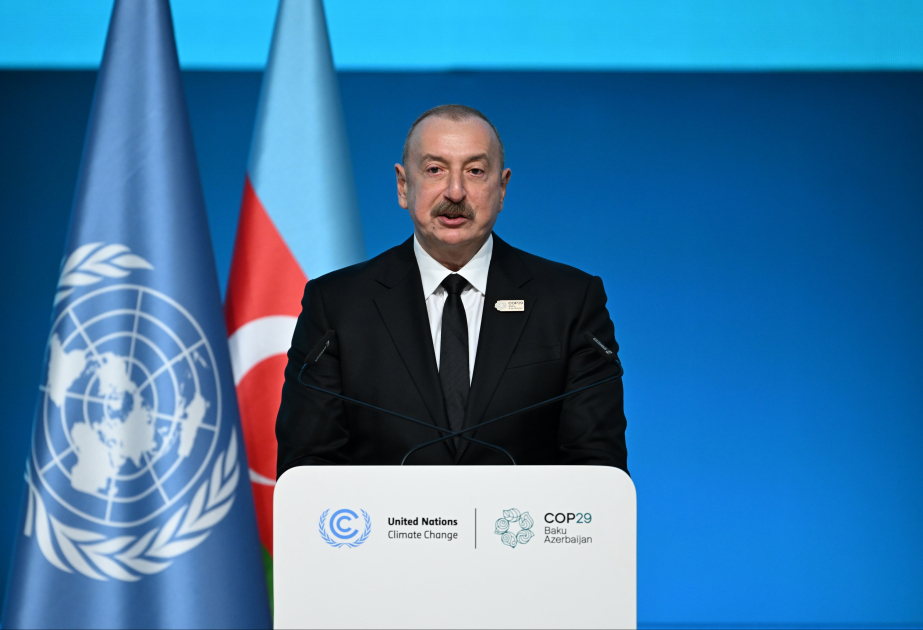
As the host country, Azerbaijan has emerged at the center of the global climate agenda. In November 2024, the world's attention was focused on Baku – Azerbaijan hosted the COP29 UN climate summit. The unanimous decision of approximately 200 countries to hold such a prestigious conference in Baku was seen as an appreciation for Azerbaijan's active role in the international climate agenda. President Ilham Aliyev addressed the Leaders' Summit, delivering important messages regarding his country's energy strategy and climate policy. He presented Azerbaijan as a country rich in hydrocarbon resources, emphasizing that concrete targets have been set for the creation and promotion of alternative and “green” energy sources on a global scale. The head of state stated in his speech that Azerbaijan's firm stance on improving the ecological environment and combating global climate threats was appreciated by world states.
In addition, President Ilham Aliyev criticized the double standards of developed countries, emphasizing the principle of justice in climate policy. He called it an injustice that Western states, historically responsible for the most greenhouse gas emissions, still rely on fossil fuels while imposing demands on developing countries. President Ilham Aliyev openly stated that Azerbaijan supports the green transition, but reality must also be considered – the country's oil and gas wealth is “a gift from God,” and Azerbaijan should not be condemned for possessing these resources. “No country should be accused for these riches, because there is a demand for these energy resources from the market and people,” he reasoned. Although these words from the leader of an oil-producing country hosting a climate summit were not unequivocally received by the global public, on the other hand, the pragmatic approach of the Azerbaijani leadership was also characterized in certain circles as a “realistic climate policy.” Yes, the head of state spoke the truth, as always. The Baku summit showed that Azerbaijan sees itself at the forefront of the global dialogue on climate issues – even if it means raising difficult questions in this dialogue.
Global Warming and Climate Laws: Coincidence, or a Deliberate Scenario?
Against the backdrop of all these collected facts, the ironic picture that emerges is thought-provoking. On one hand, world-renowned magazines dramatize the threat of global warming with metaphors of a world burning to ashes from a matchstick, while on the other hand, real statistics show that forest fires in most cases originate from human factors. At the same time, large-scale fires occurring across various geographies, from Turkey to Karabakh, create alarm in public opinion, seemingly strengthening the narrative of a “climate emergency.” New laws and agreements prepared under the guise of combating climate change are more easily legitimized on the basis of such alarm. For example, during the COP29 summit, while world leaders exchanged views on climate, almost on the same days, forest fires in California continued to evacuate residents, and unprecedented floods in Spain caused disaster. UN Secretary-General Antonio Guterres warned in his speech at the summit, “The world will pay, or humanity will pay the price” – meaning that if urgent steps are not taken regarding climate change, all of humanity will suffer the consequences.
Such parallels inevitably raise cynical questions in society about “events being a deliberately constructed scenario.” If we take a critical approach, one might ask: Do deliberate forest fires or flames ignited by human negligence, subsequently presented as “manifestations of climate change,” not create a basis for the adoption of strict laws and restrictive measures against global warming? After all, if official figures show that most fires are caused by human hands, how sincere is it to attribute all these fires solely to “climate's doing” and legitimize new climate laws? While the answer to these questions may not be unequivocal, there is a truth at stake: under the name of climate change, every event has become “everything.” Burned forests, record heatwaves, floods – each of these is both a real problem causing global concern and, at times, can become a convenient tool for various political-economic interests.

Ultimately, there is a dose of irony in the discourse surrounding climate change. On one hand, the undeniable need for real and urgent measures for the future of our planet exists. On the other hand, the presentation of natural phenomena and the political conclusions drawn from them sometimes lead to a blurring of truth and propaganda, cause and effect. Like the image of the world made from a matchstick, reality sometimes ignites within the framework presented to us – and the question of who holds the match behind this flame remains open. However, the other end of the match extends to the carbon footprint.
Sources: TIME magazine, APA, Anadolu Agency, Reuters, Teleqraf, Crossmedia, and other articles. (All facts throughout the above text are presented with reference to official open sources.)
Prepared by: Redaksiya