

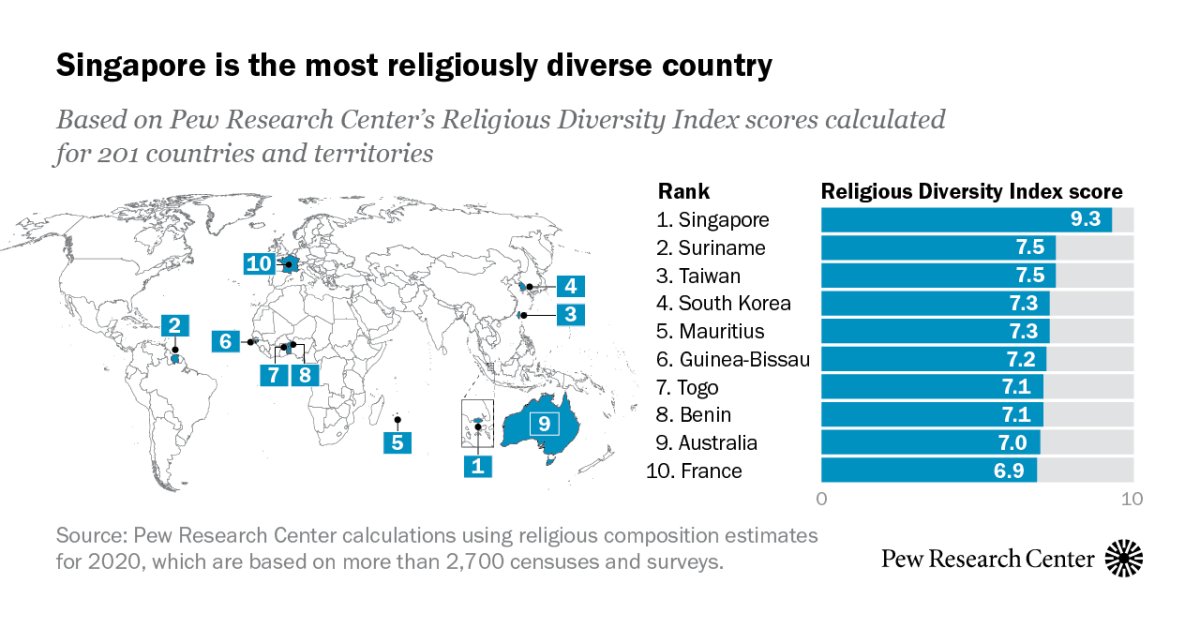
The topic of religious diversity worldwide is a crucial area examining the prevalence and influence of religious beliefs across various cultures and societies. This topic encompasses the interaction between different religions, the status of religious minorities and majorities, as well as the social, political, and economic consequences of religious diversity. Religious diversity is an important factor for ensuring understanding and cooperation in the modern world.
Redaksiya reports that the "Religious Diversity Worldwide" report, published by the Pew Research Center in 2026, investigates the state of religious diversity worldwide. This report presents data reflecting religious diversity in countries between 2010 and 2020. The main goal of the report is to help understand the spread of different religions and their impact on societies.
The report examines various aspects such as countries' religious diversity indicators, religious distribution scores, and the evaluation of religious composition. The data is presented through a series of tables and graphs showing how religious diversity has changed between 2010 and 2020. The report's methodology thoroughly explains the data collection and analysis process. The report includes information such as key indicators of religious diversity by country, religious distribution scores, and the evaluation of religious composition. The report's appendices provide additional information such as data on countries with a religious majority, religious diversity index scores, and religious distribution scores. The report's database contains global religious composition estimates for 2010 and 2020. At the end of the report, a citation guide is also noted.