

April 15 marks 41 years since the passing of the prominent ophthalmologist-scientist, Academician Zarifa Aliyeva.
The editorial board reviews some aspects of Academician Zarifa Aliyeva's life and work on her commemoration day.
Born in the ancient village of Shahtakhti in Nakhchivan, Zarifa Aliyeva lived a rich and meaningful life. Her father, the prominent public and statesman Aziz Aliyev, served as a true school of life for her. Zarifa Khanim was the life partner, friend, and comrade-in-arms of National Leader Heydar Aliyev, the architect and founder of the modern independent Azerbaijani state. The experiences she gained in her father's home proved helpful when she became the wife of the republic's first person. She was a moral support and a pillar for the Great Leader.
Academician Zarifa Aliyeva's research and her great achievements as a scientist constitute a special stage in the history of Azerbaijani medical science. After graduating from the Azerbaijan Medical Institute, she continued her education in Moscow, at the Institute for Advanced Medical Studies. She began her career in 1949 as a research fellow at the Azerbaijan Scientific Research Institute for Advanced Medical Studies and dedicated her entire life to the field of ophthalmology.
In the 1940s and 1950s, eye diseases, especially trachoma, were widespread in Azerbaijan. It was necessary to save people from this affliction, as well as to conduct fundamental research on another pressing issue – occupational eye diseases – and to develop effective treatment methods and preventive measures. Thus, life itself determined the subject of the young researcher's scientific investigations, and she dedicated the initial stage of her scientific endeavors to the treatment of trachoma. She traveled to regions where this disease was more prevalent, identified disease foci, delivered lectures to ophthalmologists, and conducted discussions among the population.
Soon after, Zarifa Khanim achieved successful results in applying syntomycin during the initial stages of trachoma. As a culmination of her research, in 1959, she successfully defended her candidate dissertation on “Treatment of Trachoma with Syntomycin in Combination with Other Therapeutic Methods.” The treatment method she proposed was widely adopted in our republic and played a significant role in the eradication of trachoma as a disease.
Among the pressing issues Zarifa Khanim focused on as an ophthalmologist-scientist, diagnosis, and the treatment of glaucoma and inflammation of the organ of vision held a special place. She deeply investigated a scientifically under-researched area of ophthalmology – occupational pathology of the organ of vision. The relevance of this problem was linked not only to the extensive development of the chemical and electronics industries but also to the study of the effects of many new chemical compounds on the organ of vision. Zarifa Khanim was the first researcher in this field. She established the world's first scientific research laboratory dedicated to studying occupational pathology of the organ of vision, laying the foundation for a new direction in the scientific world – occupational ophthalmology. Generalizing the initial results of her research in this field, she wrote her doctoral dissertation on “The State of the Organ of Vision in Workers of Azerbaijan's Chemical Industry.” In 1977, she was awarded the degree of Doctor of Medical Sciences.
For her intense and productive scientific activity, she was awarded the honorary title of “Honored Scientist” in 1980. The prominent scientist's large-scale research conducted in major industrial enterprises of the republic is reflected in her valuable monographs such as “Occupational Pathology of the Eye in Tire Production,” “Ophthalmology in Chronic Iodine Intoxication,” and “Prevention of Occupational Eye Disease in the Iodine Industry.” In 1981, for the successful results of her scientific research in the field of occupational pathology of the organ of vision and her contributions to the development of ophthalmology, she was awarded the M.I. Averbakh Prize of the USSR Academy of Medical Sciences, the most prestigious award in ophthalmology in the former Soviet Union. She was the first woman scientist to receive this award.
Zarifa Aliyeva was elected a full member of the Azerbaijan Academy of Sciences in 1983. She is also the author of several textbooks and monographs, including: “Acute Viral Conjunctivitis,” “Keratitis, Diseases of the Vascular Tract, Retina, Optic Nerve, Cataracts,” “Glaucoma and Ocular Hypertension,” “Damage to the Organ of Vision,” “Physiology and Histology of Lacrimal Drainage,” “Eye Diseases in Diabetes Mellitus,” “Microsurgery of the Eye,” “Adaptation and Protective Function of the Pupillary Margin,” and others. The scientist's works such as “Physiology of Lacrimal Pathways,” “Surgical Treatment of Lacrimal Pathways,” “Protective Surgical Methods for Lacrimal Pathways,” and others remain relevant today. She also dealt with problems of iridodiagnostics and iridotherapy, preparing two monographs on this subject. Zarifa Khanim Aliyeva was the first in the world to write books on iridodiagnostics.
One of Zarifa Khanim's thoughts on the medical profession also draws attention: “A doctor is a person's closest confidant. They should not separate themselves from people, nor should they be self-centered or indifferent.”
Academician Zarifa Aliyeva was also a prominent public figure. She was a member of the former USSR Peace Defense Committee, Deputy Chairman of the Azerbaijan Peace Defense Committee, a member of the Board of the All-Union “Bilik” Society, and a member of the Presidium of the All-Union Scientific Society of Ophthalmologists. In the book “Zarifa and Heydar Aliyevs - Everlasting Love” by People's Writer Elmira Akhundova, we read:
“She never approached any of her numerous duties formally. She personally participated in discussions of issues, sparing no knowledge, effort, or energy for their successful resolution.
At the same time, she strived to ensure that the work-related aspect of her daily life would in no way overshadow her duties as a woman and a mother. Sometimes Zarifa Khanim felt guilty that her scientific and public work took away time she could have dedicated to her family and children.”
Zarifa Khanim had numerous honorary titles, scientific degrees, and awards. Each of these titles is a source of pride and honor. But among these titles, the most honorable is that of Mother. Zarifa Khanim is the mother of President Ilham Aliyev, the worthy successor to the political line of National Leader Heydar Aliyev.
As her contemporaries said, Zarifa Khanim was an extraordinary mother, and her attitude towards her children was special. It is difficult to find a similar relationship. She regarded children as a share of light bestowed by the Almighty. She did not spare herself, nor did she spare herself in fulfilling her maternal duty. Sometimes mothers reach such high degrees of love for their children that they amaze everyone. Zarifa Khanim was precisely one of those mothers.
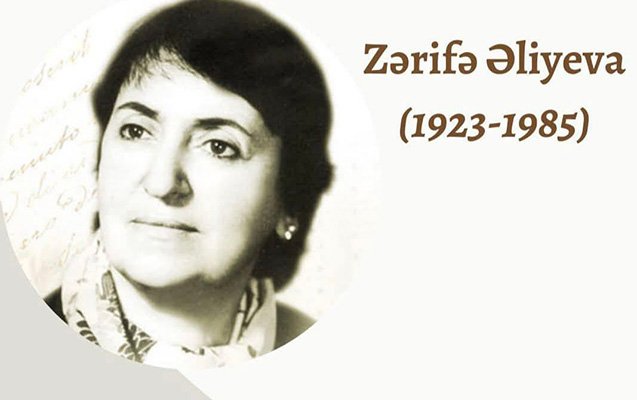
Commemoration Day of Academician Zarifa Aliyeva
Aytac Dəniz · Cəmiyyət ·