

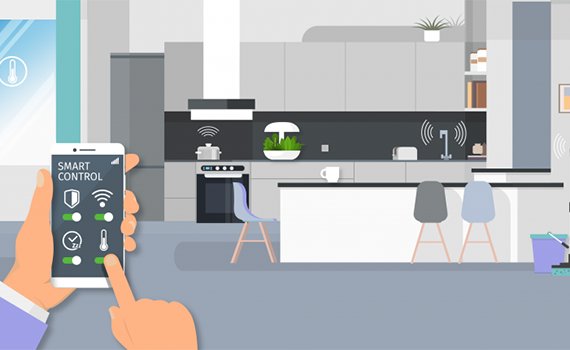
The development of home management systems is one of the most prominent examples of technological innovations that simplify our daily lives. Various tools are available for managing smart homes, but their true power lies in automation capabilities. This ensures that desired operations are performed automatically without any user intervention.
Redaksiya reports that there is an important parameter to consider when creating automations on the Home Assistant platform. This parameter directly affects how automations work and their effectiveness. Automation ensures that devices, sensors, and other elements in your home are activated automatically based on certain conditions.
To create an automation in Home Assistant, you first need to define "triggers." Triggers are the starting point of an automation. For example, when a door sensor opens, lights turn on, or when an air quality sensor reaches a certain value, the air purifier starts. Next, "conditions" are set. Conditions are additional restrictions or requirements for the automation to be executed. For example, lights only turn on after sunset, or the air purifier only runs when no one is home. Finally, "actions" are defined. Actions are the result of the automation, meaning the movements that will occur after the trigger and conditions are met. This could include turning on lights, activating the air purifier, or sending a notification.
An important parameter for the effectiveness of automations is their execution order. In Home Assistant, automations run in a specific sequence. This sequence determines the interaction between automations and their outcomes. For example, one automation can affect the operation of another automation, or vice versa. Therefore, when creating automations, their sequence must be carefully considered.
Various tools are available in Home Assistant to manage the sequence of automations. These include enabling or disabling automations, setting their priorities, or adding additional conditions. These tools allow users to manage their automations more precisely and increase their effectiveness. Ultimately, smart home automation is an important function that simplifies daily life and makes home management more convenient.